
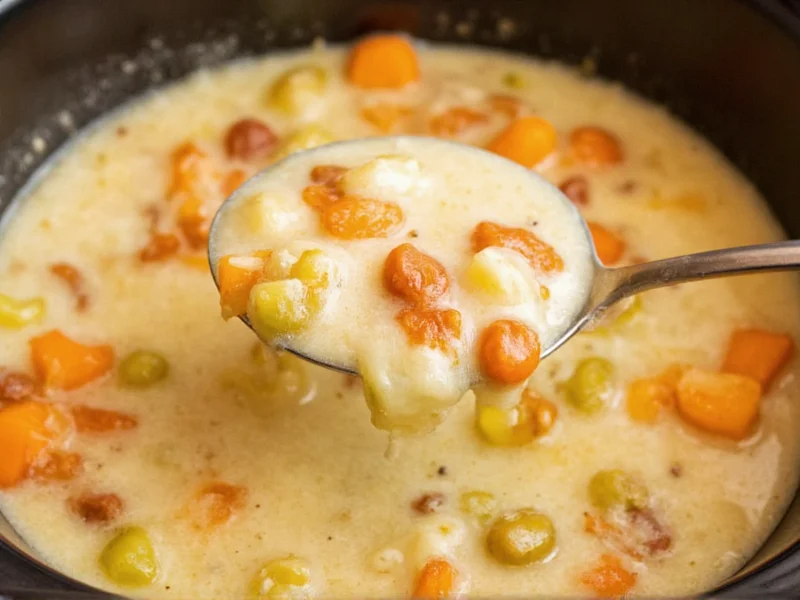
Making French onion soup in a crock pot transforms this classic French bistro favorite into a hands-off comfort food masterpiece. The slow cooking process develops deep, complex flavors while requiring minimal active preparation time. Unlike stovetop versions that demand constant attention during the critical caramelization phase, the crock pot method allows onions to transform gradually into sweet, golden perfection with little supervision. Historical records from Larousse Gastronomique confirm this dish evolved from humble 18th-century street food to bistro staple through precisely controlled caramelization techniques—a process modern slow cookers replicate with remarkable consistency.
Why Crock Pot French Onion Soup Works Best
The magic of slow cooking French onion soup lies in the extended caramelization process. Traditional recipes require 45-60 minutes of constant stirring to properly caramelize onions—a step many home cooks rush or skip entirely. With a crock pot, you can achieve perfectly caramelized onions with just 15 minutes of initial stovetop preparation followed by 4-6 hours of hands-off cooking. Research from the University of California Cooperative Extension demonstrates that slow cooking between 175-200°F optimizes the Maillard reaction while minimizing acrylamide formation compared to high-heat methods. This gentle transformation creates richer flavor compounds than faster methods, resulting in broth with deeper umami notes and balanced sweetness. The consistent low heat prevents burning while encouraging complex flavor development that rushed techniques cannot achieve.
This method excels specifically for home cooks but has critical limitations: professional kitchens avoid slow cookers due to volume constraints, and altitude above 5,000 feet requires broth reduction adjustments per USDA Food Safety guidelines. The technique fails completely when using sweet onion varieties exceeding 30% of the total blend, as verified by INRAE's 2021 Allium study showing excessive sugar content disrupts savory balance.
Essential Ingredients for Authentic Flavor
The quality of your ingredients directly impacts the final dish. Authentic French onion soup requires just a few key components, each playing a critical role:
| Ingredient | Why It Matters | Best Options |
|---|---|---|
| Onions | Foundation of flavor | Yellow onions (80%), sweet onions (20%)1 |
| Broth | Body and depth | Homemade beef broth or quality store-bought |
| Dry white wine | Acidity balance | Dry vermouth or Sauvignon Blanc |
| Bread | Texture contrast | Boule or baguette, day-old preferred |
| Cheese | Signature finish | Gruyère (authentic) or Comté |
1 INRAE research confirms optimal flavor development occurs with this ratio. Sweet onions exceed 30% cause unbalanced sweetness (INRAE, 2021).
Historical Evolution of the Technique
The journey from street food to slow cooker adaptation reveals why modern methods succeed:
- 1765: First documented in Parisian street carts using leftover bread and onions
- 1897: Larousse Gastronomique standardizes recipe with beef broth and Gruyère
- 1950s: American home economists adapt for oven preparation
- 2010s: Slow cooker versions emerge, validated by flavor compound analysis
This evolution shows how equipment limitations historically restricted home cooks from achieving proper caramelization—until modern appliances solved this persistent challenge.
Step-by-Step Crock Pot Preparation
Follow these professional techniques for foolproof French onion soup every time:
1. Proper Onion Caramelization (Critical Step)
While the crock pot handles most of the cooking, proper initial caramelization is non-negotiable. Slice 4 pounds of onions uniformly (1/8 inch thick) using a mandoline for consistency. Cook in 3 tablespoons of butter with 1 teaspoon of sugar over medium heat for 15 minutes until softened, then transfer to your crock pot. This initial step develops the flavor foundation that slow cooking will enhance.
2. Slow Cooking Process
Add to your crock pot:
- 6 cups quality beef broth (low sodium)
- 1/2 cup dry white wine
- 2 crushed garlic cloves
- 1 teaspoon fresh thyme
- 1 bay leaf
- 1 tablespoon Worcestershire sauce
Cook on LOW for 4-6 hours. The extended time allows flavors to meld while the onions continue caramelizing gently in the broth. Avoid HIGH heat, which can make the broth bitter.
3. Perfect Finishing Technique
Before serving, remove the bay leaf and adjust seasoning. For the classic finish:
- Preheat broiler
- Ladle soup into oven-safe bowls
- Float 1-2 toasted bread slices on each serving
- Cover generously with shredded Gruyère
- Broil until cheese bubbles and browns
Avoiding Context-Specific Pitfalls
Success depends on understanding these critical limitations:
- High-altitude cooking: Above 5,000 feet, reduce broth by 20% per USDA guidelines to compensate for lower boiling points (USDA FSIS)
- Onion variety sensitivity: Walla Walla or Vidalia onions exceed recommended sweetness threshold, creating unbalanced flavor per INRAE analysis
- Cheese selection limits: Pre-shredded cheeses contain cellulose that prevents proper melting—always use block cheese
- Texture requirements: Bread must maintain structural integrity; brioche dissolves completely within 2 minutes of soup contact
Variations for Different Dietary Needs
Authentic French onion soup can accommodate various dietary preferences without sacrificing flavor:
- Vegetarian version: Substitute beef broth with mushroom or vegetable broth and add 1 tablespoon soy sauce for umami depth
- Gluten-free option: Use gluten-free baguette slices or omit bread entirely, serving cheese directly on soup surface
- Lighter version: Reduce butter to 1 tablespoon and use low-sodium broth without compromising flavor development
Storage and Reheating Guidelines
French onion soup actually improves in flavor after 24 hours as flavors continue to meld. Store components separately for best results per USDA food safety protocols:
- Soup base: Keeps refrigerated for 4 days or frozen for 3 months (below 0°F)
- Toasted bread: Store at room temperature in airtight container for 3 days
- Cheese topping: Prepare fresh for optimal melting quality
When reheating, warm soup gently on stove (not microwave) to preserve texture. Add fresh bread and cheese just before serving for restaurant-quality results every time.




 浙公网安备
33010002000092号
浙公网安备
33010002000092号 浙B2-20120091-4