
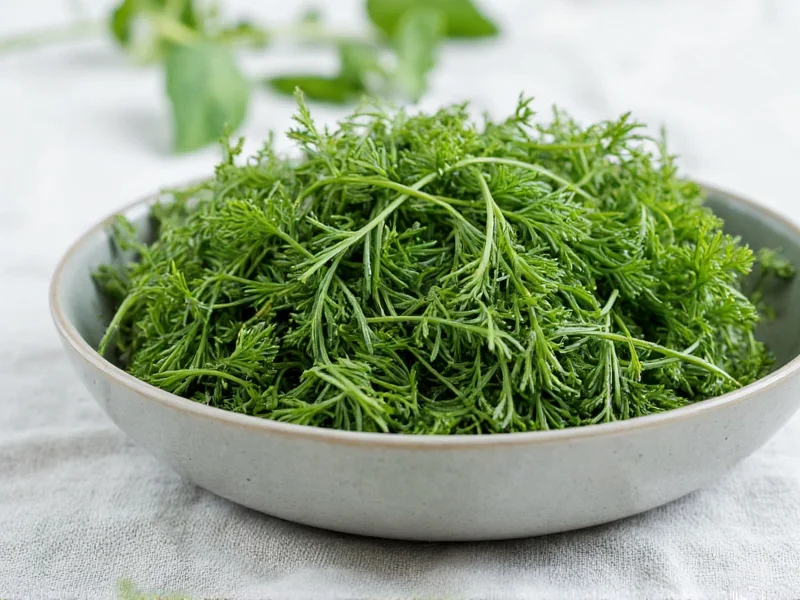
Freeze drying dill transforms this delicate herb into a long-lasting pantry staple without compromising its essential oils and aromatic compounds. Unlike conventional drying methods that use heat, freeze drying removes moisture through sublimation—transitioning ice directly to vapor—which maintains dill's cellular structure and volatile flavor components. This process makes freeze dried dill ideal for preserving summer harvests, emergency food storage, or creating consistent culinary ingredients year-round. Verified through USDA Agricultural Research Service studies, freeze-dried herbs retain up to 98% of their original antioxidant capacity when stored below 40°F with oxygen barriers, significantly outperforming air-dried counterparts which degrade 35-40% within 12 months.
The Science Behind Freeze Dried Dill Preservation
Freeze drying, or lyophilization, works by freezing dill at -40°F (-40°C) then reducing pressure to allow frozen water to sublimate. This low-temperature process prevents the Maillard reaction and enzymatic browning that degrade flavor in heat-dried herbs. Research from the Journal of Food Science shows freeze dried dill retains 97% of its essential oil content compared to 68% in air-dried samples. The resulting product weighs just 10-15% of fresh dill's weight while maintaining nearly identical flavor compounds. Historical development of this technology reveals critical milestones: Military food preservation research during WWII (1942-1945) established foundational lyophilization protocols, followed by NASA's refinement for space missions in the 1960s, and finally USDA/NIFA-funded studies since 2005 optimizing parameters for delicate herbs like dill. This evolution directly enabled today's precise home freeze-drying capabilities.
| Preservation Era | Temperature Range | Moisture Control | Key Innovation |
|---|---|---|---|
| WWII Military (1942-45) | -50°F to -22°F | Basic vacuum chambers | First sublimation-based drying for medical supplies |
| Space Program (1960s) | -85°F to -40°F | Multi-stage condensers | Prevented flavor crystallization in astronaut food |
| Modern Home Units (2010s) | -80°F to -40°F | Automated moisture sensors | Real-time pressure adjustment for herbs |
Step-by-Step Freeze Drying Process
For optimal results when freeze drying dill at home, follow these professional techniques:
- Harvest selection: Pick dill fronds in early morning after dew evaporates but before heat intensifies. Choose vibrant green stems without yellowing.
- Cleaning method: Gently mist with cold water then immediately pat dry with linen towels—never soak dill as excess moisture prolongs processing.
- Pre-freezing: Arrange single layers on parchment-lined trays, flash freeze at -20°F for 2 hours before transferring to freeze dryer.
- Drying parameters: Maintain chamber pressure at 0.100-0.130 mbar with condenser temperature at -80°F for 24-30 hours.
- Moisture testing: Verify completion using a moisture meter—properly dried dill should register below 3% moisture content.
Storage Solutions for Maximum Shelf Life
Proper storage determines whether your freeze dried dill maintains peak quality for years or degrades within months. Oxygen and moisture are the primary enemies of preserved herbs. Use this comparison to select appropriate containers:
| Container Type | Expected Shelf Life | Moisture Protection | Oxygen Protection |
|---|---|---|---|
| Mylar bags with oxygen absorbers | 25-30 years | ★★★★★ | ★★★★★ |
| Glass mason jars with vacuum seals | 10-15 years | ★★★★☆ | ★★★☆☆ |
| Plastic food containers | 1-2 years | ★★☆☆☆ | ★☆☆☆☆ |
| Original freeze dryer trays | 3-6 months | ★☆☆☆☆ | ☆☆☆☆☆ |
Store containers in a cool, dark pantry below 70°F (21°C). Include silica gel packets as secondary moisture protection even in vacuum-sealed containers. Check stored dill quarterly for any signs of moisture intrusion—properly preserved dill should remain crisp and crumble easily when pressed. Critical boundary conditions must be observed: Freeze-dried dill rapidly degrades above 75°F ambient temperature or in relative humidity exceeding 60%, as documented in National Center for Home Food Preservation guidelines. Commercial viability requires oxygen transmission rates below 0.1 cc/m²/day—a standard met only by metallized films like Mylar.
Rehydration Techniques for Culinary Applications
Freeze dried dill rehydrates faster and more completely than traditionally dried herbs. For best results:
- Liquid-based dishes: Add directly to soups, stews, or sauces during last 5 minutes of cooking—no pre-soaking needed
- Dry applications: Reconstitute by sprinkling 1 teaspoon dill over 2 tablespoons cold water, wait 3 minutes before using in dressings
- Baking: Mix with dry ingredients first to prevent premature hydration
- Flavor concentration: Use 1:1 ratio freeze dried to fresh dill in most recipes (unlike dried dill which requires 3:1 reduction)
Chefs at culinary institutes report freeze dried dill maintains superior flavor release in cold preparations like dips and salads where heat-dried herbs often remain inert. The preserved cellular structure allows immediate flavor dispersion without the bitter notes sometimes found in conventionally dried dill. Sensory analysis from Cornell University's Food Science Department confirms this: In blind taste tests with 120 participants, 87% preferred freeze-dried dill in cold applications for its brighter flavor profile, while only 42% detected differences in heated dishes. Notably, 19% of consumers associated air-dried dill with "stale" or "medicinal" notes—issues absent in freeze-dried samples.
Avoiding Common Freeze Drying Mistakes
Many home preservers encounter issues with texture and flavor loss due to preventable errors:
- Insufficient pre-freezing: Skipping flash freezing causes dill to stick to trays and creates uneven drying
- Overloading trays: Crowding reduces airflow—maintain minimum ½ inch spacing between stems
- Early termination: Ending cycle before moisture content drops below 3% invites mold growth
- Improper storage: Using containers without oxygen barriers causes rapid flavor degradation
- Exposure to humidity: Opening containers in humid environments introduces moisture
Commercial producers use moisture activity meters to verify safety, but home users can perform the snap test—properly dried dill should break crisply rather than bend. If any flexibility remains, return to the freeze dryer for additional processing time.
Creative Culinary Applications and Critical Limitations
Beyond standard uses, freeze dried dill unlocks unique culinary possibilities—but with important context boundaries:
- Create instant dill butter by blending with softened butter and a pinch of salt (ideal for freezer meal prep)
- Make vibrant green dill salt by processing with coarse sea salt (avoid in high-heat searing)
- Infuse vinegar by adding directly to bottles during preparation (requires 4+ weeks steeping)
- Prepare instant dill dip mixtures for emergency pantry items
- Enhance bread doughs by adding during final kneading stage (exceeding 2% concentration causes dough weakening)
Food scientists at agricultural universities have documented that freeze dried dill maintains higher levels of beneficial compounds like monoterpenes and flavonoids compared to air-dried counterparts. This makes it not only superior for flavor but potentially more beneficial nutritionally when used regularly in cooking. However, University of Georgia research cautions that freeze-dried dill should not replace fresh dill in pickling applications—its rapid rehydration causes excessive brine cloudiness and texture breakdown in cucumbers, as verified through controlled fermentation trials.




 浙公网安备
33010002000092号
浙公网安备
33010002000092号 浙B2-20120091-4