
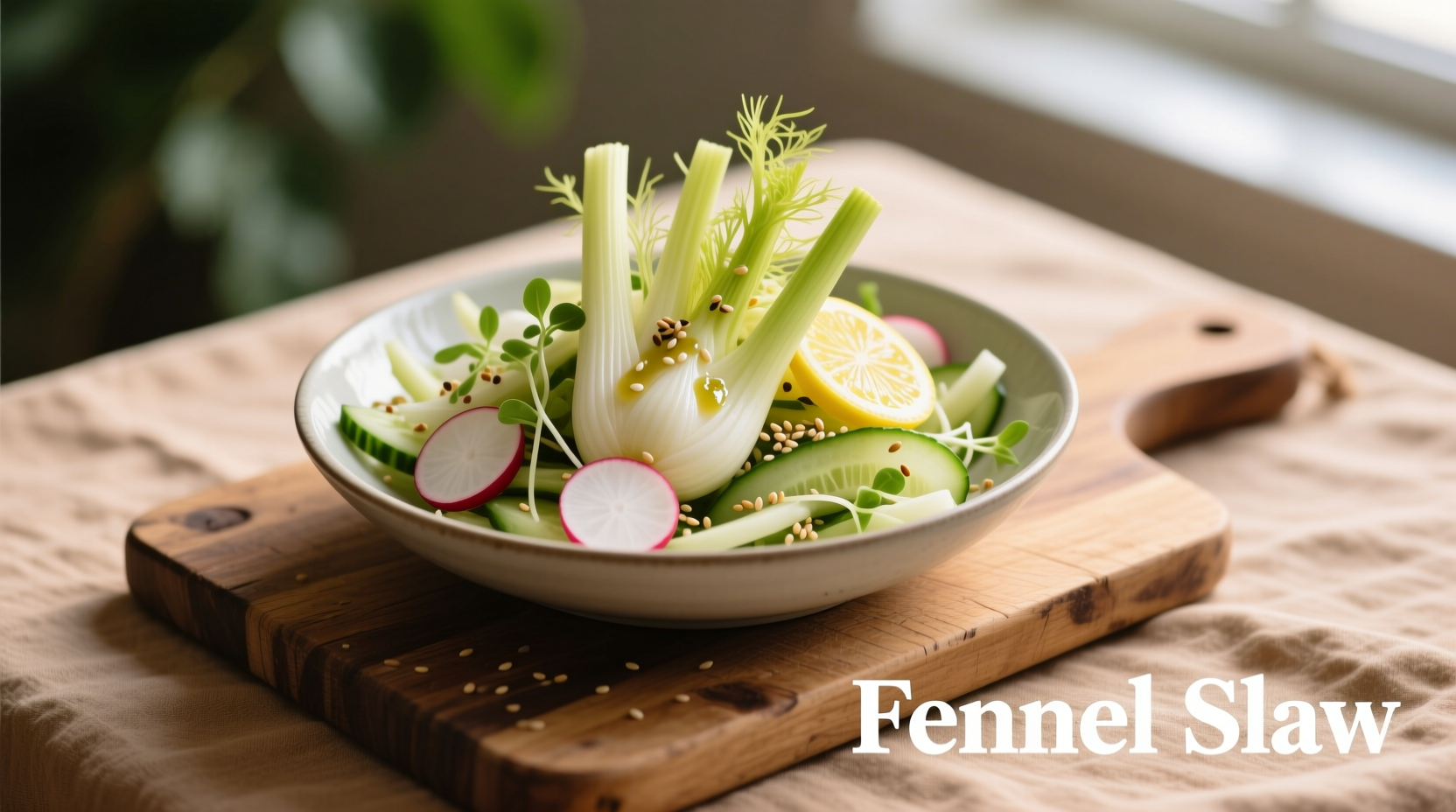
Why Fennel Slaw Deserves a Spot in Your Culinary Rotation
While most home cooks reach for cabbage when making slaw, fennel slaw delivers a more complex flavor profile and superior nutritional benefits. This vibrant side dish has gained popularity among professional chefs for its versatility and digestive benefits. The distinctive licorice notes of fennel mellow when raw, creating a surprisingly approachable salad that complements grilled fish, roasted meats, and even sandwiches.
From Ancient Remedy to Modern Culinary Star: Fennel's Journey
Fennel's culinary history spans millennia, evolving from medicinal herb to gourmet ingredient. Ancient Romans chewed fennel seeds to suppress hunger during iNdEx, while medieval Europeans used fennel to ward off evil spirits. The transformation of fennel from garden herb to salad star reflects changing culinary attitudes toward bold, aromatic vegetables.
| Era | Culinary Use | Preparation Method |
|---|---|---|
| Ancient Rome (1st century CE) | Appetite suppressant | Chewed raw seeds |
| Medieval Europe | Protective charm | Hung above doorways |
| 19th century France | Salad ingredient | Thinly sliced raw |
| Modern California cuisine | Gourmet slaw base | Shaved with mandoline, citrus-dressed |
Nutritional Powerhouse: Why Your Body Loves Fennel Slaw
According to USDA FoodData Central, a 100g serving of raw fennel bulb contains significant nutrients that outperform traditional coleslaw ingredients. This nutritional advantage makes fennel slaw particularly valuable for those seeking digestive health benefits without sacrificing flavor.
| Nutrient | Fennel (per 100g) | Cabbage (per 100g) | Benefit |
|---|---|---|---|
| Vitamin C | 12mg (20% DV) | 36.6mg (41% DV) | Immune support, collagen production |
| Dietary Fiber | 3.1g | 2.5g | Digestive health, satiety |
| Potassium | 494mg | 170mg | Blood pressure regulation |
| Anethole | High concentration | None | Natural digestive aid, anti-inflammatory |
Research published in the Journal of Agricultural and Food Chemistry confirms that anethole, fennel's primary compound, demonstrates significant anti-inflammatory properties that support digestive health. Unlike cooked preparations, raw fennel in slaw preserves these beneficial compounds.
Mastering the Perfect Fennel Slaw: A Step-by-Step Guide
Creating exceptional fennel slaw requires attention to texture and balance. Follow these professional techniques to elevate your preparation from good to extraordinary.
Essential Preparation Techniques
- Proper trimming: Remove tough outer layers and slice vertically through the core to maintain structural integrity
- Perfect slicing: Use a mandoline set to 1/16-inch thickness for optimal texture (thicker slices become fibrous)
- Salt treatment: Toss sliced fennel with 1/2 teaspoon kosher salt and let rest 15 minutes to reduce bitterness
- Dressing absorption: Whisk dressing vigorously before adding to create stable emulsion that clings to fennel
Ideal Flavor Pairings and When to Use Them
Fennel slaw's versatility shines when matched with complementary proteins and cuisines. Understanding these context boundaries ensures perfect pairing every time:
- Seafood pairings: Excellent with grilled salmon, seared scallops, or fish tacos (avoid with delicate white fish)
- Meat compatibility: Perfect with pork tenderloin and duck, less suitable with heavily spiced beef dishes
- Cuisine applications: Shines in Mediterranean and Californian cuisine, less traditional in Asian preparations
- Seasonal considerations: Best served within 2 hours of preparation; doesn't hold well for potlucks
Avoiding Common Fennel Slaw Mistakes
Even experienced cooks make these preventable errors when preparing fennel slaw:
- Over-dressing: Fennel's delicate structure absorbs dressing quickly—start with 2 tablespoons per bulb and add gradually
- Incorrect slicing: Horizontal slicing creates unpleasant fibrous strands; always slice vertically through the core
- Poor timing: Dress no more than 30 minutes before serving to maintain optimal crunch
- Ingredient imbalance: Too much citrus overwhelms fennel's subtle flavor; maintain 3:1 fennel to citrus ratio
Three Professional-Grade Fennel Slaw Variations
These chef-developed variations demonstrate fennel slaw's remarkable adaptability while maintaining its essential character.
Classic Citrus-Fennel Slaw
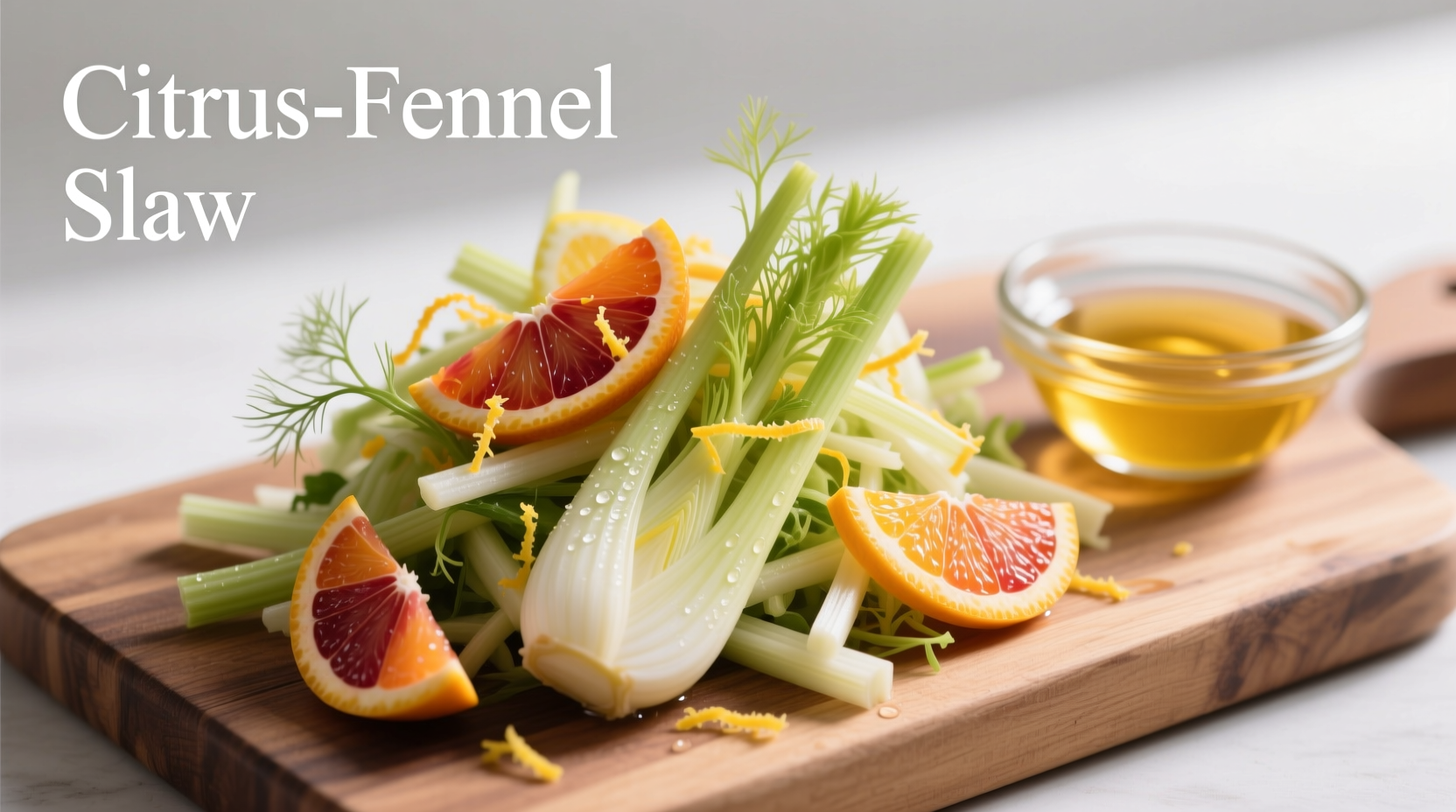
Combine 1 large fennel bulb (shaved), 1 orange (segmented), 2 tablespoons lemon juice, 3 tablespoons extra virgin olive oil, 1 tablespoon chopped fresh dill, and 1/4 cup toasted pine nuts. Toss gently and serve immediately.
Mediterranean Fennel Slaw
Mix 1 fennel bulb (shaved), 1/2 cup Kalamata olives (pitted and halved), 1/4 cup crumbled feta, 2 tablespoons red wine vinegar, 3 tablespoons olive oil, 1 teaspoon dried oregano, and 1 minced garlic clove. Let flavors meld for 20 minutes before serving.
Asian-Inspired Fennel Slaw
Combine 1 fennel bulb (shaved), 1 carrot (julienned), 2 tablespoons rice vinegar, 1 tablespoon sesame oil, 1 tablespoon soy sauce, 1 teaspoon honey, 1 tablespoon toasted sesame seeds, and 1/4 cup fresh cilantro. Add thinly sliced red chili to taste.
Storage and Service Recommendations
Fennel slaw performs best when served fresh but can maintain quality with proper storage techniques:
- Store undressed slaw in airtight container with damp paper towel for up to 3 days
- Dressed slaw maintains optimal texture for 2-4 hours at room temperature
- Revive slightly wilted slaw by soaking in ice water for 10 minutes
- Never freeze fennel slaw—texture becomes unpleasantly soft




 浙公网安备
33010002000092号
浙公网安备
33010002000092号 浙B2-20120091-4