
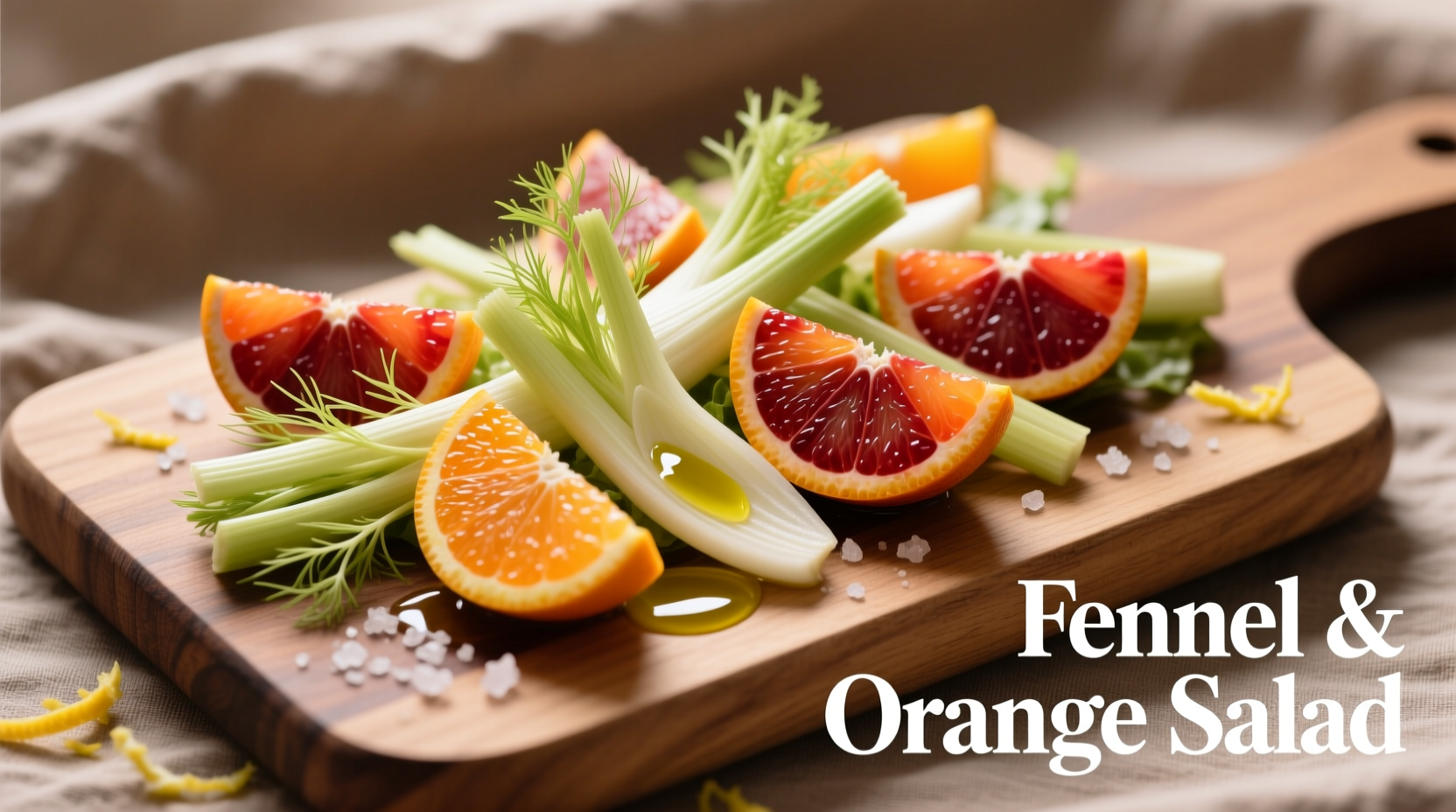
Nothing says "fresh" quite like the vibrant combination of fennel and orange in this simple yet sophisticated salad. Whether you're looking for a light lunch, a refreshing side dish for grilled fish, or a palate cleanser between courses, this salad delivers crisp textures and bright citrus notes that awaken your senses. The magic lies in how the natural sweetness of oranges complements the subtle licorice-like flavor of fennel, creating a harmonious balance that's both refreshing and satisfying.
Why Fennel and Orange Make the Perfect Pair
The culinary marriage of fennel and orange isn't just delicious—it's scientifically sound. Fennel contains anethole, the same compound found in anise and star anise, which interacts beautifully with the citric acid and natural sugars in oranges. This interaction creates a flavor synergy where neither ingredient overpowers the other. When sliced thinly, raw fennel provides a satisfying crunch that contrasts perfectly with the juicy bursts of orange segments.
| Orange Variety | Best For Salad? | Flavor Profile | Seasonality |
|---|---|---|---|
| Navel Oranges | ★★★★☆ | Balanced sweet-tart, easy to segment | Winter-Spring |
| Blood Oranges | ★★★★★ | Berry-like notes, stunning color | Late Winter |
| Cara Cara | ★★★☆☆ | Sweeter, less acidic, pink flesh | Winter |
| Valencia | ★★☆☆☆ | More juice, less firm segments | Late Spring-Summer |
Source: USDA Citrus Varietal Characteristics, Agricultural Research Service
Essential Ingredients Guide
While this salad requires minimal ingredients, choosing quality components makes all the difference:
- Fennel bulbs: Look for firm, heavy bulbs with crisp stalks and vibrant green fronds. Avoid bulbs with brown spots or soft areas.
- Oranges: Blood oranges provide the most dramatic color and complex flavor, but navels work perfectly well. Always choose heavy-for-their-size fruit.
- Olive oil: Extra virgin with fruity notes complements rather than overwhelms.
- Finishing touch: Fennel fronds, flaky sea salt, and optional toasted fennel seeds.
Step-by-Step Preparation
Follow these professional techniques for perfect results every time:
- Prepare the fennel: Trim the stalks and root end. Cut the bulb in half vertically, then slice thinly across the grain using a mandoline or sharp knife for consistent, paper-thin slices.
- Segment the oranges: Over a bowl to catch juices, cut away peel and pith. Hold the fruit over the bowl and slice between membranes to release clean segments.
- Make the dressing: Whisk 3 parts extra virgin olive oil with 1 part reserved orange juice, a teaspoon of Dijon mustard, and freshly ground black pepper.
- Combine gently: Toss fennel with half the dressing first to soften the texture, then add orange segments and remaining dressing.
- Finish: Top with fennel fronds, a sprinkle of flaky salt, and optional toasted fennel seeds.

When This Salad Shines: Context Matters
Understanding the ideal context for serving fennel and orange salad ensures maximum enjoyment:
- Perfect pairing: Serve alongside grilled salmon, roasted chicken, or as part of a mezze platter with olives and crusty bread.
- Seasonal timing: Best enjoyed in late winter through early spring when both fennel and citrus are at their peak.
- Avoid serving with: Strongly flavored fish like mackerel or dishes with competing anise flavors like absinthe cocktails.
- Temperature tip: Always serve chilled but not ice-cold—refrigerate ingredients but assemble just before serving for optimal texture.
Nutritional Powerhouse
One serving (about 2 cups) delivers impressive nutritional benefits:
- Over 100% of your daily vitamin C needs from the oranges
- 7 grams of dietary fiber from the fennel bulb
- Rich in potassium, folate, and vitamin B6
- Contains antioxidants like limonene and quercetin
- Approximately 120 calories per serving without added sweeteners
According to research published in the Journal of Food Composition and Analysis, raw fennel retains nearly all its nutritional value when consumed fresh, making this salad an excellent way to maximize nutrient intake.
Historical Journey of Fennel in Cuisine
Fennel's culinary journey spans millennia, evolving from ancient medicinal herb to modern kitchen staple:
- Ancient Greece (8th century BCE): Used medicinally and as performance enhancer for Olympic athletes
- Roman Empire: Considered sacred; used in religious ceremonies and as digestive aid
- Medieval Europe: Placed on doorways to ward off evil spirits; used in cooking for fasting days
- Renaissance Italy: Became staple in Mediterranean cuisine, particularly in coastal regions
- Modern Era: Rediscovered by chefs in the 1980s California cuisine movement for its crisp texture and subtle flavor
Today, fennel appears in everything from Italian salads to Indian spice blends, but its pairing with citrus remains one of the most enduring culinary traditions of the Mediterranean.
Make-Ahead Tips and Storage
This salad maintains its crisp texture better than most green salads, but proper storage is key:
- Store undressed fennel and oranges separately in airtight containers for up to 3 days
- Combine ingredients no more than 30 minutes before serving for best texture
- Don't dress the salad until ready to serve—citrus dressing will soften fennel over time
- Leftovers keep for 1-2 days but will lose some crispness
- Revive leftovers with a squeeze of fresh citrus and re-seasoning
Three Delicious Variations to Try
Mediterranean Style
Add ¼ cup Kalamata olives, 2 tablespoons capers, and a sprinkle of oregano. Perfect with grilled lamb.
Winter Citrus Blend
Combine with grapefruit segments and pomegranate arils. Drizzle with pomegranate molasses for holiday gatherings.
Protein-Packed Version
Add ½ cup chickpeas and 2 ounces crumbled feta cheese for a complete meal that keeps you full for hours.
Frequently Asked Questions
Can I make this salad ahead of time?
Yes, but with proper technique. Prepare and store fennel and oranges separately in airtight containers for up to 3 days. Combine and dress no more than 30 minutes before serving to maintain optimal crisp texture. The salad's components hold up better than leafy greens but will gradually soften when dressed.
How do I prevent the fennel from turning brown?
Fennel doesn't brown like apples or potatoes. Its color remains stable for several days when stored properly. To maintain maximum crispness, store sliced fennel in cold water with a squeeze of lemon juice, changing the water daily. This technique keeps fennel crisp for up to 3 days without affecting flavor.
What's the best way to slice fennel for this salad?
For optimal texture and flavor release, slice fennel paper-thin across the grain using a mandoline or very sharp knife. The thinner the slices, the more pleasant the texture and the better the fennel will absorb the dressing. Aim for slices no thicker than 1/16 inch for the most enjoyable eating experience.
Can I use bottled orange juice for the dressing?
Freshly squeezed orange juice makes a significant difference in flavor quality. Bottled juices often contain preservatives and lack the bright, complex notes of fresh citrus. For best results, always use juice from the segmented oranges in your salad—this ensures perfect flavor harmony and eliminates waste.
Is raw fennel difficult to digest?
Raw fennel is generally well-tolerated and actually aids digestion thanks to its anethole content. If you have sensitive digestion, start with smaller portions (½ cup) and gradually increase. The fiber in raw fennel supports gut health, but those with irritable bowel syndrome may want to consult their healthcare provider about appropriate portions.




 浙公网安备
33010002000092号
浙公网安备
33010002000092号 浙B2-20120091-4