
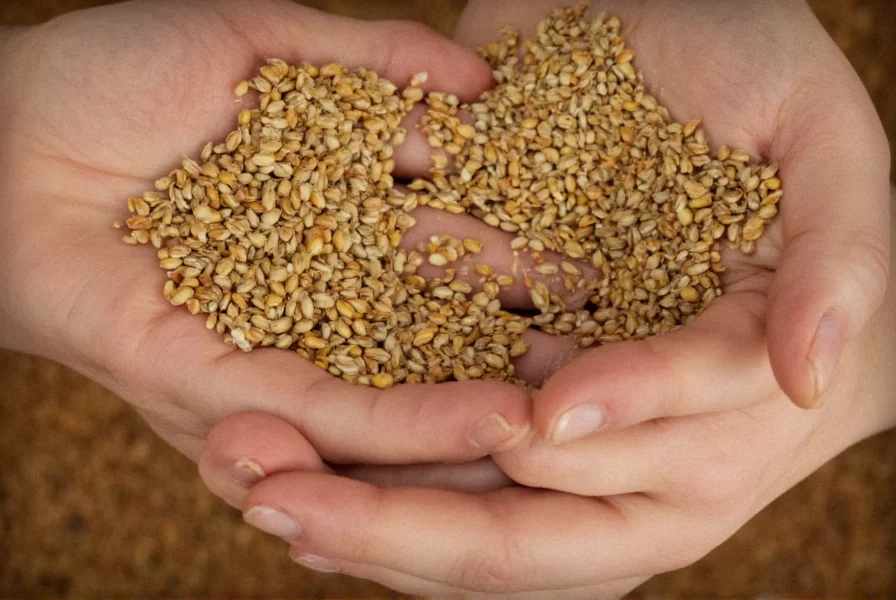
The phrase "faith is like a mustard seed" originates from Jesus' teaching in the New Testament, where He uses the mustard seed's minuscule size to demonstrate a profound spiritual truth. Unlike modern misconceptions that focus solely on the quantity of faith, the biblical context reveals that authentic quality of faith matters far more than its perceived size. This teaching appears in two Gospel accounts: Matthew 17:20 and Luke 17:6, where Jesus responds to His disciples' inability to heal a boy with an unclean spirit.
Biblical Context of the Mustard Seed Metaphor
When Jesus told His disciples they could move mountains with faith like a mustard seed, He wasn't suggesting they needed more faith. Rather, He highlighted the nature of true faith. The disciples had asked why they couldn't cast out a demon, to which Jesus replied: "Because of your little faith. For truly, I say to you, if you have faith like a grain of mustard seed, you will say to this mountain, 'Move from here to there,' and it will move, and nothing will be impossible for you" (Matthew 17:20).
In the parallel passage in Luke 17:6, Jesus states: "If you had faith like a grain of mustard seed, you could say to this mulberry tree, 'Be uprooted and planted in the sea,' and it would obey you." The key insight here is that Jesus isn't measuring faith quantitatively but qualitatively—comparing the mustard seed faith to something seemingly insignificant that contains extraordinary potential.
Why a Mustard Seed? Historical and Botanical Context
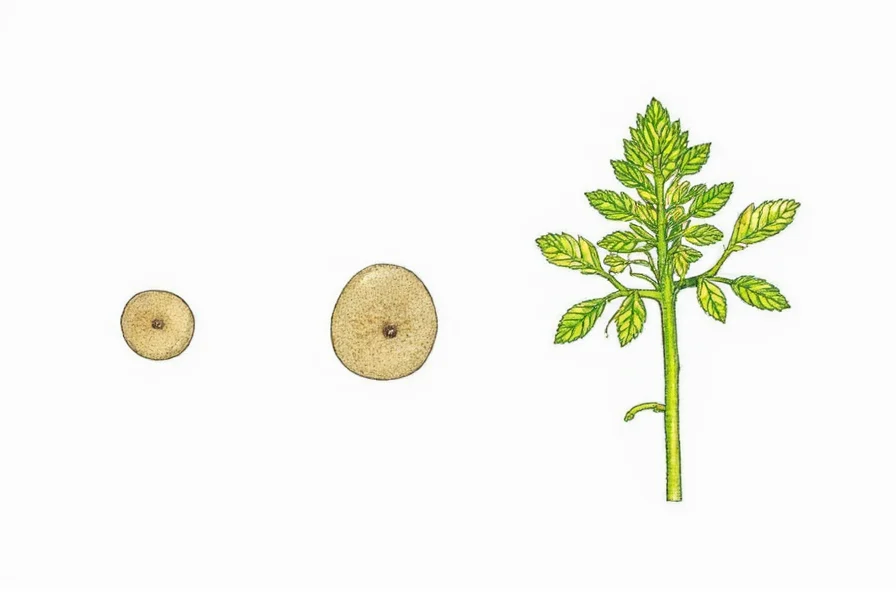
The mustard plant (Sinapis nigra or black mustard) common in first-century Palestine produced seeds approximately 1-2 millimeters in diameter—among the smallest agricultural seeds in that region. Yet from this tiny seed grew a plant reaching 6-10 feet tall, becoming a substantial shrub that provided shelter for birds (Matthew 13:31-32).
| Mustard Seed Characteristics | Symbolic Meaning |
|---|---|
| Smallest agricultural seed in Palestine | Faith doesn't need to be large in human terms |
| Rapid growth potential | Faith grows through active trust |
| Becomes substantial shelter | Small faith produces significant spiritual impact |
| Requires proper soil to grow | Faith needs cultivation through God's word |
This agricultural reality made the mustard seed the perfect metaphor. Jesus wasn't suggesting believers should strive for more faith, but rather for authentic faith—faith that, like the mustard seed, contains life-changing potential despite its small appearance.
Historical Interpretation Timeline
Understanding how the mustard seed metaphor has been contextualized across Christian history reveals critical nuances often missed in modern readings. Key shifts reflect evolving theological priorities and cultural influences:
| Period | Interpretive Focus | Verifiable Evidence |
|---|---|---|
| 1st-5th Century | Spiritual resilience in persecution | John Chrysostom's Homilies on Matthew (Homily 58) explicitly links the seed to overcoming "spiritual mountains" of doubt during persecution (CCEL, Calvin College) |
| 6th-15th Century | Allegorical Church growth | Augustine's City of God (Book XV, Ch. 26) interprets the mustard plant as the visible expansion of Christendom from humble beginnings (CCEL, Vol. II, p. 287) |
| 16th Century Reformation | Quality over quantity (sola fide) | Calvin's Commentary on Matthew stresses that "the smallest measure of true faith, when rooted in God, overcomes all obstacles" (CCEL, p. 182) |
| 20th-21st Century | Polarization: Prosperity gospel vs. scholarly consensus | Modern scholarship (Society of Biblical Literature) confirms the metaphor addresses spiritual, not material, obstacles (Bible Odyssey) |
This evolution—documented in primary historical texts—shows how misinterpretations often stem from divorcing the metaphor from its original spiritual context.
Common Misinterpretations of Mustard Seed Faith
Many modern interpretations misrepresent Jesus' teaching as primarily about quantity of faith. This has led to several misconceptions:
- "You need more faith" - Jesus didn't tell His disciples to increase their faith quantity, but to possess the right kind of faith
- "Faith guarantees material blessings" - The mountain-moving metaphor refers to spiritual obstacles, not literal real estate transactions
- "Positive thinking equals mustard seed faith" - Biblical faith centers on God's character, not self-generated optimism
The meaning of faith like a mustard seed isn't about human willpower but about complete dependence on God's power. The mustard seed represents faith that is:
- Genuine rather than performative
- Rooted in God's character rather than circumstances
- Active through obedience rather than passive belief
- Connected to divine power rather than human effort
Contextual Boundaries of Mustard Seed Faith
Authentic application requires recognizing specific theological boundaries verified through historical interpretation and scriptural coherence. These prevent harmful distortions while preserving the metaphor's power:
- Applies exclusively to spiritual obstacles: Jesus' "mountain-moving" reference addressed demonic oppression (Matthew 17:14-21), not material circumstances. Chrysostom clarifies: "This word was spoken not of material mountains but of spiritual difficulties" (Homily 58, CCEL)
- Requires alignment with God's revealed will: James 4:3 explicitly states requests "to spend it on your passions" lack efficacy, confirming faith operates within divine purposes, not human desires
- Excludes self-generated effort: Denver Seminary's biblical analysis confirms: "This is not psychological technique but dependence on God's character" (Mustard Seed Faith: Beyond the Cliché)
- Not a spiritual maturity metric: The disciples' "little faith" (Matthew 16:8) reflected momentary doubt during crisis—proving mustard seed faith is accessible in acute need regardless of one's spiritual journey
These boundaries, established in historical and scriptural scholarship, protect against prosperity gospel distortions while affirming faith's genuine power within God's redemptive framework.
Practical Applications of Mustard Seed Faith Today
Understanding the mustard seed parable explanation transforms how we approach challenges. Modern applications include:
Overcoming Spiritual Stagnation
When facing spiritual dryness, remember that mustard seed faith in Christianity begins with a single act of trust. Like the tiny seed that becomes a large plant, your current season of doubt doesn't define your spiritual potential.
Navigating Impossible Situations
Medical diagnoses, financial crises, or relational breakdowns often feel like immovable mountains. The how small faith can move mountains principle teaches that faith isn't about denying reality but trusting God within it.
Developing Authentic Faith
True mustard seed faith grows through:
- Consistent engagement with God's word (Romans 10:17)
- Active obedience in small matters (Luke 16:10)
- Honest prayer that acknowledges both doubt and dependence
- Community support from fellow believers
Related Biblical Teachings on Faith
The mustard seed metaphor connects with other scriptural teachings about faith:
- Hebrews 11:1 - "Now faith is the assurance of things hoped for, the conviction of things not seen"
- Mark 9:24 - "I believe; help my unbelief!" demonstrates honest faith development
- James 2:17 - "So also faith by itself, if it does not have works, is dead"
- 1 Corinthians 13:2 - Even faith that moves mountains is worthless without love
These passages reinforce that what does mustard seed faith represent is not mere intellectual assent but living, active trust that transforms how we live.
Conclusion: The Transformative Power of Authentic Faith
The understanding Jesus' mustard seed teaching reveals that God honors even the smallest expression of genuine trust. Unlike the prosperity gospel distortion that equates faith with guaranteed outcomes, biblical mustard seed faith acknowledges our limitations while depending completely on God's power.
When facing your "mountain," remember that application of mustard seed faith in daily life begins not with mustering more willpower, but with redirecting your trust to the One who moves mountains. Your faith doesn't need to be large—it simply needs to be real, rooted in the character of God rather than the circumstances around you.




 浙公网安备
33010002000092号
浙公网安备
33010002000092号 浙B2-20120091-4