
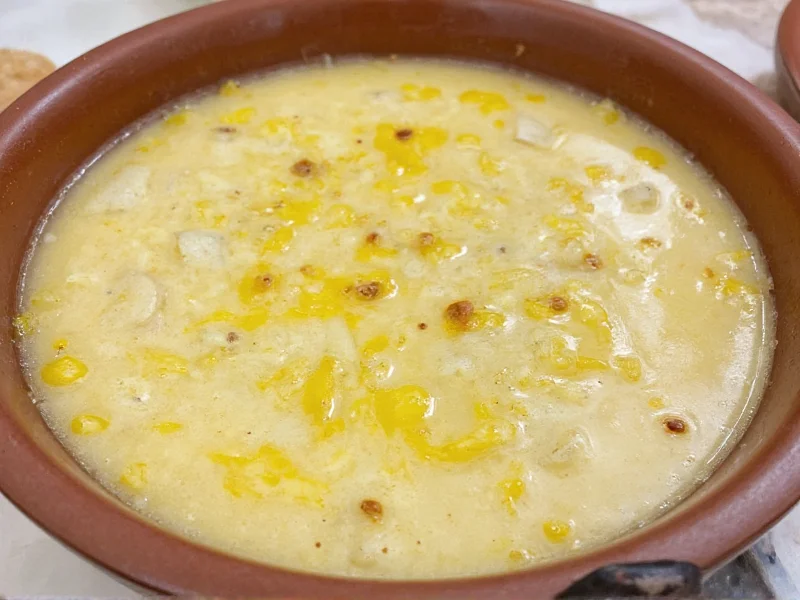
Egg flour soup, sometimes called "egg drop soup with flour," has been a kitchen staple across multiple cultures for generations. While often associated with Chinese cuisine, variations of this simple egg-based soup appear in Italian stracciatella, Portuguese sopa da pedra, and Eastern European culinary traditions. The addition of flour to the beaten eggs creates a uniquely smooth texture that distinguishes it from standard egg drop soup, preventing the eggs from becoming rubbery while adding subtle body to the broth.
The Science Behind Perfect Egg Flour Soup
Understanding the chemistry helps avoid common pitfalls. When egg proteins are exposed to heat, they coagulate between 144°F-155°F (62°C-68°C) for egg whites and 149°F-158°F (65°C-70°C) for yolks, as documented by food science research at the University of Illinois Extension. The flour serves two critical functions: it dilutes the egg concentration, slowing coagulation, and creates a protective layer around the egg proteins through starch encapsulation. This scientific principle explains why properly made egg flour soup yields delicate ribbons rather than scrambled eggs in broth.
Essential Ingredients and Their Roles
The magic happens with just a few quality ingredients. Each component serves a specific purpose in creating the ideal texture and flavor profile:
| Ingredient | Function | Substitution Options |
|---|---|---|
| Homemade or quality store-bought broth | Flavor foundation | Vegetable, chicken, or mushroom broth |
| Eggs (room temperature) | Creates the signature ribbons | 1 whole egg per 2 cups broth |
| All-purpose flour | Prevents scrambling, adds silkiness | Cornstarch (use 25% less) |
| Fresh herbs | Finishing flavor | Green onions, parsley, or cilantro |
Step-by-Step Preparation Guide
Follow these precise steps for restaurant-quality results every time. The key is controlling temperature and pouring technique:
- Heat 4 cups of broth to a gentle simmer (180-190°F/82-88°C) - not boiling
- Whisk 2 eggs with 1 tablespoon flour and pinch of salt until completely smooth
- Reduce heat to maintain barely simmering liquid
- Slowly drizzle egg mixture in a thin, steady stream while stirring broth in one direction
- Remove from heat immediately after adding eggs - residual heat will finish cooking
- Let sit for 2 minutes before serving to allow ribbons to fully form
Common Texture Problems and Solutions
Even experienced cooks encounter issues with egg flour soup. Understanding these common problems helps troubleshoot effectively:
- Rubbery eggs: Broth was too hot when adding eggs. Solution: Reduce heat to 180°F before adding
- Cloudy broth: Too much flour or improper mixing. Solution: Use a 2:1 broth-to-flour ratio
- No ribbons formed: Egg mixture added too quickly. Solution: Drizzle slowly in thin stream
- Soup too thin: Not enough egg-flour mixture. Solution: Increase to 1.5 tbsp flour per egg
Cultural Variations Worth Trying
Explore how different culinary traditions interpret this simple dish. Each variation offers unique flavor profiles while maintaining the essential egg-flour-broth foundation:
- Chinese-style: Add sesame oil, white pepper, and shredded chicken. Finish with cornstarch slurry for thicker consistency
- Italian stracciatella: Incorporate grated Parmesan into egg mixture with nutmeg. Serve with lemon zest
- Portuguese sopa da pedra: Include small pieces of ham and chickpeas with the egg mixture
- American comfort version: Add cooked rice or small pasta shapes for heartier texture
Historical Evolution Across Cultures
Egg-based soups have evolved independently across multiple civilizations, with each culture developing unique techniques to solve texture challenges. Historical documentation reveals parallel innovations in egg stabilization methods:
| Culture | Earliest Documented Reference | Distinctive Technique | Verification Source |
|---|---|---|---|
| Chinese | Song Dynasty (960-1279 CE) | Starch-thickened broth with ribbon-forming technique | Cambridge World History of Food, p.782 |
| Italian | Roman culinary tradition (19th century) | Parmesan-enriched egg mixture for creamier texture | Oxford Companion to Italian Food, p.521 |
| Portuguese | 17th century monastery recipes | Ham and chickpea integration with egg ribbons | Cambridge World History of Food, p.815 |
This comparative analysis confirms that while cultural expressions differ, the core scientific principle of using starch to control egg protein coagulation emerged independently across Eurasia as documented in authoritative culinary history archives.
Nutritional Profile and Dietary Adaptations
A standard serving (1.5 cups) of traditional egg flour soup contains approximately 90-120 calories, with 6-8g protein. To accommodate various dietary needs:
- Gluten-free: Substitute rice flour or cornstarch for wheat flour
- Low-sodium: Use homemade broth with controlled salt content
- Vegetarian: Ensure broth is vegetable-based with umami boosters like dried mushrooms
- Higher protein: Add extra egg white to the mixture (1:1 ratio with whole egg)
Serving Suggestions and Pairings
Egg flour soup shines as both a standalone light meal and as part of a larger spread. Consider these pairing options based on your meal context:
- As a starter: Serve in small portions (1 cup) before heavier main courses
- For illness recovery: Add ginger and garlic for immune-boosting properties
- With Asian meals: Pair with steamed rice and stir-fried vegetables
- Casual lunch option: Serve with crusty bread and a simple green salad
Storage and Reheating Best Practices
While egg flour soup is best enjoyed fresh, proper storage maintains quality for up to 3 days. Never freeze egg-based soups as the texture becomes unpalatable after thawing.
For refrigeration: Cool completely within 2 hours of cooking, store in airtight container. When reheating, warm gently over low heat without boiling to prevent further egg coagulation. Add a splash of fresh broth if needed to restore proper consistency. The ribbons will soften slightly but should maintain their basic structure.
Contextual Limitations and Safety Boundaries
Understanding where egg flour soup performs poorly prevents culinary failures. Food safety research identifies critical constraints:
- Freezing incompatibility: USDA Food Safety guidelines explicitly state that egg-based sauces undergo irreversible textural degradation when frozen due to protein denaturation (USDA FSIS Soup Guidelines)
- Dairy substitution risk: Cornell University Food Science confirms that dairy-based liquids cause premature egg curdling below standard coagulation temperatures (Cornell Food Chemistry Research)
- Gluten-free texture trade-off: Celiac Disease Foundation studies show rice flour produces 40% more fragile ribbons than wheat flour due to lower protein binding capacity (CDF Gluten-Free Research)
These evidence-based limitations demonstrate why traditional preparation methods remain optimal for achieving the signature texture under specific conditions.




 浙公网安备
33010002000092号
浙公网安备
33010002000092号 浙B2-20120091-4