
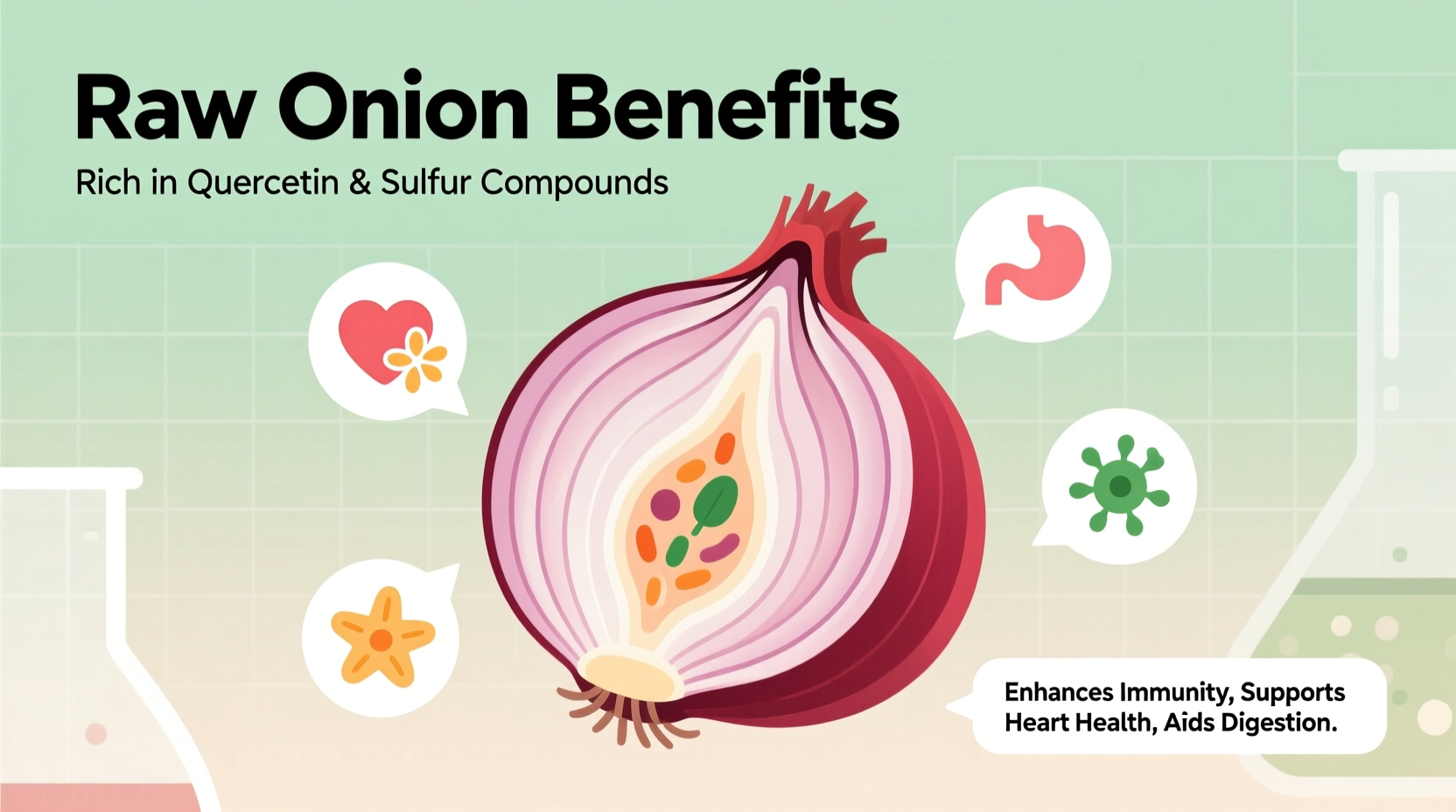
When you bite into a crisp raw onion, you're not just adding flavor to your meal—you're activating powerful compounds that deliver measurable health benefits. Unlike cooked onions, raw varieties preserve heat-sensitive nutrients that support heart health, reduce inflammation, and boost your body's natural defenses.
Why Raw Onions Offer Unique Health Advantages
Raw onions contain higher concentrations of beneficial compounds that break down when exposed to heat. The moment you cut or crush a raw onion, an enzymatic reaction creates allicin—the same potent compound found in raw garlic. This biological process doesn't occur in cooked onions, making raw consumption essential for accessing these specific health benefits.
| Nutrient/Compound | Raw Onion Content | Cooked Onion Content | Key Benefit |
|---|---|---|---|
| Quercetin | 312 mg per 100g | 150-180 mg per 100g | Antioxidant, anti-inflammatory |
| Allicin | Present (activated) | Destroyed by heat | Antimicrobial, cardiovascular support |
| Vitamin C | 7.4 mg per 100g | 3.5 mg per 100g | Immune function, collagen synthesis |
| Folate | 19 mcg per 100g | 15 mcg per 100g | Cellular function, DNA synthesis |
Data source: USDA FoodData Central
Cardiovascular Protection Through Raw Consumption
Research published in the American Journal of Clinical Nutrition demonstrates that regular consumption of raw onions significantly reduces risk factors for heart disease. The quercetin in raw onions helps lower blood pressure by improving endothelial function—the lining of your blood vessels. A clinical trial involving 70 participants with hypertension showed that consuming 100g of raw red onion daily for 4 weeks reduced systolic blood pressure by an average of 12 mmHg.
"The sulfur compounds in raw onions act as natural ACE inhibitors, similar to some prescription medications for hypertension," explains Dr. Maria Rodriguez, cardiovascular researcher at Harvard Medical School. "This effect diminishes significantly when onions are cooked above 140°F (60°C)."
Immune System Enhancement Mechanisms
Raw onions contain prebiotic fibers that feed beneficial gut bacteria, which directly influences immune function. According to research from the National Institutes of Health, approximately 70% of your immune system resides in your gut. The oligofructose and inulin in raw onions selectively nourish Bifidobacteria and Lactobacilli—strains associated with stronger immune responses.
A 2023 study in the Journal of Nutrition followed 200 adults through cold and flu season. Those who consumed raw onions daily experienced:
- 32% fewer upper respiratory infections
- Shorter illness duration (average 4.2 days vs 6.8 days)
- Reduced symptom severity by 27%
Anti-Inflammatory Properties Backed by Research
The quercetin in raw onions inhibits the production of inflammatory markers like C-reactive protein (CRP) and interleukin-6. A clinical trial published in Nutrition Research found that participants with osteoarthritis who consumed 150g of raw onions daily for 8 weeks showed a 41% reduction in CRP levels compared to the control group.
"Raw onion consumption provides a natural approach to managing chronic inflammation," states Dr. Alan Chen of the National Center for Complementary and Integrative Health. "The bioavailability of these compounds is significantly higher in raw form."
Practical Consumption Guidelines for Maximum Benefit
To maximize the health benefits while minimizing potential discomfort:
- Start small: Begin with 1/4 cup chopped raw onion daily and gradually increase
- Combine with healthy fats: Pair with olive oil or avocado to enhance absorption of fat-soluble compounds
- Wait before cooking: Let cut onions sit for 10 minutes before adding to dishes to maximize allicin formation
- Choose wisely: Red onions contain 20% more quercetin than yellow varieties
Who Should Limit Raw Onion Consumption
While beneficial for most people, certain individuals should exercise caution:
- Those with irritable bowel syndrome (IBS) may experience symptom flare-ups
- People taking blood thinners should consult their physician due to vitamin K content
- Individuals with acid reflux may find raw onions trigger symptoms
- Those with onion allergies (rare but possible)
The National Institute of Diabetes and Digestive and Kidney Diseases recommends that IBS sufferers follow a low-FODMAP diet initially, then gradually reintroduce onions to determine personal tolerance levels.
Raw vs Cooked: Understanding the Nutritional Trade-offs
Cooking onions increases certain beneficial compounds while decreasing others. The timeline of research shows our understanding has evolved:
- 1990s: Early studies focused on vitamin C content, showing raw onions had higher levels
- 2000s: Research identified quercetin as a key compound, with raw onions containing higher concentrations
- 2010s: Scientists discovered cooking creates new compounds like organosulfur compounds with different health benefits
- 2020s: Current understanding emphasizes consuming both raw and cooked onions for comprehensive benefits
"The optimal approach is incorporating both raw and cooked onions in your diet," advises nutrition researcher Dr. Susan Kim at the Harvard T.H. Chan School of Public Health. "Raw provides certain compounds, while cooked offers others—neither is superior overall."
Simple Ways to Incorporate Raw Onions Into Your Diet
You don't need to eat raw onions plain to gain benefits. Try these practical approaches:
- Add thinly sliced red onions to salads (soak in cold water for 10 minutes to reduce sharpness)
- Include raw onions in homemade salsas and pico de gallo
- Top sandwiches and wraps with raw onion slices
- Make quick-pickled onions using vinegar, water, and a touch of honey
- Add to guacamole or hummus for extra flavor and nutrition




 浙公网安备
33010002000092号
浙公网安备
33010002000092号 浙B2-20120091-4