
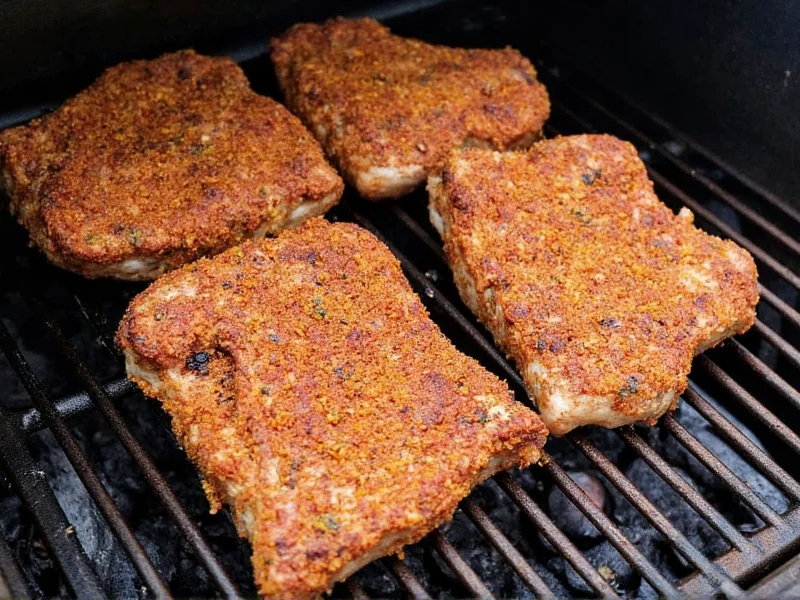
Why Dry Rubs Excel for Grilled Pork Chops
Dry rubs outperform marinades for grilled pork chops because they create superior texture and flavor development. Unlike wet marinades that can steam the meat surface, dry rubs form a flavorful crust through the Maillard reaction. The sugar components caramelize beautifully over direct heat, while salt draws out moisture initially then helps redistribute it during resting. This dual-action process gives you that coveted restaurant-quality sear while keeping the interior juicy. Professional pitmasters prefer dry rubs for thick-cut pork chops since they penetrate just enough to flavor the surface without altering the meat's texture.
Essential Dry Rub Ingredients and Their Roles
Understanding each component's function helps you customize your perfect blend:
| Ingredient | Primary Function | Best Type |
|---|---|---|
| Kosher salt | Flavor enhancer, moisture regulator | Diamond Crystal (use 50% more if using table salt) |
| Brown sugar | Caramelization, sweetness balance | Packed light brown sugar |
| Paprika | Color, mild smokiness | Sweet Hungarian or smoked variety |
| Garlic powder | Umami depth | Freshly ground preferred |
| Black pepper | Heat complexity | Coarsely ground |
The Perfect Dry Rub Ratio Formula
Mastering the dry rub ratio for pork chops on the grill prevents common issues like burning or blandness. Follow this professional framework:
- Salt base: 2 parts salt (by volume) - essential for flavor and texture
- Sweet component: 1 part sugar - balances saltiness and aids browning
- Aromatic spices: 1 part total - paprika, garlic, onion powders
- Heat elements: 1/4 part - cayenne, chili powder, or black pepper
For standard 1-inch thick pork chops, use 1 tablespoon of rub per pound of meat. Thicker chops (1.5+ inches) benefit from an extra 1/2 teaspoon of rub per side to ensure proper flavor penetration during the longer grilling time. This dry rub ingredients for pork chops grill formula prevents the sugar from burning while creating maximum flavor impact.
Step-by-Step Application Process
How to apply dry rub to pork chops properly determines your grilling success:
- Pat chops dry with paper towels - moisture is the enemy of crust formation
- Bring to room temperature - cold meat seizes when hitting hot grill
- Apply rub generously - press firmly into all surfaces including edges
- Rest before grilling - 1 hour minimum, up to 4 hours for best results
- Oil the grill grates - prevents rub from sticking to the grill
Many home cooks make the mistake of applying the rub immediately before grilling. When you let dry rub sit on pork chops for at least an hour, the salt begins breaking down muscle fibers, allowing deeper flavor penetration while improving texture. For thicker cuts, consider applying the rub the night before and refrigerating uncovered - this dry brine method yields extraordinary results.
Grilling Techniques for Rubbed Pork Chops
Master the best temperature for grilling pork chops with dry rub using this method:
- Preheat grill to 375-400°F (medium-high)
- Start over direct heat for 2 minutes per side to set the crust
- Move to indirect heat to finish cooking without burning the rub
- Check temperature at thickest part - remove at 140°F (will rise to 145°F while resting)
- Rest 5 minutes before serving - crucial for juicy results
| Guideline | USDA FSIS Recommendation | Scientific Basis |
|---|---|---|
| Safe Minimum Internal Temperature | 145°F (with 3-minute rest) | Trichinella parasite destroyed at 137°F; 145°F ensures safety margin (Source: USDA FSIS) |
| Previous Standard (pre-2011) | 160°F | Revised due to modern pork production reducing parasite risk (Source: USDA FSIS) |
Thinner chops (under 1 inch) can stay over direct heat the entire time, but thicker cuts require the two-zone method. The sugar in your dry rub for pork chops on the grill caramelizes quickly, so watch carefully during the initial searing phase. If you notice excessive flare-ups, move the chops to a cooler part of the grill immediately.
Common Dry Rub Mistakes and Solutions
Avoid these frequent errors when making grilled pork chops with dry rub:
| Mistake | Result | Solution |
|---|---|---|
| Too much sugar | Burnt, bitter crust | Reduce sugar to 1 part per 4 parts total rub |
| Insufficient salt | Flat, bland flavor | Ensure salt comprises 40-50% of rub by volume |
| Applying right before grilling | Rub falls off, uneven flavor | Apply at least 1 hour in advance |
| Overcrowding grill | Steamed instead of seared | Cook in batches with space between chops |
Context Boundaries: When Dry Rubs Aren't Ideal
Dry rubs deliver optimal results only within specific parameters. Understanding these limitations prevents culinary failures:
- Thin-cut chops (under 3/4 inch): Sugar caramelizes too rapidly, causing burning before interior cooks. The National Pork Board recommends sugar-free rubs or post-sear application for cuts under 1 inch (National Pork Board).
- Smoker cooking (low and slow): Extended smoke exposure creates bitter compounds from prolonged spice breakdown. Use salt-dominant rubs with minimal sugar for sessions exceeding 2 hours.
- Moist-heat methods: Braising or sous vide negates crust formation. Incorporate spices directly into cooking liquids instead of surface rubs.
These context boundaries stem from the fundamental requirement that dry rubs need high-heat surface reactions to activate flavor compounds effectively.
Flavor Variations for Different Palates
Customize your grilling pork chops with dry rub recipe using these professional variations:
- Smoky Southwest: Add 1 teaspoon chipotle powder and 1/2 teaspoon cumin to the base recipe
- Sweet Bourbon: Replace brown sugar with 1 tablespoon maple sugar and add 1 teaspoon bourbon powder
- Herb Garden: Mix in 1 tablespoon dried thyme and 2 teaspoons dried rosemary (finely ground)
- Coffee Rub: Add 1 tablespoon finely ground dark roast coffee to enhance meaty flavors
When creating your own dry rub for pork chops on the grill, remember that pork's natural sweetness pairs beautifully with warm spices like cinnamon and allspice in small quantities (1/4 teaspoon max). Avoid citrus-based ingredients in dry rubs as they can cook into bitter compounds on the grill.
Troubleshooting Guide
Solve these common dry rub grilling issues:
Rub isn't sticking to pork chops
Ensure you've properly dried the surface with paper towels before application. A light coating of neutral oil (like grapeseed) helps the rub adhere without creating a barrier. Press the rub firmly into the meat with your fingertips rather than just sprinkling it on.
Exterior is burning before interior cooks
This happens most often with sugar-heavy rubs. Lower your grill temperature to 350°F and use the two-zone method. For future batches, reduce sugar content by 25% in your dry rub ratio for grilled pork chops. Consider applying half the rub before grilling and the rest immediately after.
Flavor isn't penetrating beyond surface
Apply the rub earlier - minimum 1 hour, ideally 4-12 hours before cooking. For thick-cut chops, make shallow diagonal cuts 1/4 inch deep across the surface to create channels for flavor penetration. Never use table salt in your dry rub for pork chops as it's too dense - kosher salt's larger crystals create better flavor distribution.




 浙公网安备
33010002000092号
浙公网安备
33010002000092号 浙B2-20120091-4