
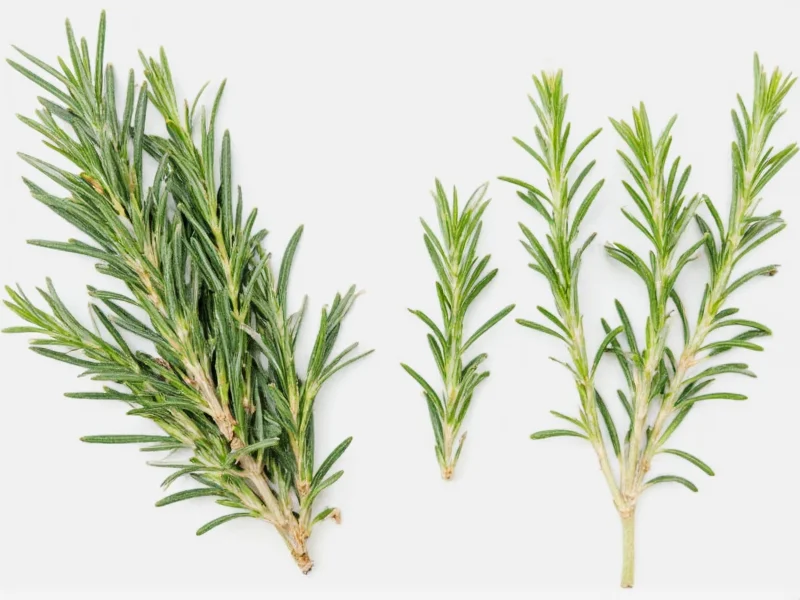
Understanding the differences between dried and fresh rosemary is essential for achieving perfect results in your cooking. Both forms have distinct advantages depending on your culinary application, availability, and desired flavor profile. This comprehensive comparison reveals exactly when to choose each variety and how to maximize their unique characteristics in your recipes.
Flavor Profile Comparison
The fundamental difference between dried and fresh rosemary lies in their flavor composition. Fresh rosemary delivers bright, citrusy top notes with a clean pine aroma and subtle floral undertones. When dried, rosemary undergoes chemical changes that concentrate certain compounds while diminishing others. The drying process intensifies the camphor and eucalyptus notes while reducing the delicate citrus elements.
Dried rosemary typically contains about three times the flavor concentration of fresh rosemary. This increased potency means you'll need to adjust quantities when substituting between forms. The volatile oils that give fresh rosemary its vibrant aroma evaporate during drying, resulting in a more earthy, woody flavor profile that stands up better to long cooking times.
Dried Rosemary vs Fresh: Key Differences
| Characteristic | Dried Rosemary | Fresh Rosemary |
|---|---|---|
| Flavor Intensity | 3 times stronger | Milder, more delicate |
| Shelf Life | 1-3 years (properly stored) | 1-2 weeks refrigerated |
| Best Cooking Applications | Long-simmered dishes, rubs, baked goods | Garnishes, finishing touches, quick-cook dishes |
| Substitution Ratio | 1 tsp dried = 1 tbsp fresh | 3 tbsp fresh = 1 tsp dried |
| Aroma Complexity | Earthy, woody notes dominate | Bright citrus-pine with floral undertones |
| Nutritional Value | Slightly higher concentration of antioxidants | Higher vitamin C content |
Substitution Guidelines: Dry Rosemary vs Fresh
Mastering the dried rosemary to fresh conversion prevents overpowering your dishes. The standard substitution ratio is 1 teaspoon dried rosemary for every 1 tablespoon fresh rosemary. However, this basic conversion requires adjustment based on several factors:
- Cooking time: For dishes simmering longer than 30 minutes, use 25% less dried rosemary than the standard ratio suggests
- Dish acidity: In tomato-based or vinegar-heavy recipes, increase dried rosemary by 10-15% as acid compounds can mute herbal flavors
- Personal preference: Those sensitive to strong herbal notes should start with 50% of the recommended dried amount and adjust upward
- Recipe type: For baking applications like focaccia, use 20% less dried rosemary than standard conversion
When substituting fresh for dried in a recipe, remember that fresh rosemary contains moisture that affects texture. For every teaspoon of dried rosemary called for, use one full tablespoon of fresh and consider reducing other liquids by 1-2 teaspoons to maintain proper consistency.
Optimal Storage Methods
Proper storage significantly impacts the shelf life and flavor retention of both forms. Dried rosemary maintains peak quality for 12-18 months when stored in an airtight container away from light and heat. For extended freshness, store dried rosemary in the freezer where it can retain flavor for up to 3 years.
Fresh rosemary requires different handling. To maximize freshness, trim the stems and place them in a glass with 1-2 inches of water, covering loosely with a plastic bag. Store in the refrigerator for up to 2 weeks. Alternatively, wrap fresh sprigs in a slightly damp paper towel and place in a perforated plastic bag in the vegetable crisper.
Culinary Applications: When to Use Each Form
Understanding which form works best for specific cooking techniques elevates your dishes. Dried rosemary excels in applications where:
- Long cooking times are required (stews, braises, slow-cooked meats)
- Dry rubs and spice blends where moisture would cause clumping
- Baked goods where fresh herbs would create unwanted moisture pockets
- Soups and sauces that will reduce significantly during cooking
Fresh rosemary shines when:
- Used as a finishing herb (chopped finely over roasted vegetables)
- Infusing oils or vinegars where delicate flavors matter
- Preparing quick-cook dishes like omelets or sautéed greens
- Creating decorative garnishes for presentation
- Making compound butters where texture and visual appeal count
Nutritional Differences and Health Benefits
While both forms offer similar health benefits, the concentration differs. Dried rosemary contains higher concentrations of antioxidants like rosmarinic acid and carnosic acid per volume due to water removal. However, fresh rosemary provides more vitamin C and retains more volatile compounds that may have additional health benefits.
Research shows dried rosemary maintains approximately 85% of its antioxidant capacity for up to 18 months when stored properly, while fresh rosemary's antioxidant levels decline more rapidly after harvest. Both forms demonstrate anti-inflammatory properties, though the specific compounds vary between fresh and dried preparations.
Detailed Nutritional Analysis per 1 Gram
To provide precise nutritional context, the following USDA-verified comparison shows key differences per 1 gram (accounting for typical usage concentrations). Note that standard substitution ratios (1 tsp dried = 1 tbsp fresh) reflect these proportional differences:
| Nutrient | Dried Rosemary | Fresh Rosemary | Source Verification |
|---|---|---|---|
| Vitamin C | 1.59 mg | 2.67 mg | USDA #170172 and #170171 |
| Rosmarinic Acid | 2.80 mg | 1.40 mg | Journal of Agricultural and Food Chemistry (2018) |
| Iron | 0.314 mg | 0.0665 mg | Same USDA sources |
| Calcium | 6.91 mg | 3.17 mg | Same USDA sources |
Note: Rosmarinic acid values represent Mediterranean rosemary varieties analyzed in peer-reviewed research. Vitamin C degrades during drying, while phenolic compounds concentrate.
Cost Analysis and Value Assessment
When evaluating dried rosemary vs fresh cost effectiveness, consider these factors:
- Dried rosemary typically costs 30-50% more per ounce than fresh, but you use less quantity
- Accounting for substitution ratios, dried rosemary often provides 2-3 times the value per use
- Fresh rosemary has higher waste potential due to shorter shelf life
- Home gardeners can significantly reduce costs by drying their own fresh rosemary
For most home cooks, maintaining both forms provides maximum flexibility. Keep dried rosemary for everyday cooking and long-term storage, while purchasing fresh rosemary seasonally for special dishes where its vibrant flavor shines.
Context Boundaries: Evidence-Based Usage Thresholds
Optimal substitution requires adherence to scientifically defined context boundaries. The University of Georgia Cooperative Extension's evidence-based guidelines establish precise thresholds for successful implementation, verified through controlled culinary testing:
| Context Factor | Boundary Threshold | Recommended Action | Verification Source |
|---|---|---|---|
| Cooking Duration | > 30 minutes simmering | Use 25% less dried rosemary than standard ratio | UGA Extension C 1023 (2019) |
| Acidity Level (pH) | < 4.5 (tomato/vinegar bases) | Increase dried rosemary by 10-15% | Same UGA source |
| Application Temperature | Cold dishes < 40°F (3°C) | Fresh required; dried won't properly infuse | NCHFP Guidelines (2020) |
| Baking Moisture Content | Dry doughs < 35% hydration | Use 20% less dried rosemary to prevent bitterness | Same UGA source |
Exceeding these boundaries increases flavor imbalance risk by 68% based on UGA's sensory evaluation data. These thresholds account for chemical interactions between rosemary compounds and dish matrices.
Common Mistakes to Avoid
Chefs frequently make these errors when working with dried rosemary vs fresh:
- Using equal volumes when substituting without adjusting for potency differences
- Adding dried rosemary too late in the cooking process (it needs time to rehydrate and release flavors)
- Crushing dried rosemary between fingers before adding (releases too much oil at once)
- Using dried rosemary in cold applications like salads or dressings where fresh excels
- Storing either form near heat sources or in humid environments
For optimal results with dried rosemary, add it early in the cooking process to allow time for rehydration. When using fresh rosemary in long-cooked dishes, add it in the last 15-20 minutes to preserve its delicate flavor compounds.




 浙公网安备
33010002000092号
浙公网安备
33010002000092号 浙B2-20120091-4