
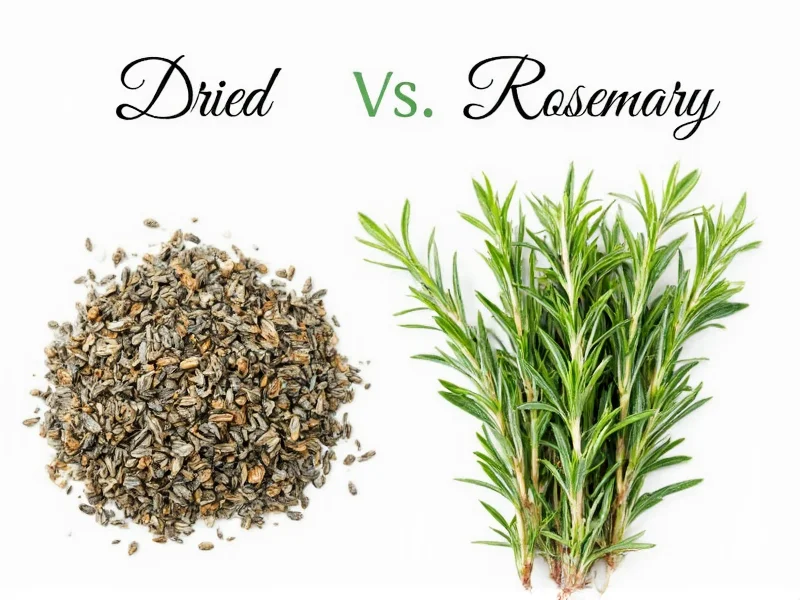
When choosing between dried and fresh rosemary for your culinary creations, understanding their distinct characteristics can significantly impact your dish's final flavor profile. This comprehensive comparison explores the practical differences every home cook should know.
Flavor and Aroma Differences
Fresh rosemary delivers a bright, pine-like aroma with subtle citrus and floral undertones. The essential oils remain intact, providing a more complex flavor profile that's vibrant but less intense. When you crush a fresh sprig between your fingers, you'll notice an immediate release of these aromatic compounds.
Dried rosemary, by contrast, develops a more concentrated, earthy flavor as moisture evaporates during the drying process. The heat-stable compounds become more prominent, resulting in a stronger, somewhat woodier taste. While some delicate top notes diminish during drying, the core flavor intensifies significantly—approximately three times stronger than its fresh counterpart.
Historical Context: Evolution of Rosemary Usage
The culinary application of rosemary has undergone significant transformation throughout history, with distinct patterns emerging for fresh and dried forms based on technological and cultural developments:
| Era | Fresh Rosemary Applications | Dried Rosemary Applications |
|---|---|---|
| Ancient Greece (c. 500 BCE) | Used in ceremonial wreaths; added to bathing waters for fragrance | Documented by Dioscorides for medicinal infusions and food preservation |
| Middle Ages (5th-15th century) | Placed on windowsills to ward off disease; used in monastery gardens for immediate culinary use | Stored for winter use; essential in meat preservation techniques due to antimicrobial properties |
| Renaissance (16th century) | Became staple in French and Italian royal kitchens for garnishes | Featured in early spice blends like herbes de Provence; traded as dried commodity across Europe |
| Modern Era (20th century+) | Standard in gourmet kitchens for finishing dishes; valued for vibrant aroma in premium applications | Industrial drying improved consistency; dominates commercial food production for shelf-stable products |
This historical trajectory demonstrates how preservation needs drove the adoption of dried rosemary for storage, while cultural preferences maintained fresh rosemary for immediate sensory impact. The shift toward industrial drying methods in the 1950s significantly improved flavor retention in dried products.
Source: Royal Botanic Gardens, Kew. "Rosemary: Herb Profile." https://www.kew.org/read-and-watch/rosemary-herb-profile
Substitution Guidelines for Cooking
Understanding the dried rosemary substitution ratio is crucial for recipe success. Professional chefs consistently recommend:
| Fresh Rosemary | Dried Rosemary Equivalent | Best For |
|---|---|---|
| 1 tablespoon chopped | 1 teaspoon | Finishing dishes, garnishes |
| 1 sprig (about 2 inches) | ½ teaspoon | Simmering sauces, soups |
| 2 tablespoons chopped | 2 teaspoons | Roasted meats, vegetables |
When substituting dried for fresh in slow-cooked dishes, add the dried herb early in the cooking process to allow time for rehydration and flavor release. For fresh-to-dried substitutions in quick-cooking recipes, remember that dried rosemary won't provide the same bright finish as fresh.
Culinary Applications: When to Use Each Form
Fresh rosemary excels in:
- Finishing dishes where vibrant color and aroma matter
- Cold preparations like salad dressings and compound butters
- Infusing oils and vinegars (the moisture helps release oils)
- Garnishing finished dishes for visual appeal
- Recipes requiring delicate herbal notes
Dried rosemary performs best in:
- Long-simmering dishes like stews, braises, and soups
- Dry rubs for meats where moisture would prevent proper browning
- Baked goods like breads and focaccia
- Recipes where shelf stability matters (meal prep, camping)
- Situations requiring precise measurement
Critical Limitations: Contextual Constraints
Understanding where each form fails is as important as knowing their strengths. Culinary science reveals specific constraints that impact recipe success:
- Dried rosemary in cold applications: Fails to rehydrate properly in salad dressings or cold sauces, resulting in gritty texture and incomplete flavor release. The University of Nebraska-Lincoln Food Safety states that "dried herbs are unsuitable for cold infusions due to inadequate rehydration" (2022).
- Fresh rosemary in dry rubs: Introduces moisture that prevents proper searing of meats. As documented by food safety experts, "the water content in fresh herbs creates steam during searing, inhibiting crust formation" (University of Nebraska-Lincoln, 2022).
- Fine chopping of fresh rosemary: Releases excessive bitter compounds when minced too finely, particularly problematic in delicate dishes like fish preparations where texture sensitivity is critical.
- Dried rosemary in quick-cooking dishes: Requires minimum 15 minutes of cooking time to rehydrate; adding it to last-minute sauces results in harsh, unoxygenated flavor that cannot mellow.
Source: University of Nebraska-Lincoln Food Safety. "Herbs and Spices: Safe Handling and Storage." https://food.unl.edu/herbs-and-spices
Storage and Shelf Life Comparison
Fresh rosemary requires careful handling to maintain quality. Store sprigs stem-side down in a glass with about an inch of water, covered loosely with a plastic bag in the refrigerator. Properly stored, fresh rosemary maintains peak quality for 10-14 days. For longer storage, freeze whole sprigs on a baking sheet before transferring to freezer bags—frozen rosemary works well for cooking but loses its fresh texture.
Dried rosemary, when stored properly in an airtight container away from light and heat, retains optimal flavor for 6-12 months. The key indicator of quality is aroma—when the distinctive pine scent fades significantly, the herb has lost most of its flavor compounds. For maximum shelf life, consider freezing dried rosemary in vacuum-sealed containers.
Nutritional Profile and Health Benefits
Both forms offer similar nutritional benefits, though fresh rosemary contains slightly higher levels of certain volatile compounds due to minimal processing. The USDA FoodData Central provides precise comparisons for equivalent culinary servings (1 teaspoon dried vs 1 tablespoon fresh), demonstrating the concentration effect of drying:
| Nutrient | Fresh (1 tbsp) | Dried (1 tsp) | Concentration Factor |
|---|---|---|---|
| Calories | 2 | 6 | 3x |
| Vitamin C | 0.6 mg | 1.8 mg | 3x |
| Calcium | 6 mg | 18 mg | 3x |
| Iron | 0.2 mg | 0.6 mg | 3x |
Source: USDA FoodData Central (2019). Fresh Rosemary (ID 171698), Dried Rosemary (ID 174448). https://fdc.nal.usda.gov/fdc-app.html#/food-details/171698/nutrients and https://fdc.nal.usda.gov/fdc-app.html#/food-details/174448/nutrients
The primary health benefits—anti-inflammatory properties, potential cognitive support, and digestive aid—remain present in both forms, with the main difference being concentration per serving. Note that volatile compounds like certain antioxidants decrease during drying, while non-volatile compounds become more concentrated as water content reduces.
Common Mistakes to Avoid
Many home cooks make these critical errors when using rosemary:
- Incorrect substitution ratios: Using equal amounts of dried and fresh results in either under-seasoned or overpowering dishes
- Adding dried rosemary too late: In quick-cooking dishes, dried rosemary doesn't have time to rehydrate and release flavor
- Using old dried herbs: Stale dried rosemary lacks flavor impact and can taste dusty
- Over-chopping fresh rosemary: Releases too many bitter compounds when finely minced
- Not adjusting for rosemary variety: Different cultivars have varying intensity levels
Professional Chef Recommendations
Top culinary professionals suggest these advanced techniques:
- For dried rosemary in dry rubs, toast the herb lightly in a dry pan before grinding to enhance flavor release
- When substituting in delicate dishes, rehydrate dried rosemary in warm broth or wine for 10 minutes before use
- For maximum flavor extraction in oils, bruise fresh rosemary sprigs before infusion
- When making stocks, add fresh rosemary near the end to preserve volatile compounds
- For consistent results in baking, always use dried rosemary as fresh can create moisture pockets
Understanding these nuanced differences between dried versus fresh rosemary transforms ordinary cooking into exceptional culinary experiences. The choice between dried rosemary and fresh rosemary ultimately depends on your specific recipe requirements, available ingredients, and desired flavor profile. By applying these practical guidelines for using dried and fresh rosemary, you'll achieve more consistent, professional-quality results in every dish.
Frequently Asked Questions
Can I substitute dried rosemary for fresh in pizza?
Yes, but use one-third the amount of dried rosemary compared to fresh. For pizza specifically, dried rosemary works better than fresh because it withstands high oven temperatures without burning and distributes more evenly across the surface. Add it before baking to allow proper flavor release.
Why does my dried rosemary taste bitter?
Bitterness in dried rosemary typically occurs when it's added too late in the cooking process or used in excessive amounts. Dried herbs need time to rehydrate—add them early in long-cooking dishes. Also, old or improperly stored dried rosemary can develop bitter notes as volatile compounds degrade over time.
How do I make dried rosemary taste fresher?
To enhance dried rosemary's flavor profile, toast it lightly in a dry skillet for 1-2 minutes until fragrant before use. Alternatively, rehydrate it by soaking in warm broth, wine, or olive oil for 10-15 minutes. Adding a small pinch of sugar can also balance the more intense earthy notes.
Is fresh rosemary better for tea than dried?
Fresh rosemary makes superior tea with more vibrant, complex flavors. Use 1-2 inches of fresh sprig per cup of hot water, steeped for 5-7 minutes. Dried rosemary requires longer steeping (8-10 minutes) and delivers a more concentrated, somewhat medicinal flavor. For therapeutic applications, fresh rosemary tea generally provides more balanced herbal benefits.
Can I freeze fresh rosemary for later use?
Yes, freezing preserves fresh rosemary effectively. Place whole sprigs on a baking sheet, freeze until solid, then transfer to airtight freezer bags. Frozen rosemary works well for cooking but loses its fresh texture, making it unsuitable for garnishes. For best results in sauces and soups, chop frozen rosemary directly into dishes without thawing.




 浙公网安备
33010002000092号
浙公网安备
33010002000092号 浙B2-20120091-4