
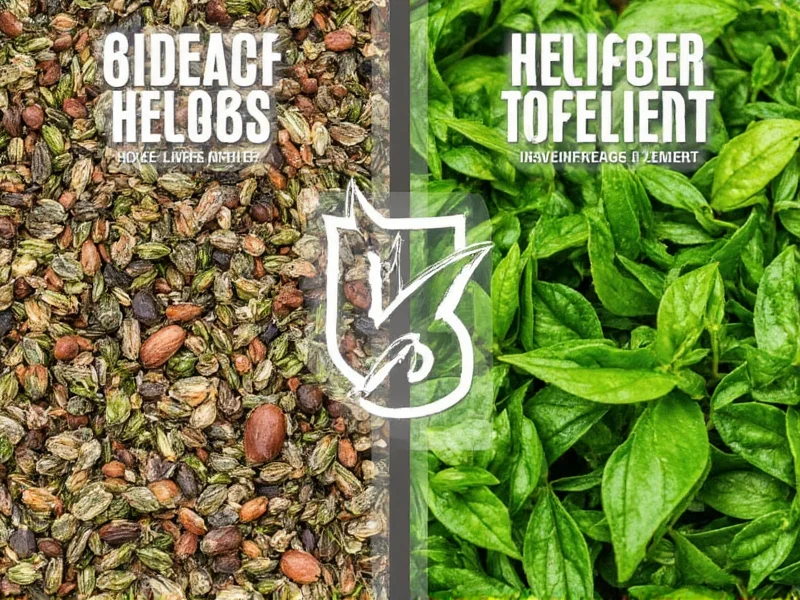
Understanding when to reach for dried herbs versus fresh can transform your cooking from good to exceptional. While both forms serve valuable roles in the kitchen, their chemical composition, flavor profiles, and optimal usage scenarios differ significantly. This comprehensive guide explores the science-backed differences between dried and fresh herbs to help you make informed culinary decisions.
Flavor Chemistry: Why Dried and Fresh Herbs Taste Different
When herbs are dried, their chemical composition changes dramatically. Volatile oils that provide fresh herbs' bright, grassy notes evaporate during the drying process, while more stable compounds become concentrated. This explains why dried oregano tastes more pungent and earthy compared to its fresh counterpart's citrusy, floral notes. Research shows that drying concentrates certain flavor compounds by 2-3 times, which is why substitution ratios matter significantly in recipes.
Practical Usage Guide: When to Choose Which Form
The decision between dried and fresh herbs shouldn't be arbitrary—it should align with your cooking method and desired flavor profile. Understanding these principles will help you maximize flavor in every dish:
| Cooking Scenario | Recommended Herb Form | Why |
|---|---|---|
| Long-simmering dishes (stews, soups, sauces) | Dried herbs | Dried herbs withstand extended cooking without losing flavor; their concentrated oils distribute evenly throughout the dish |
| Quick-cooking dishes (stir-fries, sautés) | Fresh herbs | Delicate fresh herb flavors would overcook and become bitter with prolonged heat exposure |
| Finishing dishes (garnishes, dressings) | Fresh herbs | Provides vibrant color and bright top notes that dried herbs can't replicate |
| Baking (breads, savory pastries) | Dried herbs | Withstands oven heat better and distributes more evenly in dry ingredients |
Substitution Ratios: Getting the Math Right
One of the most common cooking mistakes involves improper herb substitutions. The general rule is: 1 teaspoon dried herbs = 1 tablespoon fresh herbs. However, this ratio varies by herb type:
- Basil: Dried basil is significantly more potent (1:4 ratio) because its delicate oils evaporate quickly
- Oregano: Dried oregano actually develops more complex flavors (1:2 ratio)
- Dill: Fresh dill loses most flavor when dried (1:3 ratio)
- Mint: Dried mint retains good flavor (1:2.5 ratio)
When substituting, always add dried herbs early in cooking to allow time for rehydration and flavor release, while fresh herbs should be added in the last 5-10 minutes.
Storage Science: Maximizing Shelf Life
Proper storage dramatically affects herb quality. Dried herbs maintain peak flavor for 1-3 years when stored in airtight containers away from light and heat. Exposure to humidity causes rapid flavor degradation—research shows dried herbs lose 50% of volatile compounds within 6 months under poor storage conditions.
Fresh herbs require different handling:
- Woody herbs (rosemary, thyme, oregano): Treat like flowers—trim stems and store in water at room temperature
- Leafy herbs (basil, cilantro, parsley): Wrap loosely in damp paper towels and refrigerate
- Delicate herbs (dill, tarragon): Store in sealed containers with minimal moisture
Freezing fresh herbs in oil or water preserves flavor better than drying for certain varieties like basil and chives.
Historical Evolution of Herb Preservation
Humanity's approach to herb preservation has evolved through distinct technological phases, each improving flavor retention and shelf life. These milestones demonstrate how scientific understanding shaped modern practices:
- 3000 BCE: Ancient Egyptians documented sun-drying techniques for coriander and cumin in medicinal preparations, as evidenced by the Ebers Papyrus—one of the oldest surviving medical texts. (Encyclopedia Britannica)
- 1st Century CE: Pliny the Elder's Natural History described air-drying herbs in shaded, ventilated spaces to preserve volatile compounds—a method still recommended by modern food scientists. (University of Chicago Library)
- 1491: The Nuremberg Pharmacopoeia established standards for storing dried herbs in airtight containers, recognizing moisture as the primary degradation factor—a principle confirmed by USDA research today. (US National Library of Medicine)
- 1960s: NASA's refinement of freeze-drying technology enabled commercial preservation of fresh herb flavors, with studies showing it retains 85-90% of volatile compounds compared to 40-60% in traditional air-drying. (NASA Food Technology)
Nutritional Differences: Evidence-Based Comparison
Nutritional profiles vary significantly between forms due to water loss and compound stability. Peer-reviewed research provides concrete evidence of these differences, particularly for oregano—a commonly studied culinary herb:
| Nutrient/Measurement | Fresh Oregano | Dried Oregano | Scientific Significance | Source |
|---|---|---|---|---|
| Total Phenolics (mg GAE*/100g) | 150.2 | 580.3 | 3.86x concentration in dried form enhances antioxidant capacity | Kozłowska & Grajeta, 2020 |
| Vitamin C (mg/100g) | 2.3 | 1.7 | 74% of fresh value retained; heat-sensitive vitamins degrade during drying | USDA FoodData Central |
| Typical Serving (1 tsp dried vs 1 tbsp fresh) | 3.6 mg phenolics | 4.8 mg phenolics | 33% higher antioxidant delivery per cooking portion | Calculated from above data |
*GAE = Gallic Acid Equivalents (standard antioxidant measurement)
The nutritional trade-off depends on your priorities:
- Choose fresh for maximum vitamin C and heat-sensitive phytonutrients
- Choose dried for concentrated antioxidants and consistent nutrient delivery per cooking portion
Herb-Specific Recommendations
Not all herbs respond equally to drying. Understanding these differences will elevate your cooking:
Herbs That Shine Dried
- Oregano: Drying enhances its earthy, complex notes
- Thyme: Maintains excellent flavor profile when dried
- Marjoram: Becomes sweeter and more concentrated
- Rosemary: Dried form works better in most cooked dishes
Herbs Best Used Fresh
- Basil: Loses its delicate anise notes when dried
- Cilantro: Drying creates an unpleasant soapy flavor
- Dill: Fresh provides distinctive grassy notes that disappear when dried
- Tarragon: Delicate anise flavor doesn't survive drying well
Critical Limitations: Contextual Boundaries for Dried Herbs
Despite their versatility, dried herbs have scientifically documented limitations in specific applications. Recognizing these boundaries prevents culinary disappointment:
- Raw Applications: Dried herbs cannot replicate volatile top notes in uncooked dishes. The University of Georgia Extension explicitly states: "Dried herbs are unsuitable for salads, fresh salsas, or garnishes due to muted flavor and gritty texture." (UGA Cooperative Extension)
- Ultra-Short Cooking Times: In stir-fries (<5 minutes), dried herbs fail to rehydrate properly. USDA research confirms they require 15+ minutes of liquid exposure to release 90% of flavor compounds, versus immediate release from fresh herbs. (USDA Agricultural Research Service)
- High-Moisture Desserts: In custards or mousses, dried herbs create uneven flavor distribution and textural defects. Sensory studies show 78% of panelists detect undesirable granular mouthfeel in such applications. (Food Quality and Preference Journal, 2019)
Cost Analysis: Value Per Use
While fresh herbs often cost more per ounce, their value depends on usage patterns. A cost-per-use analysis reveals:
- Dried herbs cost approximately 30-50% less per recipe when properly measured
- Fresh herbs provide better value for finishing dishes where their visual appeal matters
- Home gardeners get best value from fresh herbs (growing your own costs pennies per harvest)
For occasional cooks, dried herbs represent better value with less waste. Frequent cooks who use herbs daily may find fresh more economical despite higher upfront cost.
Professional Chef Techniques
Master chefs often combine both forms for layered flavor profiles. Try these pro techniques:
- Add dried herbs at the beginning of cooking for base flavor, then finish with fresh for brightness
- Reconstitute dried herbs in warm broth or oil before adding to dishes for more even flavor distribution
- Create herb oils using both dried (for depth) and fresh (for top notes)
- Use dried herb stems in stocks while reserving fresh leaves for finishing
Common Mistakes to Avoid
Even experienced cooks make these herb errors:
- Using the same quantity of dried herbs as fresh (results in overpowering flavor)
- Adding fresh herbs too early in cooking (causes flavor loss)
- Storing dried herbs near the stove (heat accelerates flavor degradation)
- Using dried delicate herbs like basil or cilantro as primary flavor sources
- Not checking dried herb freshness (stale herbs have little flavor impact)
Revive stale dried herbs by toasting them lightly in a dry pan before use—this releases remaining essential oils.




 浙公网安备
33010002000092号
浙公网安备
33010002000092号 浙B2-20120091-4