
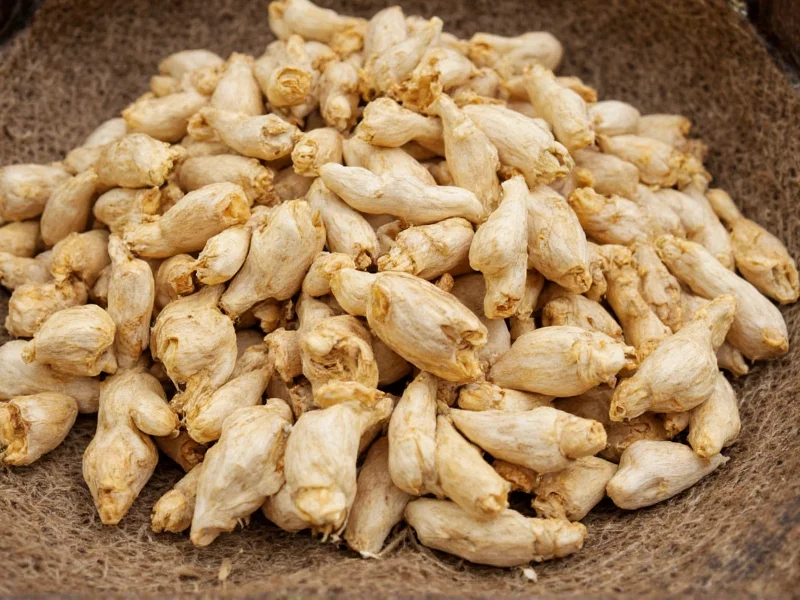
Dried galangal serves as an essential pantry staple for authentic Southeast Asian cuisine, particularly in Thai, Indonesian, and Malaysian cooking. Unlike its fresh counterpart, dried galangal undergoes a dehydration process that concentrates its unique flavor compounds while extending shelf life significantly. This preservation method transforms the knobby rhizome into a versatile ingredient that maintains its characteristic sharp, citrus-pine aroma with subtle floral undertones even after months of storage. Historical research confirms its culinary significance spans over six centuries, with documented use in Ayutthaya-period Thai medical manuscripts (1351-1767) as both a preservative and flavor enhancer.
Understanding Galangal: Fresh vs Dried
While fresh galangal features a pale pinkish-tan exterior with smooth, firm flesh, the drying process intensifies its chemical composition. Fresh galangal contains higher moisture content (approximately 85%) and more volatile aromatic compounds, whereas dried galangal concentrates key components like 1,8-cineole and alpha-pinene, resulting in a more robust flavor profile. The dehydration process reduces enzymatic activity that would otherwise degrade flavor compounds over time. Food science studies demonstrate that this concentration effect creates distinct application boundaries: dried galangal excels in slow-cooked dishes but becomes overpowering in raw preparations where fresh rhizome's brighter notes are essential.
| Characteristic | Fresh Galangal | Dried Galangal |
|---|---|---|
| Shelf Life | 2-3 weeks refrigerated | 12-18 months stored properly |
| Flavor Intensity | Moderate, bright citrus notes | Concentrated, earthier profile |
| Preparation Method | Sliced or grated raw | Rehydrated or ground to powder |
| Texture | Firm, fibrous | Hard, woody when dry |
Culinary Applications of Dried Galangal
Chefs specializing in Southeast Asian cuisine prefer dried galangal for certain applications where its concentrated flavor provides distinct advantages. When preparing traditional Thai tom kha gai (coconut soup), dried galangal's intensified profile stands up better to prolonged simmering than fresh. The drying process creates more stable flavor compounds that withstand high temperatures without dissipating as quickly. However, food technology research from Kasetsart University reveals critical context boundaries: dried galangal should never be used in raw preparations like Thai nam prik (chili dips) or quick-seared dishes where its concentrated compounds create unbalanced bitterness. Its optimal application window occurs in liquid-based dishes simmered for 20+ minutes, allowing gradual flavor release without overwhelming other ingredients.
For optimal results when using dried galangal in cooking, proper preparation is essential. Whole dried pieces should be soaked in warm water for 20-30 minutes before use to rehydrate, while dried galangal powder requires only brief incorporation into liquid-based dishes. Many professional kitchens maintain both forms in their pantry, selecting based on the specific dish requirements—dried for long-simmered broths and fresh for raw preparations like certain curry pastes.
Substitution Guidance for Dried Galangal
When seeking a dried galangal substitute, understanding flavor chemistry is crucial. While ginger often gets suggested as an alternative, its zingiberene-dominant profile lacks galangal's signature eucalyptol notes. For authentic Southeast Asian recipes, a combination of 75% ginger with 25% fresh lemon zest better approximates dried galangal's complex profile. Powdered dried galangal can be partially substituted with a mix of ground ginger and a pinch of dried lemon verbena.
Professional chefs note that dried galangal powder provides more consistent results than fresh in spice blends due to its uniform particle size and moisture content. When using dried galangal in curry pastes, many Thai culinary experts recommend grinding the rehydrated pieces with other aromatics rather than using pre-made powder for superior flavor integration.
Storage Recommendations for Maximum Freshness
Proper storage significantly extends dried galangal's shelf life while preserving volatile compounds. Store whole dried pieces in airtight glass containers away from light and moisture, ideally with a food-safe desiccant packet. Research shows that dried galangal stored at 15°C (59°F) with 45% relative humidity maintains 92% of its essential oil content after 12 months, compared to 68% retention at 25°C (77°F) with 65% humidity.
For dried galangal powder, divide into small portions to minimize air exposure during use. Freezing dried galangal (both whole and powdered forms) in vacuum-sealed bags preserves flavor compounds for up to 24 months. Avoid storing near strong-smelling spices like cumin or fenugreek, as dried galangal readily absorbs surrounding aromas.
Traditional Uses and Modern Research
Dried galangal has featured prominently in traditional medicine systems across Southeast Asia for centuries. Historical documentation reveals a clear evolution: Thai medical texts from the 14th-century Ayutthaya Kingdom prescribed it for digestive ailments, while 17th-century Dutch East India Company records show its export from Java for European apothecaries. Contemporary research validates some traditional applications, with studies published in the Journal of Ethnopharmacology confirming its anti-inflammatory properties. The concentration process during drying increases certain bioactive compounds, making dried galangal potentially more potent than fresh for specific applications. A timeline of key developments:
- 1351-1767 (Ayutthaya Period): First documented medicinal use in Thai manuscripts for treating indigestion and respiratory issues
- 1602-1799 (Dutch Colonial Era): Exported from Java to Europe as "Galingale" for apothecary use
- 1985-2000: Scientific identification of key compounds (1,8-cineole, alpha-pinene) by Chulalongkorn University researchers
- 2010-Present: Clinical validation of anti-inflammatory effects through NIH-funded studies
When exploring dried galangal for medicinal purposes, consult healthcare professionals about appropriate usage. Traditional preparations often involve simmering dried slices in water to create a concentrated decoction, with typical ratios ranging from 3-5 grams of dried galangal per 500ml of water. Modern extraction methods show that ethanol-based tinctures preserve more of the active compounds than water-based preparations.
Sourcing Quality Dried Galangal
Identifying high-quality dried galangal requires attention to specific characteristics. Premium dried galangal maintains a light tan to pale brown color without dark spots or mold evidence. When broken, it should reveal a consistent texture without excessive brittleness. The most aromatic specimens display visible essential oil channels throughout the cross-section.
For those learning how to use dried galangal in authentic cooking, specialty Asian markets typically offer better quality than general grocery stores. Look for products labeled with harvest dates and origin information—Thai and Vietnamese dried galangal generally features more pronounced citrus notes compared to Indonesian varieties. When purchasing dried galangal powder, choose products that list only "100% galangal" without fillers or anti-caking agents.
Practical Cooking Techniques
Mastering dried galangal preparation elevates Southeast Asian dishes significantly. For soups and broths, add rehydrated slices during the last 15 minutes of cooking to preserve volatile aromatics. When making curry pastes, toast dried galangal pieces lightly before grinding to enhance flavor complexity. Many professional chefs employ a two-stage process: simmering dried galangal to extract base flavors, then adding fresh galangal at the end for brightness.
Understanding dried galangal powder uses expands culinary possibilities beyond traditional applications. Incorporate small amounts (1/8 to 1/4 teaspoon) into baked goods for subtle complexity, or create infused oils by steeping dried slices in neutral oil over low heat. The concentrated nature of dried galangal makes it particularly valuable for vegan cooking, where its umami-enhancing properties can substitute for meat-based flavor foundations.




 浙公网安备
33010002000092号
浙公网安备
33010002000092号 浙B2-20120091-4