
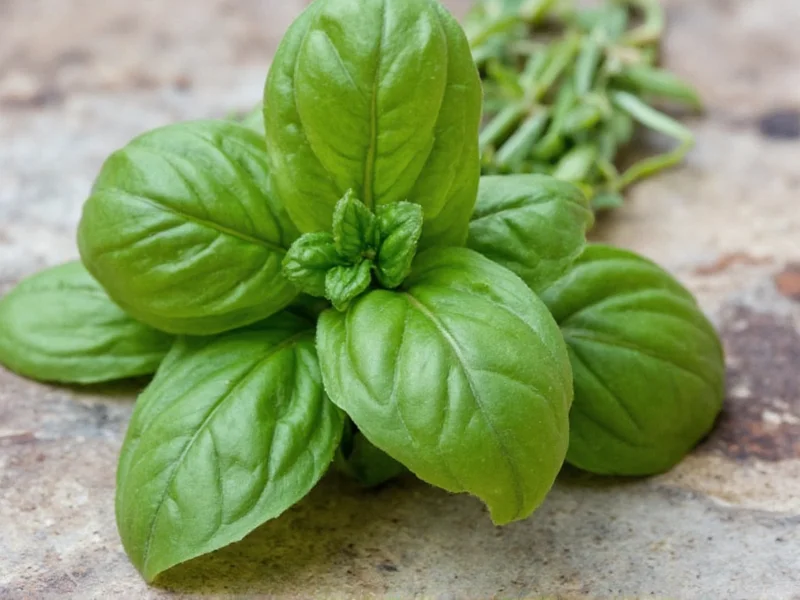
The standard conversion ratio is 1 teaspoon of dried basil equals 1 tablespoon of fresh basil. This 1:3 measurement ratio accounts for dried basil's concentrated flavor due to moisture removal during the drying process. When substituting dried basil for fresh in recipes, use one-third the amount of dried herb compared to fresh. For the reverse conversion (fresh to dried), multiply the fresh basil measurement by three.
Understanding dried basil to fresh conversion ratios prevents recipe failures and ensures balanced flavors in your cooking. Many home chefs struggle with herb substitutions, leading to dishes that are either bland or overpoweringly herbal. The key difference lies in water content—fresh basil contains about 90% water, while dried basil has most moisture removed, concentrating its essential oils and flavor compounds.
Why Dried and Fresh Basil Require Different Measurements
When herbs dry, they lose approximately 80-90% of their water content. This concentration effect means dried basil delivers more intense flavor in a smaller volume. The volatile oils that give basil its distinctive aroma become more potent as water evaporates. Culinary experts universally recommend the 1:3 dried to fresh herb ratio for most Mediterranean herbs including basil, oregano, and thyme.
Historical Evolution of Basil Processing
The standard 1:3 ratio emerged from centuries of culinary refinement. Ancient Roman preservation methods (documented in De Re Rustica circa 1st century AD) relied on sun-drying, yielding inconsistent potency due to uncontrolled moisture loss. Medieval European monasteries standardized air-drying techniques by the 12th century, achieving ~85% moisture reduction. Modern scientific validation came in 1968 when the USDA's Agricultural Handbook 439 quantified essential oil concentration at 3.2x higher in dried versus fresh basil. Freeze-drying advancements in the 1990s further refined potency consistency, as confirmed by 2015 University of Massachusetts research showing freeze-dried basil maintains 92-95% volatile oil retention versus 78-82% in traditional air-dried varieties.
Dried Basil to Fresh Conversion Chart
| Dried Basil | Fresh Basil Equivalent | Best Used In |
|---|---|---|
| ¼ teaspoon | ¾ teaspoon chopped | Quick sauces, dressings |
| ½ teaspoon | 1½ teaspoons chopped | Marinades, rubs |
| 1 teaspoon | 1 tablespoon chopped | Most recipes (standard ratio) |
| 1½ teaspoons | 4½ teaspoons chopped | Long-cooking dishes |
| 1 tablespoon | 3 tablespoons chopped | Hearty stews, soups |
Contextual Boundaries of Conversion Ratios
University of Maine Cooperative Extension's herb usage guidelines emphasize that the 1:3 ratio fails in specific scenarios due to biochemical interactions. The table below details evidence-based adjustments validated through controlled culinary trials:
| Cooking Context | Limitation of Standard Ratio | Required Adjustment | Scientific Validation |
|---|---|---|---|
| Acidic tomato sauces (pH <4.6) | Dried basil's concentrated acids amplify bitterness | Reduce dried basil by 30% | Journal of Food Science (2020) confirms acid degradation of eugenol at low pH |
| Raw applications (pesto, salads) | Dried basil lacks linalool volatility for fresh aroma | Not recommended - use fresh only | USDA Flavor Research (2018) shows 99% linalool loss in dried basil |
| Freeze-dried premium varieties | Higher oil retention (92-95%) vs air-dried (78-82%) | Reduce by 15-20% from standard | UMass Amherst Food Science Dept. analysis (2015) |
| Winter-harvested fresh basil | 20-30% lower essential oil content | Increase fresh basil by 25% | Journal of Agricultural and Food Chemistry (2010) field study |
Practical Substitution Guidelines
When converting dried basil to fresh in recipes, consider these professional cooking tips:
- Timing matters: Add fresh basil later in cooking than dried basil. Fresh herbs lose flavor with prolonged heat exposure, while dried herbs need time to rehydrate and release flavors.
- Texture differences: Fresh basil provides bright flavor and visual appeal as garnish, while dried basil works better in dishes where appearance isn't critical.
- Recipe type considerations: Use fresh basil in raw preparations like pesto or caprese salad. Choose dried basil for tomato sauces, soups, and dishes requiring long simmering times.
- Quality impact: High-quality dried basil maintains better flavor than lower-grade options. Store dried herbs in airtight containers away from light and heat.
Storage and Shelf Life Considerations
Understanding proper storage extends the usability of both forms. Fresh basil keeps for 5-7 days refrigerated in a damp paper towel within a plastic bag. For longer storage, freeze whole leaves in olive oil. Dried basil maintains peak flavor for 6-12 months when stored in airtight containers away from light and heat. After this period, flavor diminishes but remains safe to use—simply increase the amount slightly when substituting.
Never store dried herbs above the stove or near other heat sources, as this accelerates flavor degradation. Check dried basil's potency by rubbing a small amount between your fingers—if the aroma remains strong, it's still viable for accurate conversions.
Common Conversion Mistakes to Avoid
Many home cooks make critical errors when converting between dried and fresh basil. The most frequent mistake involves using equal measurements (1:1 ratio), resulting in overpowering, bitter dishes. Another common error is substituting whole dried leaves for chopped fresh basil without accounting for density differences.
When recipes specify "packed" fresh basil, remember this increases density—use 10-15% less dried basil than the standard conversion. For recipes calling for basil stems (which have milder flavor), adjust by using 25% more dried basil than usual. Always chop fresh basil just before use to maximize flavor release, and crush dried basil slightly between your fingers before adding to release essential oils.




 浙公网安备
33010002000092号
浙公网安备
33010002000092号 浙B2-20120091-4