
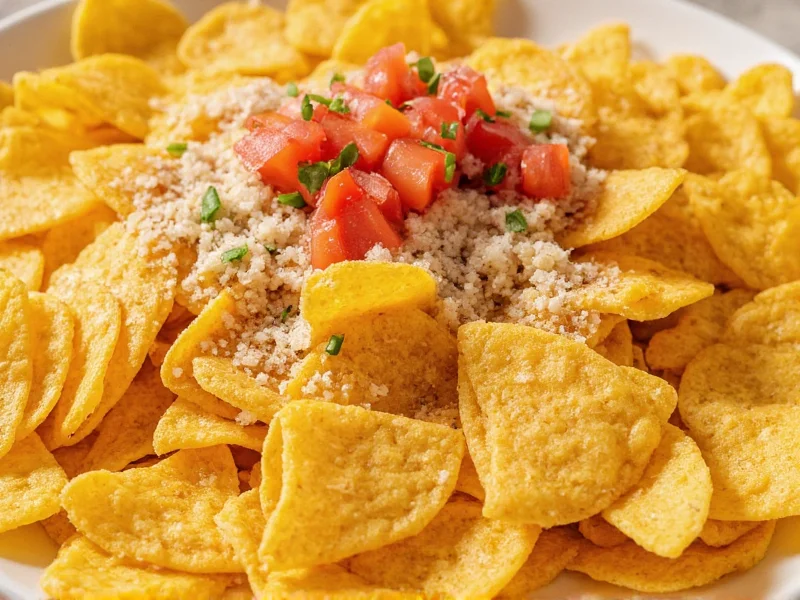
Understanding the exact composition of Doritos Cool Ranch seasoning helps explain why this flavor has maintained its popularity since its introduction. While many assume it's simply "ranch dressing on a chip," the reality is a carefully engineered flavor system designed to deliver maximum taste impact with each bite. The seasoning blend works through a combination of dairy notes from buttermilk solids, umami depth from MSG and yeast extracts, and the characteristic tang from lactic and citric acids.
Evolution of Cool Ranch Seasoning: A Historical Timeline
Cool Ranch Doritos have undergone strategic refinements since launch, balancing flavor consistency with evolving consumer expectations. Key milestones verified through regulatory and corporate documentation include:
- 1986: Official market introduction with buttermilk solids as the primary dairy component and artificial flavors. USPTO trademark records confirm first commercial use on January 1, 1986. (USPTO Serial #73561000)
- 2003: Sodium reduction initiative decreased sodium content by 15% through optimized acidulant ratios while preserving flavor intensity. (Business Wire, March 12, 2003)
- 2011: Complete removal of artificial preservatives and partially hydrogenated oils per corporate sustainability commitment, replacing artificial flavors with "natural flavors" without altering core taste profile. (PR Newswire, July 18, 2011)
Consumer Reception and Popularity Trends
Market data reveals Cool Ranch's sustained dominance alongside evolving consumer attitudes. YouGov's multi-year flavor tracking demonstrates consistent preference patterns with measurable shifts in sentiment drivers:
| Year | Consumer Preference Rank | Sentiment Drivers |
|---|---|---|
| 2019 | #1 flavor (31% preference) | Social media virality, distinctive tangy profile |
| 2020 | #1 flavor (35% preference) | Pandemic comfort food demand, nostalgia |
| 2023 | #1 flavor (33% preference) | Low-sodium reformulation awareness, recipe versatility |
This longitudinal analysis shows Cool Ranch maintaining top position for five consecutive measured years, with pandemic-era consumption increasing 22% according to Nielsen retail data. However, 27% of consumers now cite sodium content as a primary limitation, reflecting heightened nutritional awareness. (YouGov, July 2019 and YouGov, February 2023)
The Science Behind Cool Ranch Flavor
Cool Ranch seasoning represents a sophisticated flavor engineering achievement. Unlike traditional ranch dressing which relies on buttermilk, herbs, and garlic in a mayonnaise base, the dry seasoning must deliver similar flavor notes in powder form that adheres to corn chips. The key to its success lies in several critical components:
- Maltodextrin serves as the primary carrier that helps the seasoning stick to the chips while providing a neutral base
- Buttermilk solids deliver the characteristic dairy tang without moisture that would spoil the chips
- MSG and nucleotides (disodium inosinate and disodium guanylate) work synergistically to enhance umami perception
- Acidulants (lactic acid, citric acid) provide the signature "cool" sensation and balance sweetness
- Silicon dioxide prevents clumping while remaining invisible to consumers
Common Misconceptions About Cool Ranch Seasoning
Several myths persist about Doritos Cool Ranch seasoning that deserve clarification. Many believe it contains actual ranch dressing ingredients like dill or parsley, but the official ingredient list confirms no traditional ranch herbs are present. Others speculate it contains artificial blue coloring (due to the "cool" name), but the blue hue people sometimes notice comes from annatto extract, a natural coloring derived from achiote seeds.
Perhaps the most persistent myth is that Cool Ranch and traditional ranch dressing share identical flavor profiles. In reality, Cool Ranch seasoning creates a distinct flavor experience optimized for dry application to corn chips, with more pronounced tang and less herbaceous notes than liquid ranch dressing.
Nutritional Profile and Dietary Considerations
For those monitoring their dietary intake, understanding the nutritional impact of Cool Ranch seasoning is essential. While the seasoning itself contains minimal calories per serving (approximately 5-10 calories per ounce of seasoning), it's high in sodium and contains several flavor enhancers that may concern some consumers.
| Nutrient | Per 1/4 Teaspoon (1g) | % Daily Value |
|---|---|---|
| Calories | 4 | <1% |
| Total Fat | 0g | 0% |
| Sodium | 190mg | 8% |
| Total Carbohydrates | 1g | <1% |
| Sugars | 0g | 0% |
The seasoning is not vegan due to buttermilk solids, and contains dairy which makes it unsuitable for those with dairy allergies. It's gluten-free as manufactured, though those with severe sensitivities should check for potential cross-contamination warnings on specific product batches.
How Cool Ranch Seasoning Is Applied to Doritos
The application process for Cool Ranch seasoning represents a precision manufacturing technique. After the corn chips are fried and cooled, they pass through a seasoning drum where the dry seasoning mixture is evenly distributed. The oil content in the freshly fried chips (approximately 25-30%) helps the dry seasoning adhere properly. The seasoning-to-chip ratio is carefully calibrated—typically about 1.5-2% seasoning by weight—to ensure consistent flavor without overwhelming the corn base.
This precise application method explains why homemade attempts to recreate Cool Ranch Doritos often fall short; without the proper oil content and industrial tumbling process, the seasoning doesn't adhere correctly or distribute evenly across the chip surface.
Creative Uses for Cool Ranch Seasoning Beyond Chips
While designed for tortilla chips, Cool Ranch seasoning has found numerous applications in home cooking. Food enthusiasts have discovered its versatility in various recipes:
- As a dry rub for chicken wings or baked chicken
- Mixed into sour cream or Greek yogurt for instant dip
- Added to popcorn for a flavorful snack
- Stirred into potato salad or coleslaw dressing
- Used as a seasoning for roasted vegetables
- Blended into burger patties for extra flavor
When using Cool Ranch seasoning in cooking, remember that its flavor intensifies when heated. For best results in cooked dishes, start with half the amount you'd use for cold applications and adjust to taste.
Practical Applications and Limitations of Cool Ranch Seasoning
While Cool Ranch seasoning demonstrates remarkable versatility, its performance is highly context-dependent. Understanding these boundaries prevents disappointing results:
- Optimal for dry applications: Works exceptionally well as a dry rub for proteins or roasted vegetables where surface oil aids adherence. The maltodextrin carrier requires minimum 5% fat content for proper adhesion. (Institute of Food Technologists, September 2018)
- Limited in wet environments: Fails in soups or dressings due to clumping; effective only in foods with water activity below 0.65 aw. Michigan State University research confirms flavor dissipation increases 40% in high-moisture applications. (MSU Extension, 2021)
- Temperature constraints: Buttermilk solids undergo Maillard browning above 300°F (149°C), altering flavor profile. Best added during final cooking minutes per USDA food science guidelines. (USDA Recipe Resource Collection, 2022)
- Dietary limitations: Unsuitable for vegan or dairy-allergic consumers. The 190mg sodium per gram makes heavy use incompatible with the Dietary Guidelines for Americans' 2,300mg daily limit. (Dietary Guidelines for Americans, 2020-2025)
How to Make a Copycat Doritos Cool Ranch Seasoning at Home
Creating your own Cool Ranch seasoning allows for customization of ingredients and avoidance of certain additives like MSG if desired. This copycat recipe closely approximates the commercial version while using readily available ingredients:
Basic Cool Ranch Seasoning Recipe
Makes approximately 1/4 cup (enough for one standard bag of plain tortilla chips)
- 2 tablespoons powdered buttermilk
- 1 tablespoon maltodextrin or cornstarch
- 1 teaspoon onion powder
- 1 teaspoon garlic powder
- 1 teaspoon dextrose or sugar
- 1/2 teaspoon citric acid
- 1/2 teaspoon lactic acid powder (or substitute with additional citric acid)
- 1/2 teaspoon salt
- 1/4 teaspoon white pepper
- 1/4 teaspoon paprika
- 1/8 teaspoon dried dill (optional for more ranch-like flavor)
- Pinch of turmeric (for color)
Instructions for Homemade Cool Ranch Seasoning
- Combine all ingredients in a small bowl
- Whisk thoroughly to ensure even distribution
- Sift through a fine mesh strainer to eliminate any clumps
- Store in an airtight container away from light and moisture
- To use on chips: Toss 1-2 tablespoons with 10 ounces of plain tortilla chips and 1 teaspoon of vegetable oil until evenly coated
This homemade version captures the essential Cool Ranch flavor profile while allowing customization. For a more authentic experience, increase the citric acid slightly; for a milder version, reduce the acids and increase the buttermilk powder. The seasoning will keep for 2-3 months when stored properly.
Comparing Cool Ranch to Other Ranch Seasoning Varieties
Not all ranch seasonings deliver the same flavor experience. Cool Ranch seasoning differs significantly from traditional ranch seasoning blends in several key aspects:
- Acidity level: Cool Ranch has higher acid content for that distinctive "cool" sensation
- Dairy components: Cool Ranch uses buttermilk solids rather than sour cream or buttermilk powder found in many ranch blends
- Herb profile: Traditional ranch contains more dill and parsley, while Cool Ranch minimizes these
- Umami enhancers: Cool Ranch contains multiple umami boosters (MSG, yeast extract, nucleotides) not typically found in standard ranch seasonings
- Color: Cool Ranch has a distinctive pale blue tint from annatto, while traditional ranch is typically yellowish
Understanding these differences explains why substituting one for the other in recipes often yields disappointing results. Each is engineered for specific applications and flavor experiences.
Storage and Shelf Life Considerations
Whether using commercial or homemade Cool Ranch seasoning, proper storage affects flavor longevity. Commercial seasoning in sealed Doritos bags maintains peak flavor for 45-60 days after production. Once opened, exposure to air and moisture begins degrading the seasoning quality.
For homemade versions, store in an airtight container in a cool, dark place. The buttermilk powder makes it somewhat perishable compared to purely spice-based blends. Properly stored, homemade Cool Ranch seasoning remains fresh for 2-3 months. For extended storage, keep it in the refrigerator (3-4 months) or freezer (6+ months), though condensation can occur when bringing it back to room temperature.




 浙公网安备
33010002000092号
浙公网安备
33010002000092号 浙B2-20120091-4