
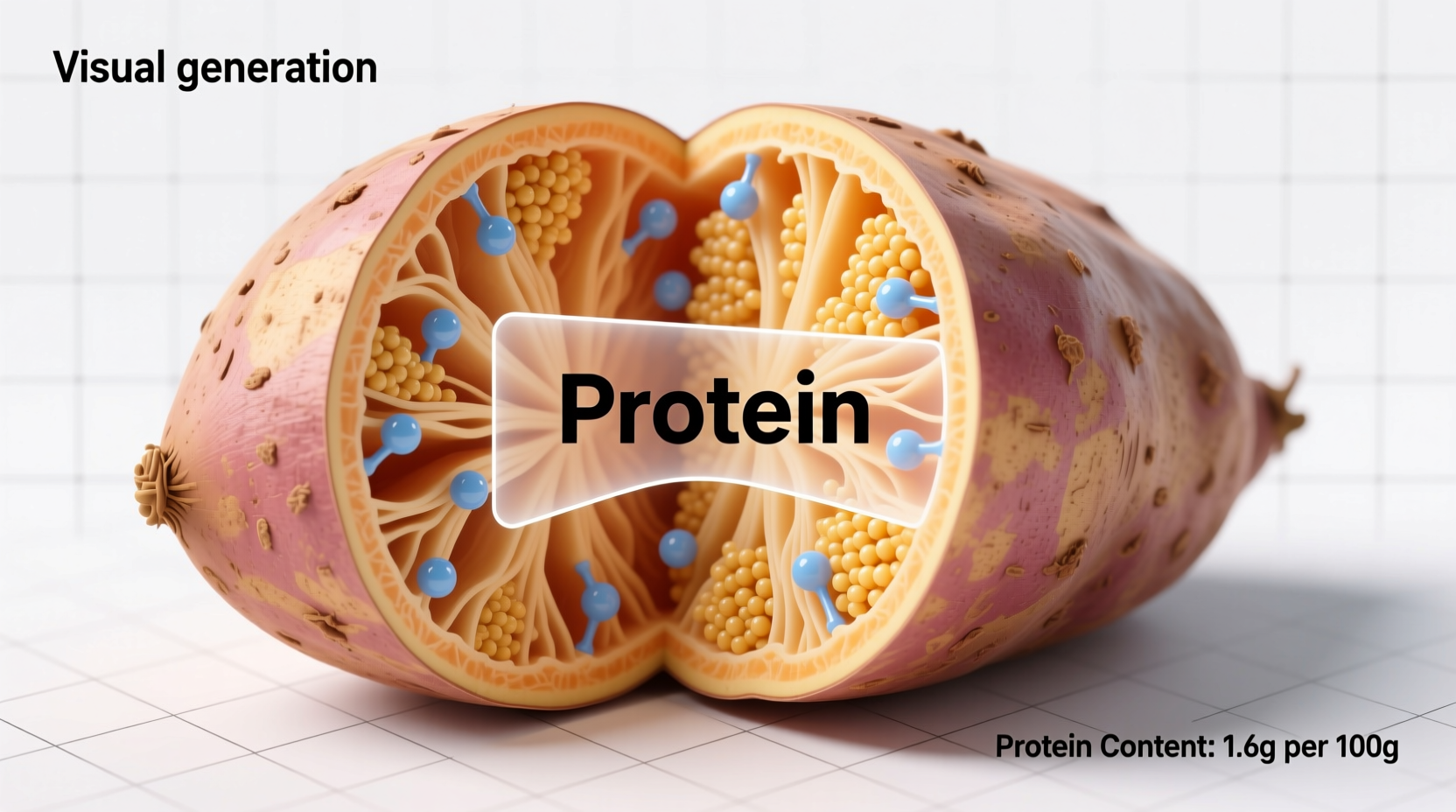
When you're evaluating plant-based protein sources, understanding the nutritional profile of common foods like sweet potatoes becomes essential. This article provides evidence-based insights into sweet potato protein content, how it compares to other foods, and practical ways to incorporate it into balanced meals.
Protein Content in Sweet Potatoes: What the Data Shows
According to the USDA FoodData Central database, a medium cooked sweet potato (130g without skin) contains 1.56 grams of protein. While this may seem modest compared to animal proteins, it's significant for a vegetable and contributes meaningfully to daily requirements when combined with other plant foods.
| Serving Size | Protein Content | Calories |
|---|---|---|
| 100g raw sweet potato | 1.57g | 86 kcal |
| Medium (130g) cooked | 1.56g | 112 kcal |
| 1 cup mashed (200g) | 3.04g | 249 kcal |
This nutritional data from the USDA FoodData Central demonstrates that sweet potatoes provide a modest but valuable protein contribution alongside their well-known vitamin A and fiber content.
How Sweet Potato Protein Fits Into Your Daily Needs
The Dietary Guidelines for Americans recommend adults consume 0.8 grams of protein per kilogram of body weight daily. For a 150-pound (68kg) person, that's approximately 54 grams of protein daily.
While sweet potatoes alone won't meet your protein requirements, they contribute meaningfully when incorporated into balanced meals. Consider this practical context:
- A medium sweet potato provides about 3% of daily protein needs for an average adult
- When paired with protein-rich foods like beans or nuts, sweet potatoes become part of complete protein meals
- Their protein comes packaged with complex carbohydrates that provide sustained energy

Maximizing Protein Benefits from Sweet Potatoes
Sweet potatoes contain incomplete protein (lacking some essential amino acids), but strategic pairing creates complete protein profiles. Here's how to optimize:
Smart Pairing Combinations
Combine sweet potatoes with complementary protein sources to create complete amino acid profiles:
- Sweet potato + black beans: Creates a complete protein while adding fiber and iron
- Sweet potato + quinoa: Provides all nine essential amino acids plus additional nutrients
- Sweet potato + pumpkin seeds: Adds healthy fats and zinc to the protein package
Cooking Methods That Preserve Nutrients
How you prepare sweet potatoes affects their nutritional value:
- Steaming or boiling: Preserves more water-soluble nutrients than baking
- Microwaving: Retains up to 90% of protein content with minimal nutrient loss
- Avoid deep-frying: Adds unnecessary calories while not enhancing protein value
Sweet Potatoes vs. Other Protein Sources: A Practical Comparison
Understanding where sweet potatoes fit in the protein landscape helps make informed dietary choices. This comparison shows how sweet potatoes stack up against common foods:
| Food Source | Protein (per 100g) | Complete Protein? | Additional Benefits |
|---|---|---|---|
| Sweet potato | 1.57g | No | High in vitamin A, fiber, complex carbs |
| Chicken breast | 31g | Yes | Rich in B vitamins, selenium |
| Black beans | 8.9g | No | High fiber, iron, folate |
| Quinoa | 4.4g | Yes | Complete protein, magnesium, iron |
This comparison from the National Institutes of Health research on plant proteins illustrates that while sweet potatoes aren't protein powerhouses, they offer valuable nutritional synergy when combined with other foods.
When Sweet Potatoes Shine as Part of Protein Nutrition
Sweet potatoes serve specific nutritional purposes that make them valuable beyond their protein content:
- For active individuals: The carbohydrate-protein combination supports muscle recovery
- In plant-based diets: Contributes to overall protein intake when combined strategically
- For digestive health: Fiber content aids protein absorption and gut health
- For sustained energy: Complex carbs paired with protein prevent blood sugar spikes
Nutritionists from the Academy of Nutrition and Dietetics note that sweet potatoes' real value lies in their nutrient density—they deliver multiple essential nutrients in a single package, making them valuable components of balanced eating patterns.
Practical Ways to Include Sweet Potatoes in Protein-Focused Meals
Here are three simple, protein-boosting sweet potato meal ideas you can prepare in under 30 minutes:
- Sweet Potato & Black Bean Bowl: Roast cubed sweet potatoes, mix with cooked black beans, avocado, and pumpkin seeds for a complete protein meal with 15g protein per serving
- Sweet Potato Breakfast Hash: Sauté sweet potatoes with onions, bell peppers, and top with a fried egg for 12g protein
- Protein-Packed Sweet Potato Toast: Top toasted sweet potato slices with almond butter and chia seeds for a 10g protein snack
These recipes demonstrate how sweet potatoes can be integrated into meals that deliver substantial protein while providing additional nutritional benefits.
Frequently Asked Questions
How much protein is in a medium sweet potato?
A medium cooked sweet potato (approximately 130g) contains about 1.56 grams of protein. While not high in protein compared to animal sources, this contributes meaningfully to daily protein needs when combined with other plant-based proteins.
Are sweet potatoes a complete protein?
No, sweet potatoes are not a complete protein as they lack sufficient amounts of certain essential amino acids. However, when paired with complementary protein sources like beans, nuts, or seeds, they form complete protein profiles that provide all nine essential amino acids.
Can sweet potatoes help with muscle building?
Sweet potatoes alone don't provide enough protein for significant muscle building, but they support the process by delivering complex carbohydrates that fuel workouts and aid recovery. When combined with adequate protein sources, sweet potatoes contribute to optimal muscle-building nutrition through their carbohydrate-protein synergy.
How does sweet potato protein compare to white potato protein?
Sweet potatoes and white potatoes have similar protein content (about 1.5-2g per medium potato), but sweet potatoes offer additional nutritional advantages including higher vitamin A, fiber, and antioxidant content. Both can be part of balanced protein-focused meals when paired with complementary protein sources.
Do sweet potatoes lose protein when cooked?
Cooking methods affect protein retention differently. Boiling or steaming preserves more protein than baking, with microwaving retaining up to 90% of protein content. The key is avoiding deep-frying, which adds unnecessary calories without enhancing protein value. Proper cooking maintains sweet potatoes' nutritional benefits while making them more digestible.




 浙公网安备
33010002000092号
浙公网安备
33010002000092号 浙B2-20120091-4