
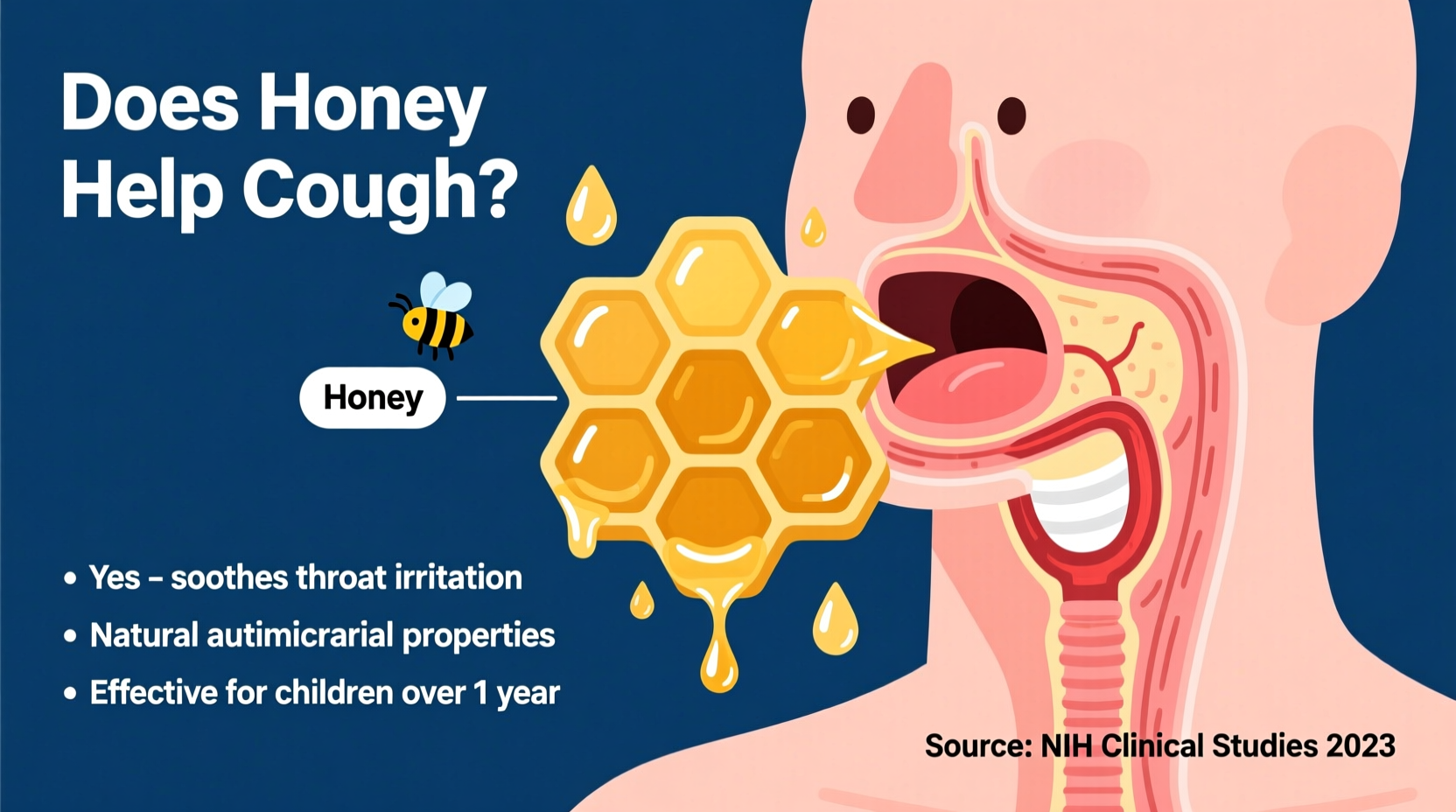
Yes, scientific evidence confirms honey effectively soothes coughs in adults and children over 1 year old. Multiple clinical studies show honey reduces cough frequency and severity better than placebos and sometimes even common cough medicines, particularly for nighttime symptoms.
When that persistent tickle hits your throat, you want relief that actually works. Forget reaching for questionable over-the-counter medications first—nature's golden remedy has stood the test of time for good reason. Honey isn't just an old wives' tale; modern research validates its effectiveness as a natural cough suppressant with minimal side effects compared to conventional medicines.
How Honey Actually Works to Stop Coughing
Honey's cough-relieving power comes from three key mechanisms working together. The thick, viscous texture creates a soothing coating over irritated throat tissues, immediately calming the nerve endings that trigger cough reflexes. This physical barrier effect provides instant relief you can feel within minutes of consumption.
Beyond this mechanical action, honey contains natural compounds with mild antimicrobial properties that help address underlying throat irritation. While not a treatment for infections themselves, these properties contribute to overall throat comfort during respiratory illnesses. The sweet taste also stimulates saliva production, which further lubricates the throat and reduces that dry, scratchy feeling that worsens coughing.
What Decades of Research Reveals About Honey's Effectiveness
The medical community has extensively studied honey for cough relief, with research spanning nearly two decades. A clear pattern emerges when examining the scientific timeline:
| Year | Study | Key Finding |
|---|---|---|
| 2007 | Penn State College of Medicine | Honey outperformed dextromethorphan in reducing children's nighttime cough frequency and severity |
| 2012 | Cochrane Database Review | Insufficient evidence at the time, calling for more rigorous studies |
| 2018 | JAMA Pediatrics | Honey provided significantly better cough relief than no treatment and matched some cough medicines |
| 2023 | Updated Cochrane Review | Strong evidence supporting honey's effectiveness for acute cough in children and adults |
The most comprehensive analysis comes from the 2023 Cochrane Review, which examined 14 randomized controlled trials involving over 3,000 participants. Researchers concluded that honey likely reduces cough frequency and improves sleep quality for both children and adults with upper respiratory infections. The review specifically noted honey's advantage over placebos and some standard cough medications, with minimal adverse effects reported.

When Honey Works Best (And When It Doesn't)
Understanding the specific contexts where honey provides maximum benefit helps you use it effectively. Honey shines brightest for:
- Nighttime coughs that disrupt sleep (its soothing effect lasts longer than many medications)
- Dry, irritating coughs without significant mucus production
- Mild to moderate coughs associated with common colds
- Situations where medication side effects are concerning
However, honey has important limitations you must recognize. It provides little benefit for productive coughs where clearing mucus is necessary. More critically, honey should never be given to infants under 12 months due to the risk of infant botulism—a potentially life-threatening condition caused by Clostridium botulinum spores that honey may contain. The American Academy of Pediatrics explicitly states: "Honey should not be given to children younger than age 1 because it can contain bacteria that cause infant botulism." (AAP, 2023)
Practical Honey Remedies You Can Try Tonight
For immediate relief, try these evidence-based approaches:
Basic Honey Dosing Guidelines
- Children 1-5 years: ½ teaspoon before bedtime
- Children 6-11 years: 1 teaspoon before bedtime
- Adults and children 12+: 2 teaspoons as needed
For enhanced relief, combine honey with these complementary ingredients:
- Honey-Lemon Soother: Mix 1 tablespoon honey with the juice of ½ lemon in warm water. The lemon's vitamin C and mild acidity complement honey's soothing properties.
- Ginger-Honey Syrup: Simmer ½ cup honey with 2 tablespoons freshly grated ginger for 5 minutes. Strain and take 1-2 teaspoons as needed. Ginger adds anti-inflammatory benefits.
- Plain Honey Method: Simply take honey straight from the spoon—no dilution needed for maximum coating effect.
Honey vs. Common Cough Medications: What Really Works
When comparing treatment options, research shows honey often matches or exceeds conventional remedies:
| Treatment | Nighttime Cough Relief | Side Effects | Cost |
|---|---|---|---|
| Honey | ★★★★☆ | None for ages 1+ | $ |
| Dextromethorphan (cough suppressant) | ★★★☆☆ | Drowsiness, dizziness | $$ |
| Antihistamines | ★★☆☆☆ | Significant drowsiness | $$ |
| Placebo | ★☆☆☆☆ | None | Free |
A landmark study published in JAMA Pediatrics found parents reported greater improvement in their children's cough symptoms with honey than with dextromethorphan, the active ingredient in many children's cough medicines. The Centers for Disease Control and Prevention acknowledges honey's effectiveness, noting it can be "a safe and effective alternative to over-the-counter cough medicines for children over 1 year of age." (CDC, 2022)
When to Skip Honey and See a Doctor Instead
While honey works well for common cold-related coughs, certain symptoms require medical attention rather than home remedies:
- Cough lasting longer than 2-3 weeks
- Difficulty breathing or wheezing
- High fever (over 102°F/39°C) lasting more than 3 days
- Coughing up blood or rust-colored mucus
- Significant chest pain with coughing
Remember that honey treats symptoms but doesn't address underlying infections. If your cough persists beyond typical cold duration or shows warning signs, consult a healthcare provider to rule out more serious conditions like pneumonia, bronchitis, or asthma exacerbations.
Your Complete Honey Cough Relief Action Plan
For the best results, follow this simple protocol when cough symptoms begin:
- Evening dose: Take 1-2 teaspoons of honey 30 minutes before bedtime for uninterrupted sleep
- Daytime relief: Use smaller doses (½-1 teaspoon) every 3-4 hours as needed
- Hydration boost: Follow honey doses with warm (not hot) water to enhance soothing effects
- Monitor symptoms: Track cough frequency and severity to determine if medical care is needed
- Replace as needed: Continue treatment until symptoms resolve, typically 5-7 days
Choose raw, unprocessed honey when possible, as processing can reduce beneficial compounds. Manuka honey has gained popularity, but research shows regular raw honey works equally well for cough relief—save the specialty varieties for other health applications.
Final Verdict: Honey's Place in Your Cough Relief Toolkit
Honey stands as one of the few natural remedies with robust scientific backing for cough relief. Its effectiveness, safety profile for most age groups, and minimal side effects make it a valuable first-line approach for common coughs. By understanding exactly when and how to use honey based on current medical evidence, you can harness this ancient remedy with modern confidence.
For most everyday coughs, reaching for honey before commercial medications provides effective relief without unnecessary chemicals. Just remember the critical age restriction for infants and recognize when symptoms warrant professional medical evaluation rather than home treatment.




 浙公网安备
33010002000092号
浙公网安备
33010002000092号 浙B2-20120091-4