
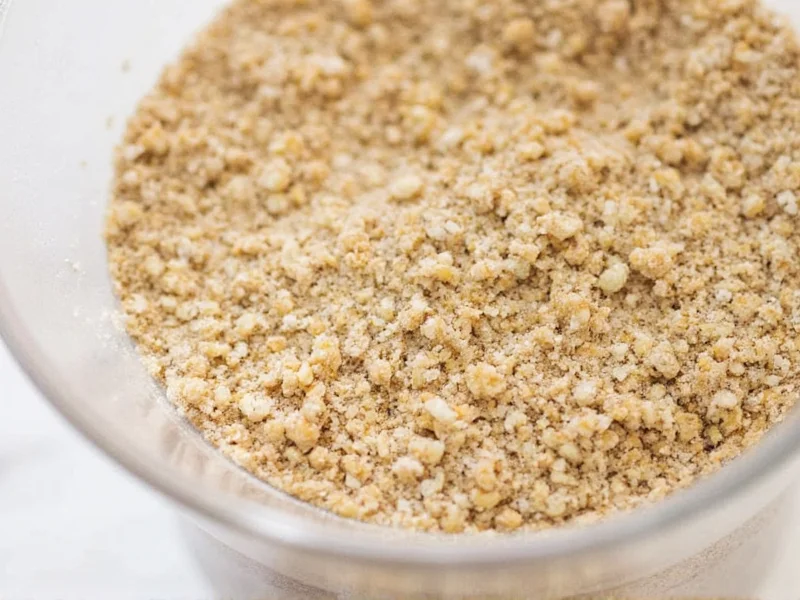
Garlic Powder Is Salt-Free—Unless You’re Holding the Wrong Container
In most homes, the confusion starts at the pantry shelf: a jar labeled "garlic powder" sits beside one labeled "garlic salt," and over time, the distinction blurs. People taste garlic powder in a finished dish that’s salty—and conclude the powder must contain salt. But the real cause is rarely the powder itself. It’s usually cross-contamination: the same shaker used for garlic salt gets reused for plain garlic powder, or the spice rack holds both side by side and fine particles drift during storage. The consequence isn’t just inaccurate seasoning—it’s inconsistent results across meals, especially when cooking for kids or people managing sodium intake. A parent reheating soup may add ‘just garlic powder’ to boost flavor, only to find the broth suddenly sharp and saline—not from the powder, but from residual salt clinging to the spoon or grinder.
The salt question matters only when you’re actively controlling sodium—not as a general rule about the ingredient. In dishes where salt is added separately and precisely (like a brine, a vinaigrette, or a low-sodium marinade), the absence of salt in garlic powder is functionally irrelevant. What matters is whether you’ve verified the label *that day*, not whether you remember what the brand used last year. If your recipe already calls for measured salt, and you’re using garlic powder purely for aromatic depth—not bulk seasoning—then its salt content changes nothing. This boundary collapses only when garlic powder replaces salt entirely, as in quick rubs or no-measure ‘shake-and-go’ cooking. There, even trace sodium—or the habit of assuming it’s present—alters outcomes.
Two common fixations are actively unhelpful. First: checking whether the ingredient list says ‘sodium chloride.’ That’s useful only if you’re reading the *right* label—yet most people glance at the front (“Garlic Powder”) and skip the back panel, especially with older jars or generic store brands. Second: comparing price per ounce between ‘plain’ and ‘salted’ versions. Cost differences reflect packaging, sourcing, and marketing—not sodium content. A $2.99 jar isn’t safer than a $1.49 one; it’s just branded differently. Neither tells you whether the contents match the label. Both distractions shift attention away from the one thing that reliably indicates salt: the full ingredients statement, read fresh each time you open a new container.
The real constraint isn’t labeling ambiguity—it’s how long garlic powder stays usable in home conditions. Over time, exposure to light, humidity, and repeated opening degrades volatile compounds, making the powder less pungent. To compensate, cooks often add more—sometimes doubling the amount they’d use fresh. When that happens *alongside* undetected salt contamination (from shared scoops or dusty shelves), the sodium load creeps up without intention. This isn’t about regulation or lab testing. It’s about physical reality: a 6-month-old jar in a warm, humid kitchen loses aromatic potency, prompting heavier use—and amplifying any latent salt presence, intentional or not.
Here’s where judgment shifts: in a weeknight stir-fry where soy sauce and fish sauce already supply sodium, garlic powder’s salt status doesn’t matter—you’ll add salt separately only if needed, and the powder serves aroma alone. In a low-sodium lentil soup for someone on hypertension meds, even ‘unsalted’ garlic powder demands verification—not because it’s likely salted, but because mislabeling *does* occur in private-label lines, and one wrong jar invalidates the whole effort. And in a child’s lunchbox muffin recipe relying on garlic powder for savory depth? Salt-free matters only if the child has a documented restriction; otherwise, the risk isn’t sodium—it’s blandness from under-seasoning due to overcaution.
Forget memorizing brands or scanning for ‘no salt added’ seals. The faster, more reliable filter is this: if the ingredient list contains *only* ‘dehydrated garlic,’ it’s salt-free. Full stop. No exceptions in mainstream retail channels. If it lists anything else—even ‘anti-caking agent’ or ‘silicon dioxide’—that doesn’t imply salt, but it *does* signal the product isn’t pure garlic. So prioritize brevity of ingredients over marketing claims. In a home kitchen, purity is signaled by minimalism—not certifications, not price, not color intensity.
| What people fixate on | What it affects | When it matters | When it doesn't |
|---|---|---|---|
| Front-of-jar wording like “seasoned” or “premium” | Assumption of added ingredients | When buying private-label or bulk-bin products with inconsistent labeling | In major national brands sold in sealed, labeled jars |
| Color or grain size of the powder | Perceived strength or purity | When substituting for fresh garlic in sensitive applications (e.g., baby food) | For general savory depth in soups, stews, or roasted vegetables |
| Price difference between jars | Assumed quality or formulation | When budget forces reliance on store brands with variable oversight | When using any nationally distributed brand with consistent labeling history |
| Whether the jar has a salt shaker top | Actual sodium content | When the same container was previously used for garlic salt | When the jar is newly opened and unused |
Quick verdicts for home cooks
- If your recipe already includes measured salt, garlic powder’s salt content won’t change sodium levels—focus instead on freshness and dose.
- When cooking for someone on a strict low-sodium diet, verify the ingredient list—not the front label—every time you open a new jar.
- If you keep garlic salt and garlic powder in the same drawer, assume cross-contamination and use separate spoons—regardless of what the labels say.
- Older garlic powder loses potency, so you’ll use more—making any trace salt more consequential than it would be in a fresh jar.
- Store-brand garlic powder is no more likely to contain salt than name-brand—what varies is label clarity, not formulation.
- Using garlic powder in baking (e.g., savory scones) makes salt content relevant only if the recipe is explicitly low-sodium—not because garlic powder is risky, but because margins are tighter.
Frequently asked questions
Why do people think garlic powder contains salt?
Because it’s often stored next to garlic salt, used with the same utensils, and added to dishes that already contain salt—creating a false association between flavor impact and sodium source.
Is it actually necessary to check the ingredient list every time?
Yes—if you rely on garlic powder for sodium control. Front labels don’t guarantee composition; only the full ingredients statement does—and formulations can change without notice.
What happens if you ignore the salt question entirely?
In most weekday cooking, nothing. But in medically restricted diets or precise applications like infant meals, unverified assumptions introduce avoidable risk—not from the powder itself, but from how it’s handled in your kitchen.




 浙公网安备
33010002000092号
 浙B2-20120091-4