
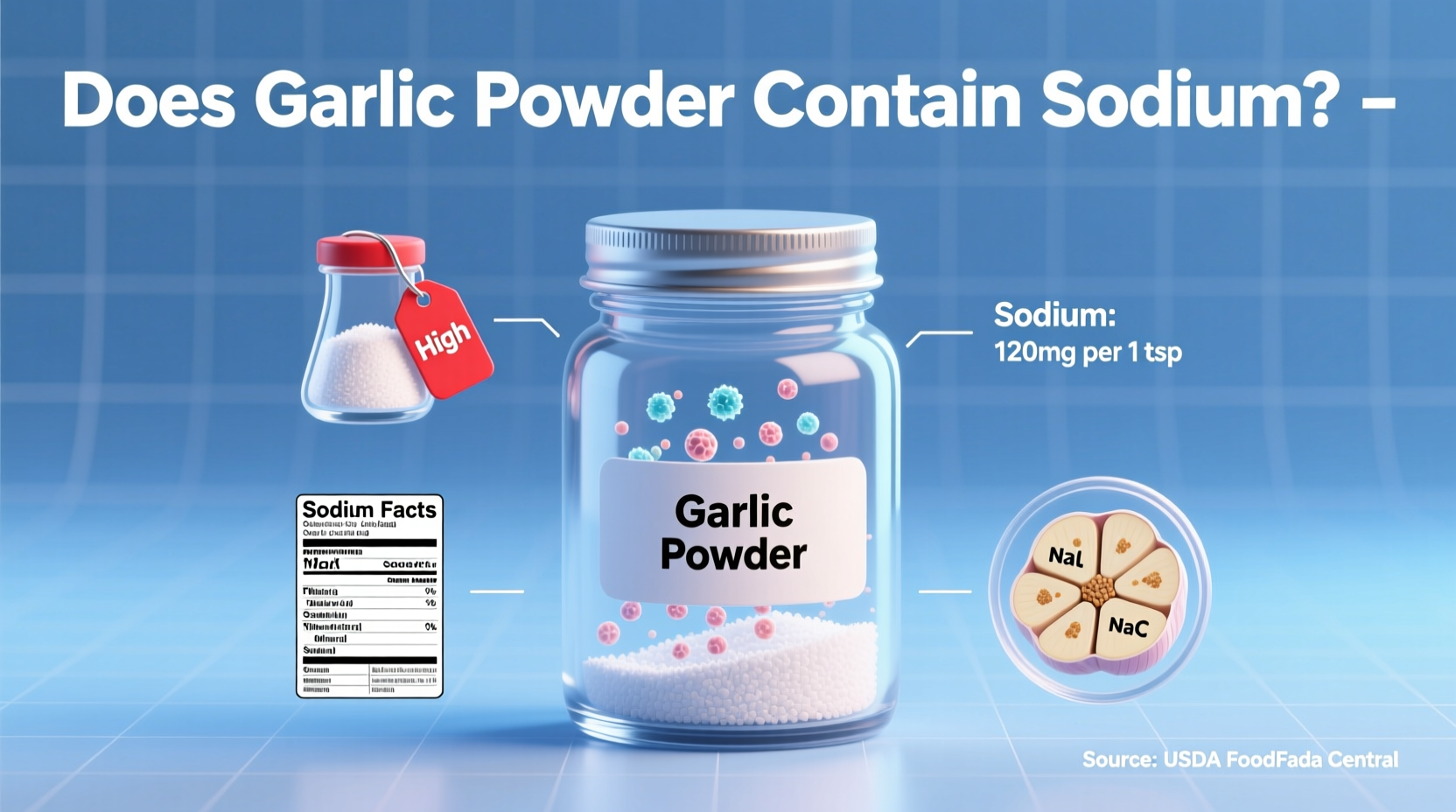
Understanding the sodium content in your spice cabinet is crucial for maintaining a heart-healthy diet. Whether you're managing hypertension, following a low-sodium regimen, or simply making more informed cooking choices, knowing exactly what's in your garlic powder can significantly impact your daily sodium intake.
What You Need to Know About Garlic Powder and Sodium
Garlic powder itself contains naturally occurring sodium, but the amounts are negligible for most dietary purposes. The real concern comes from added sodium in commercial products. When manufacturers process fresh garlic into powder, they often include salt as a preservative and anti-caking agent to prevent clumping.
Breaking Down the Numbers: Pure vs. Commercial Garlic Powder
Let's examine the actual sodium content you'll encounter in different garlic powder products. The USDA FoodData Central provides authoritative nutritional information that helps us understand these differences.
| Product Type | Serving Size | Natural Sodium | Total Sodium (with additives) | Percentage of Daily Value* |
|---|---|---|---|---|
| Pure garlic powder (no additives) | 1 teaspoon (3g) | 5-10mg | 5-10mg | <1% |
| Standard commercial garlic powder | 1 teaspoon (3g) | 5-10mg | 150-300mg | 6-13% |
| "No salt added" garlic powder | 1 teaspoon (3g) | 5-10mg | 5-10mg | <1% |
| Garlic salt (for comparison) | 1/4 teaspoon | N/A | 480mg | 21% |
*Based on 2,300mg daily sodium recommendation from the American Heart Association
How Processing Affects Sodium Content
The evolution of garlic powder production reveals why sodium content varies. Originally, garlic powder was simply dehydrated garlic with no additives. As commercial production scaled in the mid-20th century, manufacturers began adding salt (typically 2-3%) to prevent moisture absorption and clumping during storage. This practice continues today, though health-conscious consumers have prompted many brands to offer "no salt added" alternatives.
Reading Labels Like a Pro: Finding Low-Sodium Options
When shopping for garlic powder, follow these practical steps to ensure you're getting a low-sodium product:
- Check the ingredients list - Pure garlic powder should contain only "garlic"
- Look for specific labeling - "No salt added," "sodium-free," or "unsalted"
- Examine the nutrition facts - Compare milligrams of sodium per serving
- Beware of "garlic salt" - This is a 1:1 or 3:1 blend of garlic powder and salt
- Consider organic options - Many organic brands avoid added salt
When Sodium Content Really Matters: Context Boundaries
For most healthy adults, the small amount of sodium in standard garlic powder won't significantly impact daily intake. However, certain situations require more careful attention:
- Heart health management - Those with hypertension or heart conditions following a 1,500-2,000mg sodium diet
- Kidney disease patients - Often restricted to 1,500mg or less sodium daily
- Processed food consumers - When combined with other sodium-containing packaged foods
- Home cooking enthusiasts - When making large batches of sauces or rubs where small amounts accumulate
According to the American Heart Association's 2023 dietary guidelines, processed seasonings contribute significantly to hidden sodium in the average American diet, accounting for approximately 12% of daily sodium intake for frequent users of packaged seasonings.
Practical Solutions for Sodium-Conscious Cooking
Don't sacrifice flavor for health. Here are actionable strategies to maintain delicious cooking while managing sodium:
- Make your own garlic powder - Dehydrate fresh garlic cloves and grind them in a spice grinder
- Choose wisely at the store - Brands like Frontier Co-op and Simply Organic offer certified no-salt-added options
- Adjust measurements - When using standard garlic powder, reduce by 25% if watching sodium
- Create blends - Mix pure garlic powder with other sodium-free spices like onion powder or dried herbs
- Use fresh alternatives - Minced garlic or garlic-infused oils provide flavor without sodium concerns
Common Questions About Garlic Powder and Sodium
Many home cooks have specific concerns about incorporating garlic powder into their low-sodium diets. Here's what you need to know:
Does pure garlic powder naturally contain sodium?
Yes, garlic naturally contains small amounts of sodium (about 5-10mg per teaspoon of powder), but this is negligible for dietary purposes. The primary sodium concern comes from added salt in commercial products, not the garlic itself.
How can I identify garlic powder without added sodium?
Check the ingredients list for only "garlic" without salt or sodium compounds. Look for "no salt added," "sodium-free," or "unsalted" on the label. The nutrition facts should show 5-10mg of sodium per serving (about 1 teaspoon), matching garlic's natural content.
Is garlic powder healthier than garlic salt?
Yes, significantly. Garlic powder typically contains 150-300mg sodium per teaspoon, while garlic salt contains about 480mg per 1/4 teaspoon (since it's half salt). For low-sodium diets, pure garlic powder or "no salt added" versions are much better choices than garlic salt.
Can I make my own low-sodium garlic powder at home?
Absolutely. Slice fresh garlic cloves thinly, dehydrate at 135°F (57°C) for 8-10 hours until completely dry, then grind in a spice grinder or mortar and pestle. Store in an airtight container away from light. This homemade version contains only garlic's natural trace sodium.
How much sodium am I saving by choosing no-salt-added garlic powder?
By choosing no-salt-added garlic powder instead of standard versions, you save approximately 145-295mg of sodium per teaspoon. If you use one teaspoon daily, that's 53,000-108,000mg less sodium annually—equivalent to avoiding 13-27 teaspoons of table salt over the year.




 浙公网安备
33010002000092号
浙公网安备
33010002000092号 浙B2-20120091-4