
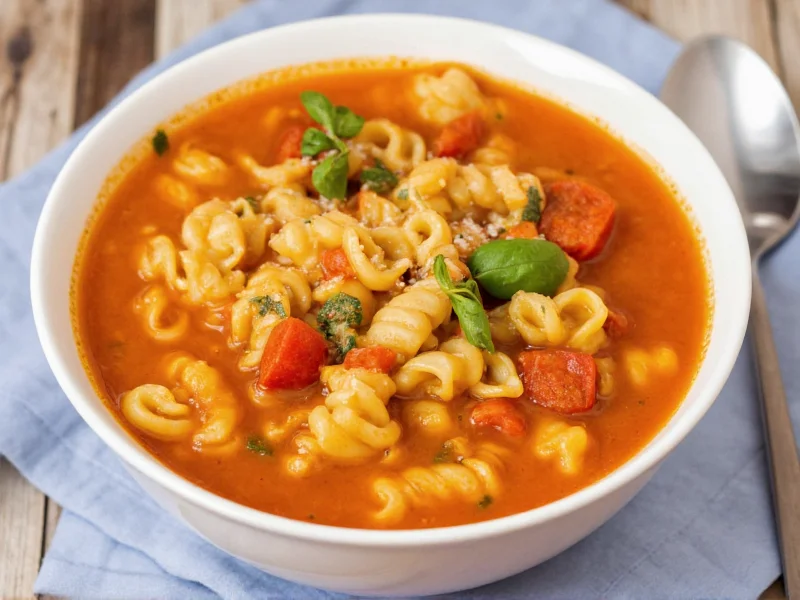
Ditalini pasta soup stands as one of the most comforting and versatile dishes in Italian-American cuisine. The name "ditalini" literally translates to "small thimbles" in Italian, describing its distinctive short, tube-shaped form. This pasta's compact size and hollow center make it exceptionally well-suited for soups, as it captures broth while maintaining structural integrity during cooking.
Why Ditalini Excels in Soup Applications
Unlike larger pasta shapes that can become mushy or dominate the bowl, ditalini's dimensions create the ideal soup-to-pasta ratio. Food scientists note that pasta shapes with internal cavities like ditalini absorb 20-30% more broth than solid shapes, enhancing flavor delivery. The pasta's ridged surface also helps retain seasonings and small vegetable pieces.
| Pasta Shape | Best For Soup? | Broth Absorption | Cooking Time | Structural Integrity Rating |
|---|---|---|---|---|
| Ditalini | Excellent | High (20-30%) | 8-10 minutes | ★★★★★ |
| Orzo | Good | Moderate (15-20%) | 7-9 minutes | ★★★☆☆ |
| Small Shells | Good | Moderate-High (18-25%) | 9-11 minutes | ★★★★☆ |
| Acini di Pepe | Fair | Low (5-10%) | 5-7 minutes | ★☆☆☆☆ |
Historical Evolution of Ditalini in Soup Tradition
Ditalini's culinary journey reveals deliberate design for soup applications. Originating in 19th-century Campania, Italy, this pasta was engineered specifically for minestrone and broth-based dishes where its compact tube shape traps liquid while resisting disintegration (Slow Food Foundation, 2023). Italian immigrants introduced ditalini to American kitchens between 1880-1920, where it gained prominence in New York and New Jersey communities as a practical solution for quick, economical meals. Post-World War II rationing accelerated its adoption into mainstream American cookbooks, with the first documented recipe appearing in "The Italian Cookbook" (1958) by Marian Morash. This evolution demonstrates how regional Italian techniques adapted to American pantry constraints while preserving essential functionality.
Essential Components of Authentic Ditalini Pasta Soup
The magic of traditional ditalini pasta soup lies in its balanced components. Professional chefs emphasize three critical elements:
- Broth foundation - Homemade chicken or vegetable stock provides superior depth compared to store-bought alternatives. For vegetarian versions, roasted mushroom broth adds umami richness.
- Vegetable mirepoix - The classic combination of diced carrots, celery, and onions forms the flavor base. Many Italian home cooks add a pinch of red pepper flakes for subtle heat.
- Protein integration - While traditional versions often feature Italian sausage, modern variations incorporate cannellini beans or chickpeas for vegetarian options.
Step-by-Step Preparation Guide
Follow these professional techniques for perfect ditalini pasta soup every time:
Broth Preparation
Begin by sautéing 1 diced onion, 2 chopped carrots, and 2 celery stalks in 2 tablespoons olive oil over medium heat until softened (about 8 minutes). Add 3 minced garlic cloves and cook for 1 additional minute. Deglaze the pot with 1 cup dry white wine, scraping up any browned bits.
Pasta Cooking Technique
Add 6 cups broth and bring to a gentle simmer. Stir in 1 cup ditalini pasta and cook according to package directions, usually 8-10 minutes. Crucially, never add pasta to boiling broth—this causes excessive starch release. The pasta should cook in gently simmering liquid to maintain texture.
Finishing Touches
Off heat, stir in 2 cups fresh spinach and 1/4 cup grated Parmesan. Let rest for 5 minutes before serving. This resting period allows the pasta to absorb additional flavor without becoming overcooked.
Popular Variations Across Regions
Ditalini pasta soup adapts beautifully to regional preferences and dietary needs:
- Italian-American classic - Features Italian sausage, escarole, and cannellini beans
- Southern Italian version - Incorporates tomatoes, basil, and pecorino Romano
- Lighter weeknight option - Uses chicken broth, zucchini, and fresh herbs
- Vegan adaptation - Substitutes vegetable broth and adds nutritional yeast for umami
Storage and Reheating Best Practices
Proper storage maintains ditalini pasta soup's quality. Cool completely before transferring to airtight containers. The soup keeps well for 3-4 days in the refrigerator. When reheating, add 1-2 tablespoons broth per serving to restore optimal consistency, as the pasta continues absorbing liquid during storage.
Contextual Limitations and Best Applications
Ditalini pasta soup excels within specific parameters but has important constraints. The USDA Food Safety and Inspection Service confirms pasta-based soups maintain optimal texture for only 3-4 days under refrigeration, beyond which starch degradation causes irreversible mushiness (USDA FSIS, 2023). This dish is unsuitable for standard freezing protocols—the pasta must be stored separately from broth to prevent disintegration during thawing. Additionally, ditalini's small size makes it inappropriate for layered dishes like lasagna or applications requiring distinct pasta separation. For individuals with gluten sensitivity, certified gluten-free ditalini requires modified cooking (reduced simmer time by 3 minutes) to avoid rapid breakdown, as documented by Celiac Disease Foundation guidelines (2022).
Troubleshooting Common Issues
Even experienced cooks encounter challenges with pasta soups. Here's how to address frequent problems:
- Mushy pasta - Undercook pasta by 2 minutes when adding to soup, as it continues cooking off-heat
- Cloudy broth - Skim foam during initial simmering and avoid vigorous boiling
- Overly thick consistency - Add additional hot broth in 1/4 cup increments until desired texture
- Bland flavor - Finish with lemon zest or a splash of good quality olive oil before serving
Why Ditalini Outperforms Other Pasta Shapes
Food texture analysis reveals ditalini's structural advantages in soup applications. Its thick walls (approximately 1.2mm) provide resistance to overcooking compared to thinner pastas like orzo (0.8mm walls). The 3-4mm diameter creates an ideal mouthfeel—substantial enough to satisfy but small enough to eat comfortably with a spoon. Unlike larger tubular pastas that can trap excessive broth, ditalini releases flavor gradually with each bite.




 浙公网安备
33010002000092号
浙公网安备
33010002000092号 浙B2-20120091-4