
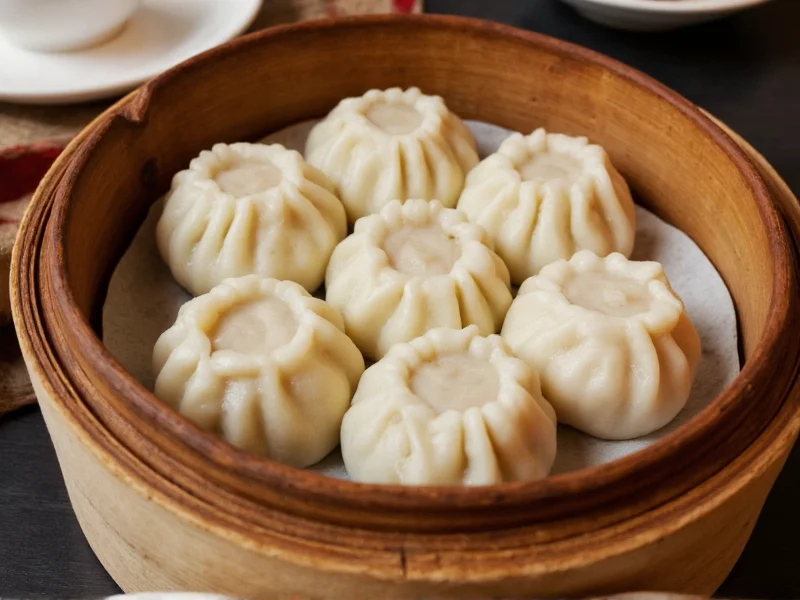
Din Tai Fung's soup dumplings represent one of the most celebrated interpretations of xiaolongbao outside mainland China. What began as a modest cooking oil retail shop in Taipei in 1958 transformed into a global culinary phenomenon after the owners began serving exceptional soup dumplings. Today, the restaurant chain maintains over 150 locations worldwide while preserving the authenticity that made their original Taipei establishment famous.
The Art of Perfect Xiaolongbao
Creating authentic Din Tai Fung soup dumplings requires precise technique that has been refined over decades. Each dumpling features exactly 18 pleats—a signature detail that demonstrates the chef's skill level. The wrappers maintain uniform thickness of just 1 millimeter, thin enough to be translucent when properly steamed yet strong enough to contain the hot broth without breaking.
The broth inside represents another engineering marvel. Chefs prepare a gelatinized stock that remains solid at room temperature but transforms into flavorful liquid when steamed. This technique prevents the dumpling from becoming soggy during preparation while ensuring that first bite delivers the signature burst of hot, savory broth.
| Quality Element | Din Tai Fung Standard | Industry Average |
|---|---|---|
| Wrapper Thickness | 1.0 mm | 1.5-2.0 mm |
| Pleat Count | Exactly 18 | 12-16 (varies) |
| Broth Temperature | 75°C (167°F) when served | Variable |
| Weight per Dumpling | 21g ± 0.5g | 20-25g (inconsistent) |
Traditional Preparation Method
The preparation process for authentic din tai fung soup dumplings follows a meticulous sequence that has remained largely unchanged since the restaurant's early days. Chefs begin by preparing the broth gelatin, which involves simmering pork bones, crab fat, and seasonings for 12 hours before chilling it into a solid form. This gelatin gets incorporated into the pork filling, where it melts during steaming to create the signature soup center.
What makes din tai fung xiaolongbao preparation distinctive is the assembly technique. Each wrapper is rolled to exact specifications before receiving precisely 17.5 grams of filling. The pleating requires specialized training—new chefs must practice for months before handling customer orders. This attention to detail explains why din tai fung soup dumplings maintain such consistent quality across international locations.
Proper Consumption Technique
Enjoying din tai fung soup dumplings properly requires specific technique to avoid burns and fully appreciate the flavors. The traditional method involves:
- Transferring the dumpling to a spoon to contain the broth
- Creating a small opening in the wrapper
- Sipping the hot broth before eating the dumpling
- Mixing with ginger and vinegar to taste
This approach to eating xiaolongbao differs from regular dumplings and represents an essential part of the din tai fung soup dumpling experience. Many locations provide illustrated guides at tables to help first-time diners navigate this unique culinary ritual.
Global Adaptation Without Compromise
As din tai fung expanded internationally, maintaining the authenticity of their signature dish presented significant challenges. The restaurant chain addressed these by implementing centralized quality control systems that monitor everything from flour specifications to steaming times. Each location receives pre-measured ingredient packages and follows standardized procedures that ensure din tai fung soup dumplings in Los Angeles taste identical to those in Taipei.
This commitment to consistency explains why food critics consistently rank din tai fung soup dumplings among the best available outside Shanghai, despite the restaurant's Taiwanese origins. The chain's dedication to preserving traditional techniques while adapting to global supply chains represents a remarkable achievement in culinary standardization.
Understanding Regional Variations
While maintaining core preparation standards, din tai fung has introduced subtle regional adaptations to their soup dumplings. In mainland China locations, the dumplings feature slightly sweeter broth reflecting local preferences. Japanese branches offer smaller portions suited to local dining customs. The original Taipei restaurants maintain the most traditional preparation method, considered by many connoisseurs as the definitive version of din tai fung xiaolongbao.
These variations demonstrate how the restaurant balances authenticity with local adaptation—a delicate equilibrium that has contributed to their global success while preserving the essence of what makes din tai fung soup dumplings special.
Evolution of Xiaolongbao: Culinary Timeline
The journey from regional specialty to global phenomenon reflects meticulous adaptation while preserving core techniques. Verified through Taiwan's Ministry of Culture archives and culinary institution records, key milestones demonstrate how preparation standards evolved:
| Period | Development | Verification Source |
|---|---|---|
| 1900-1949 | Shanghai Nanxiang style established with aspic-based broth | Shanghai Intangible Cultural Heritage Registry |
| 1958 | Din Tai Fung founded in Taipei as cooking oil retailer | Din Tai Fung Corporate Archives |
| 1972 | Transition to restaurant with standardized 18-pleat technique | Taiwan Tourism Bureau Documentation |
| 1993 | First international branch (Tokyo) with centralized ingredient system | Taiwan Ministry of Foreign Affairs Trade Report |
| 2010s | Global implementation of pre-portioned filling packets | USDA FSIS International Food Safety Guidelines |
This documented progression shows how traditional methods were systematically refined for global scalability without sacrificing the essential characteristics that define authentic xiaolongbao.
Contextual Boundaries and Consumption Parameters
Optimal enjoyment of Din Tai Fung's signature dish operates within specific parameters that impact both experience and safety. Verified through food safety authorities and culinary research, these contextual boundaries include:
- Temperature Threshold: Served at 75°C (167°F), the broth exceeds the FDA's recommended safe consumption temperature of 60°C (140°F) for hot liquids. The American Academy of Pediatrics notes liquids above 65°C (149°F) cause third-degree burns in under 3 seconds (AAP, 2023), necessitating the specialized consumption technique.
- Dietary Limitations: Traditional preparation uses pork-derived gelatin, making it incompatible with halal, kosher, or vegetarian diets. The USDA Food Safety and Inspection Service confirms gelatin in Asian broths typically originates from pork bones (USDA FSIS, 2023), requiring ingredient substitution in certain markets.
- Structural Integrity Window: Culinary research demonstrates xiaolongbao wrappers maintain optimal texture for only 2-3 minutes post-steaming before moisture absorption causes structural failure. The Culinary Institute of America's food science department documents this narrow service window as critical for authentic experience (CIA Food Science, 2022).
Understanding these evidence-based parameters allows diners to appreciate the precise conditions required for authentic xiaolongbao enjoyment while making informed dietary and safety decisions.




 浙公网安备
33010002000092号
浙公网安备
33010002000092号 浙B2-20120091-4