
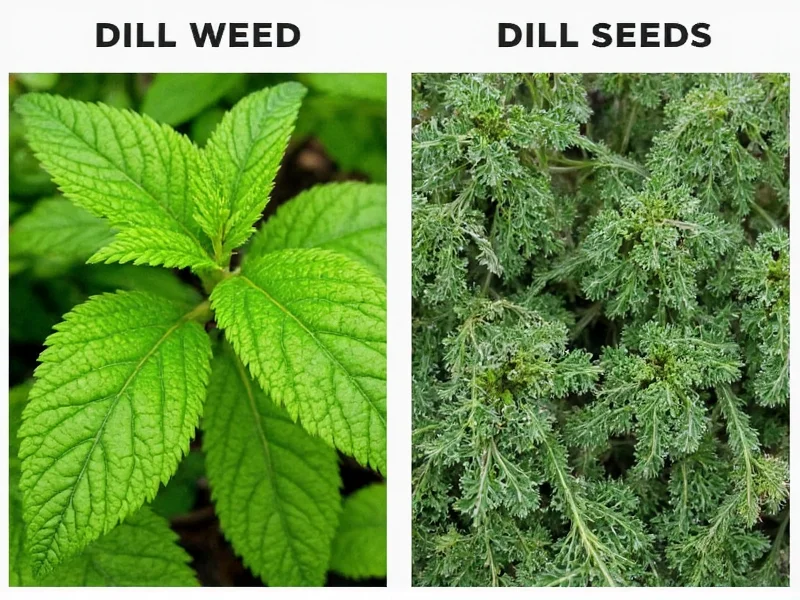
Understanding the differences between dill weed and dill seeds is essential for home cooks and professional chefs alike. Though they come from the same plant, these two ingredients serve different purposes in the kitchen and shouldn't be used interchangeably without proper conversion. Let's explore their unique characteristics, flavor profiles, and best culinary applications to help you make informed choices for your recipes.
What Exactly Are Dill Weed and Dill Seeds?
Dill weed and dill seeds represent different parts of the same annual herb, Anethum graveolens. This distinction explains why their flavors and uses vary significantly despite sharing botanical origins.
Dill Weed: The Delicate Leaf Component
Dill weed specifically refers to the feathery green leaves of the dill plant. When harvested fresh, it offers a bright, grassy flavor with subtle anise notes. The fresh version provides the most vibrant taste, while dried dill weed maintains much of its characteristic flavor though slightly muted.
Chefs often describe fresh dill weed as having a delicate, almost citrusy quality that works beautifully with fish, potatoes, and creamy sauces. Its flavor dissipates quickly when exposed to heat, making it ideal for finishing dishes rather than cooking for extended periods.
| Characteristic | Dill Weed | Dill Seeds |
|---|---|---|
| Plant Part | Leaves (fresh or dried) | Seeds (mature fruit) |
| Flavor Profile | Fresh, grassy, subtle anise | Stronger, earthy, caraway-like, slightly citrus |
| Best Used In | Fish dishes, salads, dips, dressings | Pickling, breads, stews, spice blends |
| Heat Tolerance | Add at end of cooking | Can withstand prolonged cooking |
| Substitution Ratio | 1 tbsp fresh = 1 tsp dried | 1 tbsp seeds = 3 tbsp dried weed |
| Shelf Life | Fresh: 1-2 weeks; Dried: 6-12 months | 2-3 years when properly stored |
Dill Seeds: The Robust Flavor Powerhouse
Dill seeds form after the dill plant flowers and go to seed. These small, oval-shaped fruits (often mistakenly called seeds) develop a much stronger, earthier flavor profile compared to the delicate leaves. The seeds contain higher concentrations of essential oils, giving them a more pronounced taste with distinct caraway and citrus notes.
Unlike dill weed, dill seeds maintain their flavor when exposed to heat, making them ideal for recipes requiring extended cooking times. This characteristic explains why dill seeds serve as the primary flavoring agent in traditional dill pickles rather than dill weed. The seeds' robust nature allows them to infuse brines and marinades effectively during the pickling process.
Culinary Applications: When to Use Each
Understanding proper usage scenarios for dill weed versus dill seeds prevents disappointing results in your cooking. Consider these specific applications:
Dill Weed Best Practices
- Add fresh dill weed during the final minutes of cooking or as a garnish to preserve its delicate flavor
- Use in Scandinavian gravlax and other raw fish preparations
- Mix into sour cream or yogurt-based sauces and dips
- Combine with new potatoes and lemon for classic side dishes
- Stir into egg salads or potato salads just before serving
Dill Seeds Best Practices
- Use in pickling recipes where they provide essential flavor to brines
- Add to bread doughs, especially rye and pumpernickel varieties
- Include in spice rubs for meats that require longer cooking times
- Toast lightly before grinding to enhance their aromatic qualities
- Use in hearty stews and bean dishes where robust flavors are needed
Substitution Guidelines for Dill Weed vs Dill Seeds
While not perfect substitutes due to their different flavor intensities, you can swap between dill weed and dill seeds in a pinch with proper conversion. Understanding the dill weed to dill seeds conversion ratio prevents overpowering or under-seasoning your dishes.
When substituting dill seeds for dill weed, use approximately one-third the amount of seeds compared to weed. For example, if a recipe calls for 1 tablespoon of dried dill weed, use about 1 teaspoon of dill seeds instead. Conversely, when replacing dill seeds with dill weed, you'll need three times the amount of weed.
Remember that fresh dill weed has more potent flavor than dried, so adjust accordingly. The fresh-to-dried conversion follows standard herb ratios: 1 tablespoon fresh dill equals about 1 teaspoon dried dill weed.
Storage Recommendations for Maximum Freshness
Proper storage extends the shelf life and preserves the flavor of both dill forms:
Fresh dill weed: Treat like fresh flowers. Trim the stems, place in a glass with water, cover loosely with a plastic bag, and refrigerate. Change water every two days. Properly stored, fresh dill lasts 1-2 weeks.
Dried dill weed: Store in an airtight container away from light and heat. When properly stored, dried dill maintains good flavor for 6-12 months before gradually losing potency.
Dill seeds: Keep in a cool, dark place in an airtight container. Whole dill seeds retain their flavor for 2-3 years, significantly longer than the leaf form. For maximum flavor, toast seeds briefly before use and grind them just before adding to recipes.
Growing Your Own Dill for Fresh Harvests
Growing dill in your garden provides the freshest possible dill weed and allows you to harvest seeds when needed. Dill grows easily from seed and prefers full sun with well-draining soil. For continuous leaf harvest, plant new seeds every 3-4 weeks throughout the growing season.
If you want to collect dill seeds, allow some plants to flower and go to seed. The seeds turn from green to brown when mature and ready for harvest. Cut the seed heads and place them in a paper bag to finish drying indoors, away from direct sunlight.
Common Questions About Dill Weed and Dill Seeds
Understanding these frequently asked questions helps clarify common points of confusion between these two dill forms:
Can I substitute dill seeds for dill weed in tzatziki?
No, dill seeds don't work well in tzatziki sauce. The traditional Greek yogurt-cucumber dip requires the delicate flavor of fresh dill weed. Dill seeds would create an unpleasant texture and overpowering flavor that doesn't complement the other ingredients. For authentic tzatziki, always use fresh dill weed.
Why do pickling recipes call for dill seeds instead of dill weed?
Pickling recipes typically use dill seeds because they maintain their flavor during the extended fermentation process. The seeds' stronger, more robust flavor penetrates the brine effectively, while dill weed would lose its delicate flavor during prolonged exposure to vinegar and heat. Some recipes include both for layered flavor complexity.
Which has more nutritional value, dill weed or dill seeds?
Dill seeds contain higher concentrations of nutrients by volume since they're more densely packed. They provide more fiber, calcium, iron, and manganese than dill weed. However, because you use smaller quantities of seeds in cooking, the actual nutritional difference in finished dishes is minimal. Both forms offer antioxidants and contribute to a healthy diet.
How can I tell if my dried dill weed has gone bad?
Dried dill weed loses potency over time rather than spoiling. Check for faded color (should be vibrant green), weak aroma, or musty smell. Properly stored dried dill should have a noticeable grassy scent. If it has no aroma or shows signs of moisture, mold, or insects, discard it. For best flavor, replace dried dill weed every 6-12 months.
Can I grow dill weed from dill seeds?
Yes, dill weed grows from dill seeds. In fact, dill seeds are simply the mature fruit of the dill plant. Plant the seeds directly in your garden after the last frost, and they'll grow into dill plants that produce the feathery leaves known as dill weed. Allow some plants to flower and produce seeds for future planting or culinary use.




 浙公网安备
33010002000092号
浙公网安备
33010002000092号 浙B2-20120091-4