
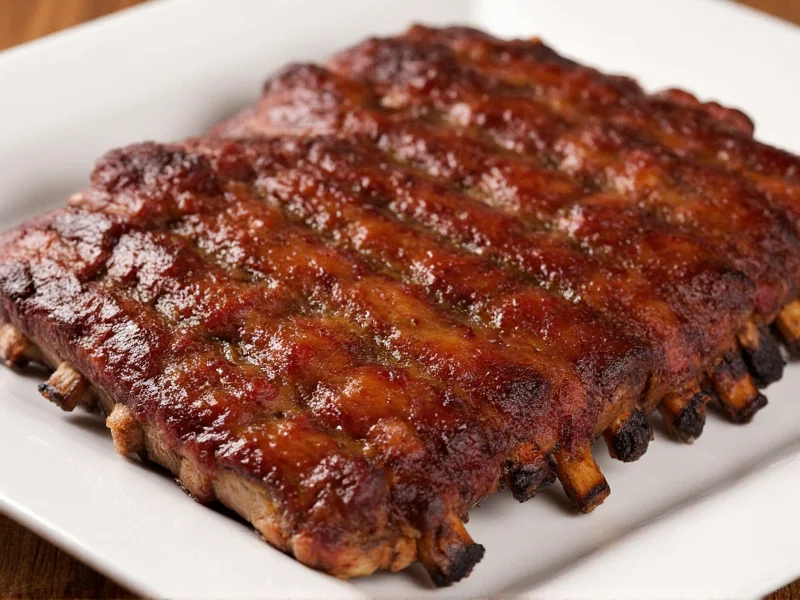
When planning your next barbecue or indoor cooking project, choosing between spare ribs and baby back ribs can significantly impact your results. These two popular pork cuts often confuse home cooks and grill enthusiasts alike, despite both being classified as "ribs." The distinction goes beyond mere naming conventions and affects cooking time, flavor development, and final presentation.
Anatomical Origins: Where Each Cut Comes From
The fundamental difference between these rib varieties begins with their location on the pig. Baby back ribs, also known as loin back ribs or top loin ribs, are cut from where the rib meets the spine after the loin has been removed. This positioning gives them their characteristic curved shape and leaner profile. These ribs sit above the hog's belly, nestled against the backbone.
Spare ribs, sometimes called side ribs or beef back ribs (though they're pork), come from the belly area beneath the baby backs, extending down to the breastbone. Butchers remove the belly to make bacon, leaving behind the spare rib section. This lower positioning results in a flatter shape with more bone and connective tissue compared to baby backs.
Physical Characteristics Compared
Understanding the visual and structural differences helps when selecting ribs at the market. Baby back ribs typically measure 3-6 inches wide and 6-8 inches long, weighing 1.5-2 pounds per rack. Their bones curve upward, creating a distinctive dome shape. The meat sits primarily on top of the bones with minimal coverage underneath.
Spare ribs present a different profile. They're larger, flatter, and more irregular in shape, usually weighing 2.5-3 pounds per rack. The bones run straighter with meat covering both sides more evenly. Spare ribs contain the sternum bone, costal cartilage, and more marbling, contributing to their richer flavor profile but requiring more careful preparation.
| Characteristic | Baby Back Ribs | Spare Ribs |
|---|---|---|
| Location on Pig | Along the spine, below loin | Belly area, below baby backs |
| Rack Weight | 1.5-2 lbs | 2.5-3 lbs |
| Bone Structure | Curved, shorter bones | Flatter, longer bones with sternum |
| Meat Distribution | Primarily on top of bones | Evenly distributed around bones |
| Fat Content | Less marbling, leaner | More marbling, higher fat content |
| Average Price | Higher ($5-8/lb) | Lower ($3-5/lb) |
Cooking Considerations and Safety Context
When considering spare ribs vs baby back ribs cooking time, the differences are significant and carry important safety implications. Baby backs typically require 3-4 hours at 225°F for smoking, while spare ribs need 4-6 hours due to their higher fat content and connective tissue. The USDA Food Safety and Inspection Service (FSIS) specifies a minimum safe internal temperature of 145°F (63°C) with a 3-minute rest for all pork, but achieving this safely varies by cut. Spare ribs' higher fat content increases flare-up risks during grilling, making indirect heat methods essential to avoid charring and ensure even cooking. Baby backs' leaner composition, while reducing flare-up concerns, makes them more susceptible to drying out if cooked beyond 145°F, requiring precise temperature monitoring.
The membrane on baby backs (the silverskin) must be removed for optimal tenderness and smoke penetration, while spare ribs often benefit from partial membrane removal to maintain structural integrity during extended cooks. For beginners, spare ribs offer more forgiveness due to their higher fat content, which protects against drying out during temperature control learning curves. Baby backs demand more precision but reward with consistent results once mastered. Understanding these contextual limitations—flare-up risks with spares and drying risks with baby backs—is crucial for selecting the right cut based on your equipment and experience level.
Source: USDA FSIS: Safe Minimum Cooking Temperatures
Flavor and Texture Differences
The flavor profiles between these two rib cuts create distinct culinary experiences. Baby back ribs offer a milder pork flavor with less fat marbling. Their leaner composition makes them cook faster but also increases the risk of drying out if overcooked. The meat texture tends to be more tender when properly prepared, with less connective tissue to break down.
Spare ribs deliver a more robust, traditional pork flavor thanks to their higher fat content and marbling. This additional fat renders during cooking, basting the meat internally and creating that characteristic fall-off-the-bone tenderness barbecue enthusiasts seek. However, the increased connective tissue requires longer cooking times to achieve optimal texture. The difference between pork spare ribs and baby back ribs in terms of flavor development is particularly noticeable when using low-and-slow smoking methods.
Economic Factors and Availability
Price differences between these cuts reflect both supply and perceived quality. Baby back ribs command a premium price (typically 20-30% more per pound) for several reasons: they're more meaty relative to bone, have a more uniform shape that's easier to present, and come from a smaller section of the animal. A single pig yields only one rack of baby backs but two racks of spares, making baby backs inherently more scarce.
When shopping, you might encounter St. Louis-style ribs, which are actually trimmed spare ribs with the sternum bone and cartilage removed. This creates a more rectangular shape that's easier to cook evenly. Understanding why baby back ribs are more expensive than spare ribs helps explain why many competitive barbecue teams prefer spares—they offer more flavor potential at a lower cost, allowing for greater experimentation.
Practical Selection Guide
Choosing between these rib varieties depends on your specific cooking scenario. For quick weeknight meals, baby backs work better due to shorter cooking times. Their leaner composition also makes them more suitable for oven cooking when outdoor grilling isn't possible. The best cut of ribs for beginners spare or baby back often comes down to available time—baby backs are more forgiving with timing but require careful attention to prevent drying.
Spare ribs shine in traditional barbecue applications where extended cooking times develop complex flavors. Their higher fat content creates that sought-after bark formation during smoking. If you're cooking for a crowd on a budget, spares provide more substantial portions per dollar. Consider the difference between pork spare ribs and baby back ribs when planning your menu—spares deliver that authentic, rich barbecue experience while baby backs offer elegant presentation with slightly less intense flavor.
Historical Processing Evolution
The modern distinction between spare ribs and baby backs emerged from mid-20th century industrial butchering practices. Historically, whole pork sides were sold with ribs intact until the 1950s, when USDA meat grading standards (Amended 1952) formalized subprimal cuts. Baby back ribs gained popularity through 1980s restaurant menus as "premium" cuts, while spare ribs remained barbecue staples. The 1999 USDA Institutional Meat Purchase Specifications further standardized these classifications, separating the "loin rib" (baby back) from "spare rib" sections. This evolution reflects changing consumer preferences toward leaner meats during the 1980-90s, followed by a craft barbecue resurgence favoring traditional spare ribs since 2010.
Source: USDA Agricultural Marketing Service: IMPS #045 (2019 Revision)
Common Misconceptions Clarified
Many believe baby back ribs come from younger pigs, but the "baby" designation refers only to their smaller size, not the animal's age. Both cuts come from market-weight hogs. Another misconception suggests spare ribs are inferior quality, when in reality they simply represent a different part of the animal with distinct culinary properties.
Some novice cooks think the membrane must be removed from both cuts, but spare ribs often benefit from leaving some membrane intact to hold the irregular shape together during cooking. Understanding these nuances prevents unnecessary preparation steps that might compromise your final product.




 浙公网安备
33010002000092号
浙公网安备
33010002000092号 浙B2-20120091-4