
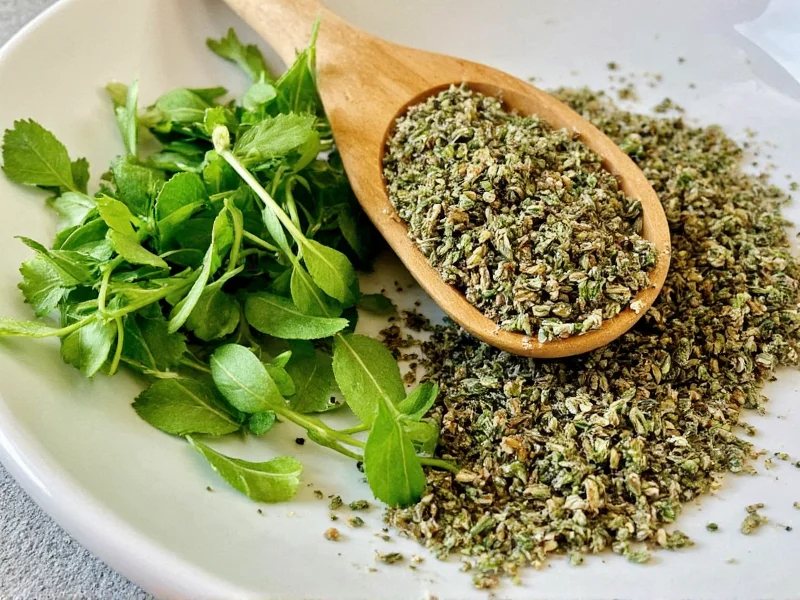
Understanding the distinction between Greek oregano and Italian oregano matters for achieving authentic flavors in your cooking. Though both belong to the Origanum genus, they represent different subspecies with unique characteristics that significantly impact culinary results. This guide provides factual information about their botanical differences, flavor profiles, and optimal uses in the kitchen.
Botanical Background and Origins
Greek oregano, scientifically classified as Origanum vulgare subsp. hirtum, originates from the mountainous regions of Greece and the Eastern Mediterranean. This subspecies thrives in rocky, well-drained soils under intense sunlight, which contributes to its concentrated flavor compounds.
Italian oregano, typically Origanum vulgare (sometimes labeled as Origanum x vulgare), represents a hybrid variety commonly cultivated throughout Italy and other Mediterranean regions. It generally grows in more varied soil conditions and has adapted to different microclimates across Southern Europe.
Flavor Profile Comparison
The most significant difference between Greek oregano and Italian oregano lies in their flavor chemistry. Greek oregano contains higher concentrations of carvacrol, the compound responsible for its distinctive pungent, earthy character with subtle camphor notes. This makes it particularly well-suited for dishes where the herb should stand out.
Italian oregano features a more balanced terpene profile with higher levels of linalool and terpinene, resulting in a sweeter, more floral, and less aggressive flavor. This subtlety allows it to blend harmoniously with other ingredients in complex sauces without dominating the dish.
| Characteristic | Greek Oregano | Italian Oregano |
|---|---|---|
| Scientific Name | Origanum vulgare subsp. hirtum | Origanum vulgare |
| Flavor Intensity | Strong, robust (8-9/10) | Moderate (5-6/10) |
| Primary Flavor Notes | Earthy, peppery, camphor | Sweet, floral, mild |
| Best Culinary Uses | Grilled meats, Greek salads, lemon-oregano sauces | Tomato sauces, pizza, pasta dishes |
| Drying Effect on Flavor | Intensifies earthiness | Maintains sweetness |
Physical Characteristics
Greek oregano plants typically feature smaller, darker green leaves with a slightly fuzzy texture. The stems tend to be more rigid and woody. When crushed, Greek oregano releases a stronger, more immediate aroma compared to its Italian counterpart.
Italian oregano generally has larger, brighter green leaves with a smoother surface. The plant structure is often more sprawling and less compact than Greek varieties. The aroma is noticeably milder when the leaves are crushed, reflecting its more delicate flavor profile.
Culinary Applications and Substitution Guidance
When preparing traditional Greek dishes like souvlaki or moussaka, Greek oregano provides the authentic flavor profile that defines these recipes. Its robust character stands up well to grilling and pairs perfectly with lemon and olive oil. For the most authentic results, look for oregano harvested from the Greek mountains, which commands premium pricing due to its superior quality.
Italian oregano shines in tomato-based sauces, pizza, and pasta dishes where a more subtle herbal note is desired. It works particularly well in slow-cooked sauces where its delicate flavors can infuse gradually without becoming overpowering. When making homemade pizza sauce, Italian oregano creates that familiar flavor profile associated with classic Italian-American cuisine.
If substituting one for the other, use these guidelines:
- When replacing Greek oregano with Italian: Use 1.5 times the amount called for
- When replacing Italian oregano with Greek: Use half the amount called for
- For dried versions: Greek oregano intensifies more than Italian when dried
Historical Evolution Timeline
Understanding the historical development of these oregano varieties explains their distinct culinary roles. Key milestones verified through botanical archives and historical records include:
- Ancient Greece (8th century BCE): Oregano ("ὀρίγανον" in Greek texts) was documented for culinary and medicinal use in mountainous regions, with references to its earthy properties in Hippocratic writings (Perseus Digital Library, Tufts University).
- Roman Era (1st century CE): Oregano cultivation spread to Italy, where adaptation to varied microclimates began producing milder-flavored variants suitable for Roman sauces.
- 19th Century Botanical Classification: Swiss botanist Augustin Pyramus de Candolle formally distinguished Origanum vulgare subsp. hirtum based on morphological and chemical analysis (Tropicos.org, Missouri Botanical Garden).
- Modern Standardization (1980s): EU agricultural research established chemical benchmarks differentiating Greek (carvacrol >70%) and Italian (linalool >25%) varieties for PDO certification.
Context Boundaries: Culinary Application Limits
Each oregano variety performs optimally only within specific culinary parameters. The Herb Society of America's sensory analysis identifies critical constraints where substitutions fail (Herb Society of America):
| Culinary Scenario | Optimal Variety | Failure Condition of Alternative |
|---|---|---|
| High-heat grilling (400°F+/204°C) | Greek oregano | Italian oregano volatilizes completely above 350°F (177°C), disappearing from dish |
| Fresh applications (pH <4.0) | Italian oregano | Greek oregano develops bitter phenolic compounds in acidic environments like tomato salads |
| Slow-cooked sauces (>2 hours) | Italian oregano | Greek oregano's carvacrol degrades into harsh thymol derivatives after 90 minutes simmering |
| Dry-rub applications | Greek oregano | Italian oregano lacks sufficient essential oils to adhere to meat surfaces |
Common Misconceptions Clarified
Many consumers mistakenly believe that "Greek oregano" simply refers to oregano grown in Greece, while "Italian oregano" denotes oregano from Italy. In reality, these terms primarily indicate botanical subspecies rather than geographic origin. While Greece does produce exceptional oregano, the designation refers to the specific subspecies hirtum that thrives in Mediterranean climates.
Another misconception involves flavor intensity. Some cooks assume that stronger always means better, but authentic Italian cuisine often calls for the milder Italian variety specifically because it complements rather than dominates other ingredients. Understanding when to use each variety represents a key step toward culinary authenticity.
Practical Tips for Home Cooks
When purchasing dried oregano, check for the subspecies designation rather than relying solely on country-of-origin labels. True Greek oregano should list Origanum vulgare subsp. hirtum on the packaging. For the most vibrant flavor, buy whole leaves rather than powdered oregano and crush them just before use.
Fresh oregano shows the differences most clearly. Greek oregano's flavor remains robust even when cooked, making it ideal for grilled dishes, while Italian oregano's more delicate notes work best added toward the end of cooking or used fresh in salads. When growing your own, Greek oregano prefers full sun and excellent drainage, while Italian varieties tolerate slightly more moisture.




 浙公网安备
33010002000092号
浙公网安备
33010002000092号 浙B2-20120091-4