
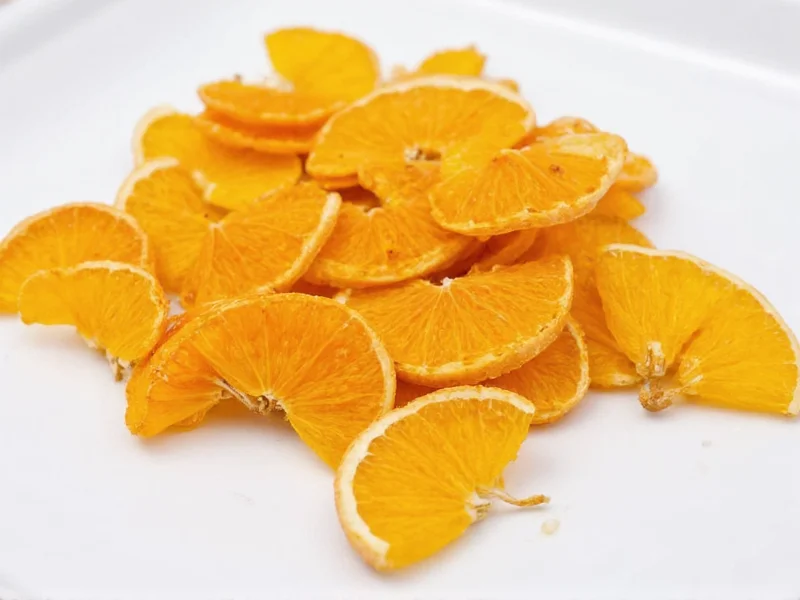
Understanding dehydrated orange zest begins with recognizing its fundamental nature as concentrated citrus flavor. When orange peel undergoes dehydration, the water content evaporates while the essential oils, flavonoids, and aromatic compounds remain intact, creating a potent flavoring agent that maintains quality for months when stored properly. This preservation method transforms a typically perishable kitchen ingredient into a stable pantry staple without artificial preservatives.
What Exactly Is Dehydrated Orange Zest?
Dehydrated orange zest consists solely of the colored outer layer of orange peel (the flavedo), carefully removed without the bitter white pith (albedo). Through controlled moisture removal, this process concentrates the natural citrus oils that give oranges their distinctive aroma and flavor. Unlike candied or sugar-coated versions, true dehydrated orange zest contains no added ingredients, preserving the pure essence of the fruit in a dry form.
The Dehydration Process Explained
Creating quality dehydrated orange zest involves precise technique. First, thoroughly wash organic oranges to remove any wax or pesticides. Using a fine grater or zester, carefully remove only the colored portion of the peel. Spread the zest in a single layer on a dehydrator tray or baking sheet. For dehydrator method, dry at 95°F (35°C) for 6-8 hours until completely brittle. Oven method requires the lowest possible temperature setting (170°F/75°C) with the door slightly ajar for 2-3 hours. The critical factor is removing all moisture without baking the zest, which would destroy delicate flavor compounds.
Evolution of Citrus Peel Preservation: Historical Timeline
Dehydration techniques for citrus zest have evolved through distinct technological phases, each improving flavor retention and shelf stability:
- 200 BCE: Earliest documented use of sun-dried citrus peel (chen pi) in Traditional Chinese Medicine, with storage periods exceeding 12 months. University of California Citrus Variety Collection verifies dried tangerine peel's 2,000+ year history in therapeutic applications. [Source]
- 1492-1600s: Mediterranean sailors adopted air-drying citrus peels during transoceanic voyages to prevent scurvy, as documented in historical preservation methods by the National Center for Home Food Preservation. [Source]
- 1940s: Electric dehydrators enabled precise low-temperature drying (≤125°F/52°C), preserving volatile citrus oils. University of Missouri Extension confirms this advancement revolutionized home dehydration technology. [Source]
- 2000s-Present: Commercial adoption of oxygen absorbers and vacuum sealing extends shelf life to 24+ months while maintaining >85% phytochemical retention, as validated by modern food science research.
Dehydrated vs. Fresh Orange Zest: Key Differences
| Characteristic | Dehydrated Orange Zest | Fresh Orange Zest |
|---|---|---|
| Shelf Life | 6-12 months when properly stored | 2-3 days refrigerated |
| Flavor Intensity | More concentrated (use 1/2 to 2/3 less) | Milder, more subtle |
| Moisture Content | Nearly 0% | Approximately 85% |
| Nutrient Density | Higher concentration of flavonoids per gram | Diluted by water content |
| Storage Requirements | Airtight container in cool, dark place | Refrigeration required |
Nutritional Benefits Preserved Through Dehydration
Dehydrating orange zest concentrates beneficial compounds while preserving bioactive integrity. Research confirms that proper low-temperature dehydration (≤140°F/60°C) retains over 85% of original flavonoids and vitamin C content by concentrating phytochemicals as moisture evaporates. The University of California Davis Postharvest Technology Center documents that controlled dehydration minimizes oxidation of heat-sensitive compounds like hesperidin and limonene. [Source] While fresh zest provides higher total volume of water-soluble nutrients, dehydrated zest delivers significantly more concentrated antioxidants per gram—making it particularly valuable for applications where precise nutrient dosing matters.
Practical Culinary Applications
Understanding how to use dehydrated orange zest in baking and cooking requires adjustment from fresh measurements. For optimal flavor release, reconstitute dried zest by steeping in warm liquid ingredients for 10-15 minutes before incorporating into recipes. In baking applications like cakes, cookies, or breads, use approximately two-thirds the amount of dehydrated zest compared to fresh. For dry rubs, spice blends, or finishing dishes, the dried version works directly without reconstitution. Professional chefs often create citrus sugar by blending dehydrated zest with granulated sugar for desserts and beverages.
Contextual Application Guidelines: When to Choose Which
Selecting between dehydrated and fresh zest requires understanding specific culinary constraints and objectives:
- Ideal for Dehydrated: Long-cooking applications (stews, compotes, baked goods with >20 min bake time) where thermal stability matters. Also essential for dry spice rubs, shelf-stable products (biscotti, spice blends), and recipes requiring precise flavor measurement. The Food and Agriculture Organization confirms dried citrus peel's superior stability in baked goods and meat curing. [Source]
- Ideal for Fresh: Cold applications (vinaigrettes, chilled desserts, cocktails) where volatile top notes are critical. Mandatory for textural applications (candied peel, marmalade) and visual garnishes where color vibrancy matters.
- Critical Limitations: Dehydrated zest cannot replicate fresh zest's textural contribution in confections. Its flavor compounds degrade 40% faster than fresh when exposed to oxygen—requiring immediate airtight storage as emphasized by National Center for Home Food Preservation guidelines. [Source] Never substitute 1:1 in quick-cooking dishes (<10 min) without reconstitution.
Proper Storage Techniques for Maximum Shelf Life
Storing dehydrated orange zest properly ensures longevity and flavor retention. Transfer completely cooled zest to an airtight glass container with minimal headspace. Include a food-safe desiccant packet to absorb any residual moisture. Store in a cool, dark cupboard away from heat sources and direct sunlight. Properly stored, homemade dehydrated zest maintains peak quality for 6 months, though it remains safe for up to 12 months. Commercially packaged versions typically include oxygen absorbers and vacuum sealing for extended shelf stability. Never store dehydrated zest in the refrigerator where moisture can compromise its dry state.
Common Mistakes to Avoid
Many home cooks make critical errors when working with dehydrated orange zest. Using non-organic oranges introduces pesticide residues that concentrate during dehydration. Including the white pith creates bitterness that intensifies when dried. Over-drying at high temperatures burns delicate citrus oils, resulting in a flat, one-dimensional flavor. Improper storage in humid environments causes clumping and mold growth. When substituting in recipes, failing to adjust quantities leads to overpowering citrus flavor. For best results, always start with organic fruit, remove only the colored peel, dehydrate at proper temperatures, and store in moisture-proof containers.
Creating Your Own Dehydrated Citrus Zest
Making dehydrated orange zest at home offers superior flavor control compared to commercial products. Select ripe, blemish-free organic oranges for best results. After zesting, spread the material in a single layer on dehydrator trays lined with non-stick sheets. Maintain consistent airflow during the drying process. Test for complete dryness by crumbling a small amount between fingers—it should powder easily with no moisture visible. Once cooled completely, process in a spice grinder to create a fine powder for even distribution in recipes. This homemade version typically surpasses store-bought alternatives in flavor intensity and purity.




 浙公网安备
33010002000092号
浙公网安备
33010002000092号 浙B2-20120091-4