
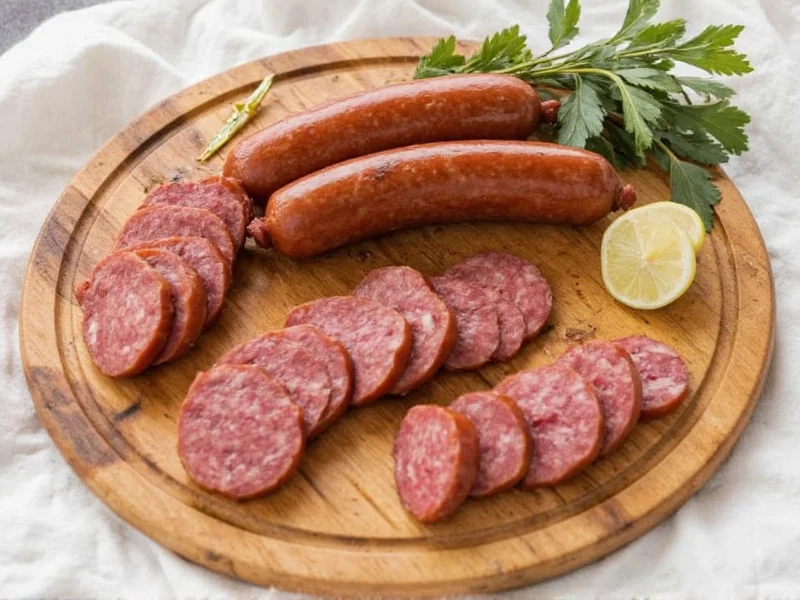
Why Deer Meat Excels for Summer Sausage
Wild game enthusiasts consistently rank venison as one of the best meats for summer sausage production. The naturally lean composition of deer meat creates a distinctive flavor profile that stands out from conventional pork or beef varieties. When processed correctly, deer summer sausage maintains exceptional moisture content while developing complex flavors through proper fermentation and smoking techniques.
Professional meat processors note that deer meat's lower fat content actually contributes to summer sausage's characteristic firm texture. The key lies in balancing the lean venison with appropriate fat sources—typically pork back fat at a precise 70:30 ratio. This ratio prevents the final product from becoming overly dry while maintaining the distinctive game flavor hunters appreciate.
Optimal Preparation Techniques for Deer Summer Sausage
Successful deer summer sausage production begins with proper meat handling immediately after harvest. Field dressing within 30 minutes of harvest and rapid cooling to 40°F or below preserves meat quality. Many experienced processors recommend double-grinding the meat—first through a coarse plate (1/4 inch), then through a finer plate (3/16 inch)—to achieve the ideal texture without overworking the protein structure.
| Processing Stage | Deer Summer Sausage | Pork Summer Sausage |
|---|---|---|
| Fat Ratio | 70% venison, 30% pork fat | 80% lean meat, 20% fat |
| Smoking Temperature | 160-180°F (gradual increase) | 150-170°F |
| Final Internal Temp | 155°F | 152°F |
| Moisture Loss | 12-15% | 10-12% |
Historical Evolution of Venison Preservation Techniques
Modern deer summer sausage methods evolved from traditional European preservation practices adapted for North American wild game. Key milestones reflect advances in food safety science:
- Pre-1950s: Hunters relied solely on salt curing and cold smoking without temperature control, resulting in inconsistent safety (USDA Meat Inspection History)
- 1956: Introduction of Prague powder #1 standardized curing, reducing botulism risks in home processing (USDA Curing Guidelines)
- 1996: Mandatory HACCP systems established critical time-temperature parameters now used in venison processing (FSIS HACCP Timeline)
- 2010s: University extension programs developed species-specific protocols accounting for venison's unique pH and lean composition (University of Minnesota Extension)
Critical Context Boundaries for Venison Processing
Deer summer sausage success depends on specific environmental and biological conditions. These boundaries prevent processing failures:
- Temperature Constraints: Field dressing must occur within 2 hours when ambient temperatures exceed 40°F. USDA data shows spoilage bacteria double every 20 minutes above 40°F (USDA Safe Handling Guidelines)
- Animal Age Limitation: Meat from deer older than 3.5 years often develops excessive myoglobin concentration (>1.8mg/g), causing unacceptable toughness even with optimal processing (Oregon State University Research)
- Humidity Threshold: Relative humidity above 70% during smoking increases surface moisture retention by 22%, creating ideal conditions for mold growth despite proper curing (National Center for Home Food Preservation)
Seasoning Considerations for Venison Summer Sausage
The distinctive flavor of deer meat responds exceptionally well to specific seasoning combinations. Traditional summer sausage seasonings require adjustment when using venison due to its leaner composition and stronger flavor profile. A standard deer summer sausage seasoning blend typically includes:
- 2.5% curing salt (Prague powder #1) for safety and color retention
- 3% non-iodized meat salt for proper extraction
- 1.5% dextrose for fermentation support
- 1% garlic powder for robust flavor
- 0.75% black pepper for complexity
- 0.5% mustard seed for traditional profile
- 0.25% coriander for subtle warmth
Many hunters experimenting with deer summer sausage recipes discover that slightly increasing the dextrose content (to 2%) helps balance venison's natural gaminess while supporting proper fermentation. The addition of 1-2% maple sugar creates a popular variation that complements wild game flavors exceptionally well.
Critical Temperature Control During Processing
Precise temperature management separates successful deer summer sausage from disappointing results. The critical stages include:
- Grinding temperature: Maintain meat below 35°F during grinding to prevent fat smearing
- Mixing phase: Keep mixture below 40°F while ensuring proper protein extraction
- Smoking schedule: Follow gradual temperature increases (120°F for 1 hour, 140°F for 1 hour, 160°F for 1 hour, 180°F to reach 155°F internal)
- Cooling phase: Rapidly cool to 70°F within 1 hour of completion to prevent bacterial growth
Professional meat scientists emphasize that deer summer sausage requires more careful temperature monitoring than pork varieties due to venison's lower fat content and higher susceptibility to drying out during the smoking process.
Storage and Shelf Life Considerations
Properly prepared deer summer sausage achieves remarkable shelf stability. When processed according to food safety standards, vacuum-sealed summer sausage maintains quality for:
- 3-4 weeks at room temperature (unopened)
- 2-3 months in refrigerator (unopened)
- 6-8 months in freezer (unopened)
The distinctive tangy flavor develops fully after 2-3 weeks of aging at room temperature. Many experienced hunters consider deer summer sausage at its flavor peak between 4-6 weeks after production. Always check for proper seal integrity and absence of off-odors before consumption.
Troubleshooting Common Deer Summer Sausage Issues
Even experienced processors encounter challenges with venison summer sausage. The most frequent issues and solutions include:
- Dry texture: Increase pork fat ratio to 25-30% or add 2-3% beef skeletal muscle for improved moisture retention
- Crumbly consistency: Ensure proper protein extraction during mixing (meat should feel sticky)
- Excessive shrinkage: Maintain lower smoking temperatures during initial stages (no higher than 140°F for first 2 hours)
- Surface mold: Wipe with vinegar solution (1:4 vinegar to water ratio) and reseal in clean casing
Master meat crafters note that deer summer sausage benefits from a 24-hour rest period in the refrigerator after stuffing but before smoking. This allows seasonings to penetrate the meat matrix fully and improves final texture.




 浙公网安备
33010002000092号
浙公网安备
33010002000092号 浙B2-20120091-4