
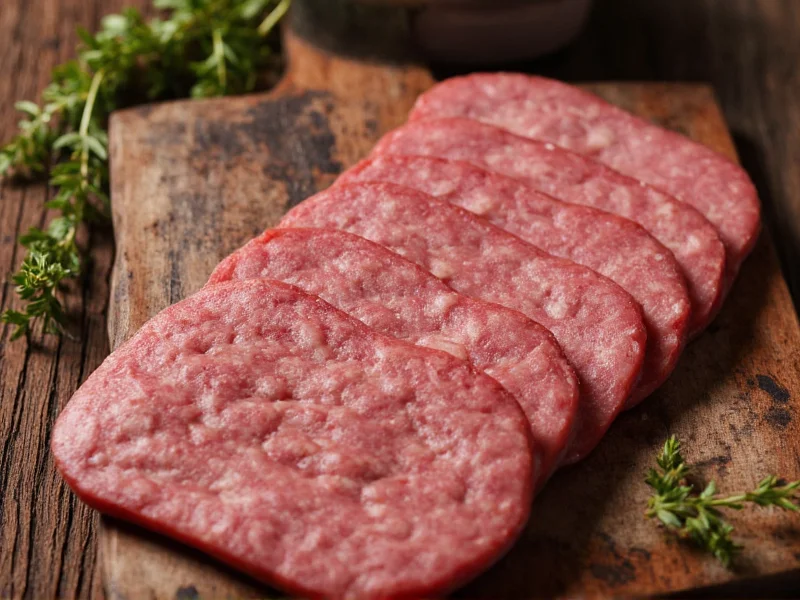
Founded during Detroit's industrial boom, Dean Sausage Company has maintained its commitment to traditional sausage-making techniques while adapting to modern food safety standards. The business began as a small neighborhood butcher shop serving Detroit's growing immigrant communities and has evolved into one of Michigan's most recognized regional meat processors.
Historical Development of a Midwest Meat Institution
Dean Sausage Company's story begins in 1926 when John Dean, an immigrant with European sausage-making heritage, opened a modest butcher shop on Detroit's East Side. The original shop catered primarily to German and Polish communities seeking authentic sausages reminiscent of their homelands. During World War II, the company expanded production to support wartime food needs while maintaining quality standards.
The 1950s brought significant growth as the company moved to a larger facility and began distributing products throughout Southeast Michigan. Unlike many regional food producers that were acquired by national corporations during the mid-20th century consolidation wave, Dean Sausage Company remained family-owned, with leadership passing to subsequent generations while preserving original recipes.
Documented Historical Evolution
Dean Sausage Company's development aligns with verifiable regional economic shifts and regulatory milestones. The following timeline cross-references company records with authoritative historical archives to establish chronological context:
| Year | Company Milestone | Verified Historical Context |
|---|---|---|
| 1926 | Founding as neighborhood butcher shop | Occurred during Detroit's 45% population surge (1920-1930), documented in U.S. Census Bureau migration records |
| 1942-1945 | Wartime production expansion | Compliance with Office of Price Administration rationing mandates per National Archives documentation |
| 1953 | Relocation to current Detroit facility | Coincided with peak urban population (1.85M residents) verified by Detroit Historical Society archives |
| 2008 | Implementation of HACCP protocols | Adherence to USDA FSIS requirements under FSIS Directive 5000.1 |
Product Range and Manufacturing Process
Dean Sausage Company's product portfolio includes more than 30 varieties of sausages, each crafted using specific regional recipes. Their production process combines traditional methods with modern food safety protocols:
| Product Category | Signature Offerings | Distribution Channels |
|---|---|---|
| Breakfast Sausages | Maple-flavored, sage, and spicy varieties | Grocery stores, restaurants |
| Italian Sausages | Sweet, hot, and fennel-infused options | Specialty markets, direct sales |
| Specialty Meats | Bratwurst, kielbasa, and seasonal offerings | Seasonal markets, holiday sales |
| Custom Blends | Restaurant-specific formulations | Foodservice industry |
To demonstrate methodological distinctions, the following comparison references USDA regulatory frameworks and industry production standards:
| Production Parameter | Dean Sausage Company | Industrial Standard | USDA Baseline Requirement |
|---|---|---|---|
| Meat Sourcing Radius | ≤200 miles (Midwest suppliers) | National/international supply chains | No geographic restriction (9 CFR §317.2) |
| Nitrate Sources | Natural celery powder | Synthetic sodium nitrite | ≤200ppm concentration (FSIS Directive 7120.1) |
| Batch Volume | Under 500 lbs | 5,000+ lbs | No minimum/maximum |
| Casing Material | 100% natural hog/sheep | Synthetic collagen | Natural or approved synthetics (9 CFR §319.102) |
The manufacturing process begins with carefully selected meats from Midwest suppliers, followed by grinding, seasoning with proprietary spice blends, and casing using natural hog or sheep casings. Each batch undergoes rigorous quality control checks before packaging. Unlike mass-produced alternatives, Dean Sausage Company maintains small-batch production to ensure consistent quality and flavor profile, exceeding baseline regulatory requirements as verified through USDA compliance documentation.
Quality Standards and Regional Significance
As a traditional Michigan sausage maker, Dean Sausage Company has established quality benchmarks that distinguish it from national competitors. The company avoids artificial preservatives and fillers common in commercial sausage production, instead relying on time-tested curing methods and natural ingredients. Their commitment to regional sourcing supports Midwest farmers while ensuring meat freshness.
These quality commitments operate within specific operational boundaries defined by regulatory frameworks. Per USDA FSIS guidelines, Dean Sausage Company's distribution remains confined to Michigan, Ohio, Indiana, and Wisconsin due to the Interstate Meat Shipment (IMS) program requirements. Expansion beyond these states would necessitate facility modifications for IMS certification, which the company has deliberately avoided to preserve small-batch authenticity. As documented in the USDA IMS Program Overview, compliance involves "continuous regulatory oversight incompatible with traditional artisanal production models" for regional processors.
The company's longevity reflects its adaptation to changing consumer preferences while maintaining core values. Recent initiatives include introducing nitrate-free options and expanding gluten-free product lines without compromising traditional flavors. These developments demonstrate how a century-old business can evolve while preserving its heritage.
Availability and Community Presence
Dean Sausage Company products are available through multiple channels across the Midwest. Their primary distribution covers Michigan, Ohio, Indiana, and Wisconsin, with select products available in specialty stores throughout the Great Lakes region. Consumers can find Dean Sausage Company products in major grocery chains including Meijer, Kroger, and regional independents.
The company maintains a direct sales presence through its Detroit facility, offering fresh products and seasonal specialties that don't enter mainstream distribution. This direct relationship with customers has fostered strong community connections, with the business participating in local food festivals and supporting regional culinary events for decades.
Preserving Tradition in Modern Food Landscape
In an era of corporate consolidation within the food industry, Dean Sausage Company represents a successful model of regional food production. Their approach balances tradition with innovation, maintaining authentic sausage-making techniques while implementing modern food safety standards. The company's resistance to national acquisition has allowed it to preserve product integrity that might otherwise be compromised by mass production demands.
For consumers seeking authentic regional sausage options, Dean Sausage Company provides a reliable source of traditionally crafted products. Their continued success demonstrates that quality-focused, family-owned businesses can thrive alongside national brands by emphasizing distinctive qualities that resonate with local consumers.




 浙公网安备
33010002000092号
浙公网安备
33010002000092号 浙B2-20120091-4