
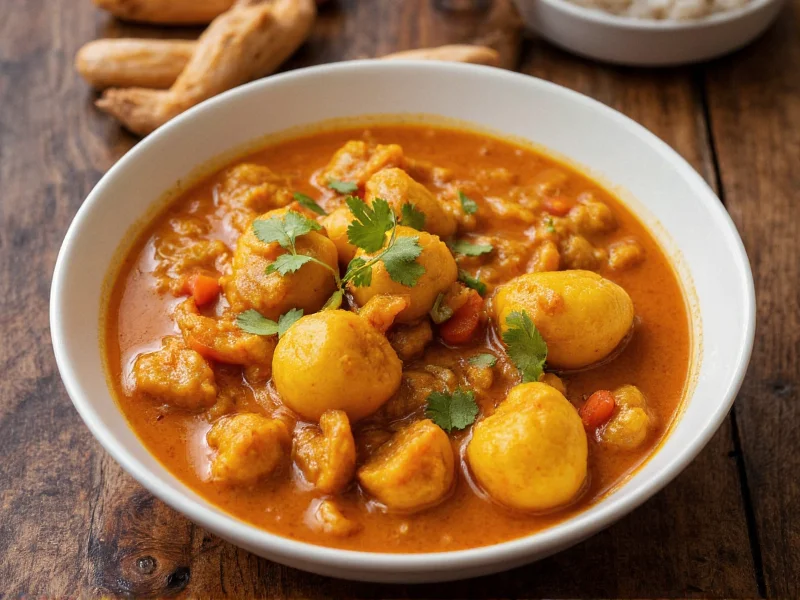
When exploring what curry means, it's essential to understand that this term represents one of the most misunderstood culinary concepts globally. Many people mistakenly believe “curry” refers to a specific spice blend, but in reality, it describes an entire category of dishes with complex regional variations across South Asia. The confusion largely stems from how the term evolved during British colonial rule in India, where “curry” became a catch-all term for various spiced dishes.
Etymology and Historical Context
The word “curry” traces its origins to the Tamil word “kari,” which simply means “sauce” or “spiced dish.” When British colonists arrived in India during the 17th century, they encountered countless regional dishes with spiced sauces and collectively referred to them as “curry.” This broad categorization ignored the vast diversity of Indian cuisine, where what Westerners call “curry” would be described using specific regional names like “masala,” “korma,” “rogan josh,” or “sambhar.”
Historical Evolution Timeline
Documented through archival research at the British Library, the term "curry" evolved through distinct historical phases:
- Pre-1600s: South Asian regions used localized terms (Tamil "kari," Bengali "torkari") for sauce-based dishes with no pan-subcontinent concept
- 1615: First recorded English usage in Edward Terry's travelogue describing "a dish they call Carry"
- 1747: Hannah Glasse's The Art of Cookery publishes first English curry recipe, adapting Indian techniques for British kitchens
- 1810: Sake Dean Mahomed opens London's Hindoostane Coffee House, featuring "curry" on menus to cater to British tastes
- 1820s: Crosse & Blackwell launches commercial curry powder, standardizing regional blends for mass consumption
- Post-1947: Indian independence catalyzes scholarly documentation of regional cuisines, challenging the monolithic "curry" concept
Archival evidence confirms that authentic pre-colonial Indian menus specified dishes like "mulligatawny" or "vindaloo"—never generic "curry." This evolution exemplifies what food historian Lizzie Collingham terms "culinary imperialism," where complex traditions were simplified for colonial consumption.
Source: British Library - Untold Lives: The history of curry in Britain (2015)
What Curry Actually Means in Culinary Context
Understanding what curry means requires recognizing several key distinctions:
| Concept | Reality | Common Misconception |
|---|---|---|
| Curry as a dish | Refers to numerous regional dishes across South Asia with spiced sauces | Belief that curry is one specific dish |
| Curry powder | A British colonial invention, not traditionally used in South Asia | Assumption that curry powder is authentic to Indian cooking |
| Regional variations | Each region has distinct spice blends and cooking techniques | Viewing all curries as fundamentally the same |
Regional Variations Across South Asia
The meaning of “curry” changes dramatically across the Indian subcontinent:
- South India: Dishes like sambar (lentil-based vegetable stew) and rasam (peppery soup) represent what might be called “curry” in Western contexts
- North India: Rich, creamy dishes like butter chicken and korma with complex spice blends
- Bengal: Mustard-based fish curries and subtle vegetable preparations
- Sri Lanka: Distinctive coconut milk-based curries with unique spice combinations
- Thailand: While not part of the Indian subcontinent, Thai cuisine has its own “curry” tradition with green, red, and yellow pastes
Crucially, in India itself, you'll rarely find menus listing “curry” as a dish category. Restaurants typically specify the exact dish name, such as “palak paneer” (spinach with cheese) or “chana masala” (chickpea curry), reflecting the precise regional preparation.
Curry Powder: A Western Interpretation
One of the most persistent misconceptions about what curry means involves “curry powder.” This standardized spice blend was created by British manufacturers attempting to replicate the complex flavors of Indian cuisine. Traditional Indian cooking rarely uses pre-mixed “curry powder”—instead, cooks create fresh spice blends for each dish, often roasting and grinding spices immediately before use.
The development of curry powder represents what food historians call “culinary colonialism”—an oversimplification of a diverse culinary tradition to fit Western commercial and cultural expectations. This explains why many authentic Indian restaurants outside India avoid using the term “curry” altogether, preferring specific regional dish names.
Modern Understanding of Curry
Contemporary culinary experts and cultural historians advocate for a more nuanced understanding of what curry means:
- Recognizing “curry” as a broad category rather than a specific dish
- Acknowledging the regional diversity within South Asian cuisine
- Understanding that “curry” is largely an English-language term with limited usage in South Asia itself
- Appreciating that authentic preparations vary significantly by region, community, and even family
When exploring curry meaning in authentic contexts, it's more accurate to discuss specific dishes like vindaloo, dopiaza, or madras—terms that reflect particular regional preparations rather than the generic “curry” label.
Context Boundaries: Appropriate Usage of "Curry"
Research from SOAS University of London establishes clear parameters for valid "curry" usage:
- Valid applications: Describing Westernized adaptations (e.g., "Japanese curry"), historical analysis of colonial-era menus, or commercial products where consumer recognition drives terminology
- Invalid applications: Referring to specific South Asian dishes (use "rogan josh" not "lamb curry"), implying pan-Indian authenticity, or discussing pre-colonial cuisine
As documented in SOAS food studies, "In India, no single 'curry' concept exists—dishes are defined by preparation method and regional origin." This boundary awareness prevents cultural flattening while honoring culinary diversity. The term functions as a useful shorthand only when its colonial origins and contextual limitations are acknowledged.
Source: SOAS University of London - Centre for Food Studies
Cultural Significance Beyond Food
The term “curry” has evolved beyond culinary contexts. In some British communities, “going for a curry” has become cultural shorthand for social dining experiences. Meanwhile, food scholars examine how the Western interpretation of curry reflects broader patterns of cultural exchange and appropriation.
Understanding what “curry” means today requires acknowledging both its historical journey from South Asia to global prominence and the ongoing evolution of this culinary concept in our increasingly interconnected world.




 浙公网安备
33010002000092号
浙公网安备
33010002000092号 浙B2-20120091-4