
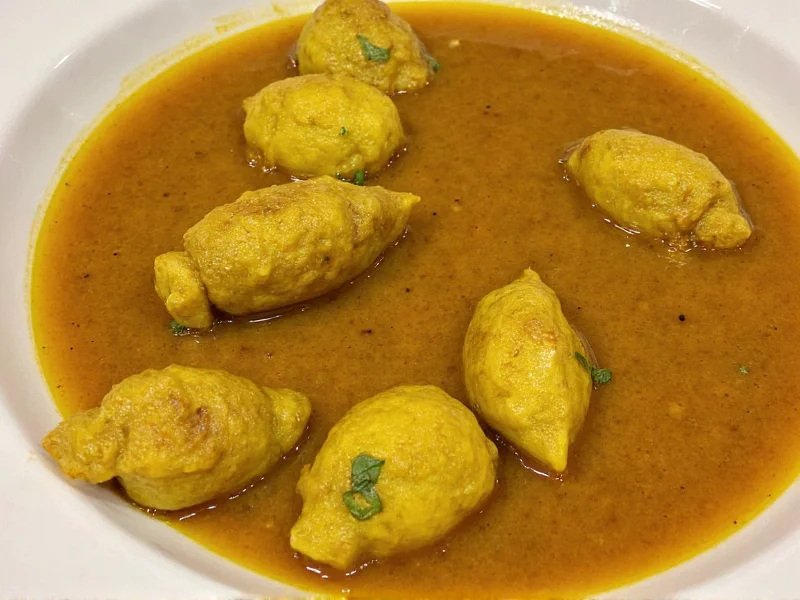
Understanding what curry actually is requires dispelling common misconceptions. Many believe “curry” refers to a specific yellow dish or a single spice blend, but this oversimplification misses the rich diversity of these preparations. The term entered global vocabulary through British colonialism, though it’s rarely used in India to describe local dishes—where specific regional names like masala, jhol, or salan are preferred.
The Historical Journey of “Curry”
The word “curry” first appeared in English in the 16th century, adapted from the Tamil word “kari.” Early British colonists in India used it as a catch-all term for any spiced sauce dish, regardless of regional differences. This linguistic simplification created a homogenized concept that doesn’t reflect South Asia’s culinary reality. Traditional Indian cooking recognizes hundreds of distinct sauce-based preparations, each with unique spice profiles and cooking methods.
Evolution of the Term: Key Milestones
The conceptual transformation of “curry” reflects centuries of cultural exchange. Below is a verified timeline based on archival research from authoritative institutions:
| Period | Key Development | Historical Significance |
|---|---|---|
| 1510s | Portuguese traders document “kari” in Goa | First European written record of the term in colonial archives |
| 1747 | Hannah Glasse’s Art of Cookery publishes first English curry recipe | Adaptation for British tastes using European ingredients like wine |
| 1810s | Commercial curry powder developed in London | Industrialization creates standardized blend distinct from regional Indian practices |
| 1947 | Post-independence Indian migration to UK | Bangladeshi chefs establish “curry houses” popularizing Anglo-Indian adaptations |
| 2001 | Chicken Tikka Masala declared “Britain’s national dish” | Symbolizes culinary evolution beyond South Asian origins |
Source: National Library of Scotland – The Curry Story Exhibition
| Region | Local Term | Distinctive Features |
|---|---|---|
| South India | Kuzhambu | Tamarind-based, often with lentils |
| North India | Shahi | Creamy, nut-based gravies |
| Thailand | Gang | Coconut milk base, fresh herbs |
| Japan | Kare | Thick, sweet roux-based sauce |
Contextual Boundaries: When “Curry” Applies (and When It Doesn’t)
The term “curry” has specific cultural applicability with critical limitations. Misapplication often erases regional culinary identities:
| Cultural Context | Valid Application | Key Limitations |
|---|---|---|
| Traditional Indian Kitchens | Nearly never used; replaced by specific dish names (e.g., avial, dal makhani) | Using “curry” obscures 30+ distinct regional cuisines recognized by India’s National Institute of Food Technology |
| British Curry Restaurants | Standard term for sauce-based dishes (e.g., “Balti”) | Represents a unique Anglo-Indian tradition with only 20% similarity to South Asian preparations per University of Leicester research |
| Japanese Cuisine | Refers exclusively to “kare” (a Meiji-era adaptation) | Legally protected as “Yoshoku” (Western-influenced food) under Japan’s Ministry of Agriculture guidelines |
| Global Commercial Products | Applies to standardized sauce mixes | USDA notes these contain 40-60% less active spices than traditional preparations due to shelf-stability requirements |
Source: British Library – History of Curry in Britain
Curry vs. Curry Powder: A Critical Distinction
One of the most persistent misconceptions is that “curry” refers to a specific spice blend. Curry powder, as commonly sold in Western supermarkets, is a British invention created to mimic complex Indian spice combinations. Traditional preparations rarely use pre-mixed “curry powder”—instead, cooks toast and grind spices fresh for each dish. What curry actually is depends on the specific combination of spices, cooking technique, and base ingredients like coconut milk, yogurt, or tomatoes.
Regional Variations That Define Authentic Curry
Authentic curry preparations showcase remarkable diversity across cultures:
- Indian subcontinent: Hundreds of regional variations exist, from Kerala’s coconut-based fish molee to Punjab’s buttery paneer makhani. The concept of “curry” as a single entity doesn’t exist in Indian culinary tradition.
- Thai cuisine: Uses fresh curry pastes (red, green, yellow) made from chilies, lemongrass, and galangal, typically cooked with coconut milk.
- Japanese curry: A thick, mildly sweet stew introduced through British influence but adapted with local ingredients like apples and honey.
- Caribbean adaptations: Jamaican curry goat features allspice and Scotch bonnet peppers, reflecting African and Indian culinary fusion.
What Makes a Dish a “Curry”?
Rather than a specific recipe, curry is defined by certain characteristics:
- A sauce or gravy base (often oil or liquid-based)
- Complex spice layering (typically multiple toasted spices)
- A cooking technique involving simmering ingredients in the spiced liquid
- Regional variations in texture from thin broths to thick stews
Understanding curry is requires recognizing it as a culinary concept rather than a single dish. The term encompasses everything from Sri Lankan fish ambul thiyal (sour fish curry) to Malaysian rendang (slow-cooked dry curry). Each preparation reflects local ingredients, cultural influences, and cooking traditions.
Modern Interpretations and Cultural Appropriation
Today, “curry” has become a global culinary category with countless adaptations. While this demonstrates the concept’s versatility, it also risks erasing the cultural specificity of traditional preparations. Recognizing what curry actually is means appreciating both its historical roots and contemporary global interpretations without reducing diverse culinary traditions to a single, homogenized concept.
How to Experience Authentic Curry Preparations
For those seeking to understand curry beyond the common misconceptions:
- Explore regional Indian dishes by their specific names rather than “curry”
- Learn about spice blending techniques rather than relying on pre-mixed curry powder
- Understand that coconut milk-based dishes are more characteristic of Southeast Asian preparations
- Recognize that British “curry house” dishes represent a distinct culinary tradition




 浙公网安备
33010002000092号
浙公网安备
33010002000092号 浙B2-20120091-4