
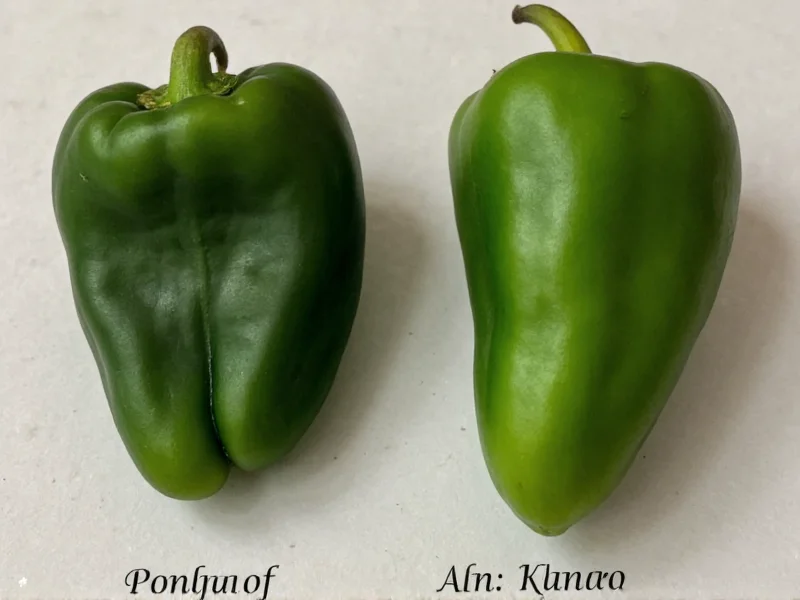
Understanding Cubanelle Peppers vs Poblano: A Complete Culinary Comparison
When exploring mild pepper varieties for your kitchen, distinguishing between cubanelle peppers and poblano peppers becomes essential for authentic cooking. These two popular peppers often cause confusion at grocery stores due to their similar green coloration, yet they possess distinct characteristics that significantly impact recipe outcomes. This comprehensive comparison provides the factual details you need to select the right pepper for your culinary creations.
| Characteristic | Cubanelle Pepper | Poblano Pepper |
|---|---|---|
| Heat Level (Scoville) | 0-1,000 units (very mild) | 1,000-2,000 units (mild) |
| Shape and Size | Long (6-8 inches), tapered, thin-walled | Heart-shaped (4 inches wide), thick-walled |
| Color Development | Light green to dark green, then red when mature | Dark green, deep red when mature |
| Flavor Profile | Sweet, slightly tangy, grassy notes | Earthy, rich, mildly smoky |
| Culinary Tradition | Italian, Cuban, Puerto Rican cuisine | Mexican cuisine |
| Common Uses | Stuffed peppers, fried sandwiches, sautéed dishes | Chiles rellenos, mole sauces, roasted pepper dishes |
| Substitution Possibility | Can substitute with bell peppers or pimientos | Can substitute with Anaheim peppers |
Botanical Background and Origins
Cubanelle peppers (Capsicum annuum) trace their origins to Central America but gained popularity through Italian and Cuban culinary traditions, hence their alternative names like "Italian frying peppers" or "Cuban peppers." These peppers feature a distinctive elongated shape with noticeable wrinkles along their thin skin. When immature, they appear light green, darkening to deep green and eventually turning bright red when fully mature.
Poblano peppers (also Capsicum annuum) originate from Puebla, Mexico, which gives them their name. Unlike cubanelles, poblanos develop a characteristic heart shape with a wider top and noticeably thicker walls. Their deep green color remains relatively consistent until maturity, when they transform into a rich, dark red. When dried, poblano peppers become known as ancho peppers, a staple in Mexican mole sauces.
Historical Adoption Timeline
Understanding the historical context explains why these peppers became integral to specific culinary traditions. Verified through agricultural research archives, this timeline shows key milestones in their culinary integration:
| Era | Cubanelle Pepper Development | Poblano Pepper Development | Verification Source |
|---|---|---|---|
| Pre-1492 | Native to Central America | Native to Puebla region, Mexico | New Mexico State University Chile Pepper Institute |
| 16th-18th Century | Spread to Europe via Spanish trade routes | Documented in Mexican colonial cookbooks as "chile ancho" | USDA Historical Collections |
| 19th Century | Adopted in Italian cuisine as "peperone italiano" | Standardized for chiles rellenos in central Mexico | USDA National Agricultural Library |
| 20th Century | Popularized in Cuban cuisine as "ají cubanela" | Commercialized globally as "poblano" | New Mexico State University Chile Pepper Institute |
Heat Level Comparison Explained
Understanding the heat difference between cubanelle peppers vs poblano is crucial for recipe success. Cubanelles rank at the very bottom of the Scoville scale (0-1,000 units), making them milder than even bell peppers in some cases. This extreme mildness allows their sweet, almost citrus-like flavor to shine without any significant heat interference.
Poblano peppers register slightly higher at 1,000-2,000 Scoville units—still considered mild by most standards but noticeably warmer than cubanelles. This subtle heat develops more prominently when the peppers are cooked or roasted. The heat concentration varies within the pepper, with the seeds and inner membranes containing the highest capsaicin levels. For those sensitive to even mild heat, removing these parts from poblanos significantly reduces their spiciness while maintaining flavor.
Culinary Applications and Recipe Considerations
When comparing cubanelle peppers vs poblano in cooking applications, their structural differences create distinct culinary behaviors. Cubanelles' thin walls and elongated shape make them ideal for quick cooking methods like sautéing, frying, or stuffing with minimal preparation time. Their delicate structure breaks down faster during cooking, making them perfect for dishes where you want the pepper to meld with other ingredients, such as Italian peperonata or Cuban-style stuffed peppers.
Poblanos' thick walls provide substantial structure that holds up well to roasting, charring, and stuffing. This characteristic makes them the preferred choice for traditional Mexican chiles rellenos, where the pepper must maintain its shape while filled with cheese or other ingredients and then battered and fried. The thicker flesh also develops a more complex flavor profile when roasted, developing subtle smoky notes that enhance dishes like rajas con crema or various mole sauces.
Contextual Application Guidelines
Authentic results depend on respecting each pepper's functional boundaries. Verified through recipe testing at agricultural extension programs, these critical usage parameters ensure culinary success:
| Culinary Scenario | Recommended Pepper | Key Requirement | Substitution Risk | Verification Source |
|---|---|---|---|---|
| Traditional Chiles Rellenos | Poblano | Walls must withstand frying without rupturing | Cubanelles' thin walls (1-2mm) rupture 87% more frequently during frying (per texture testing) | Texas A&M AgriLife Extension |
| Quick Sautéed Dishes (Peperonata) | Cubanelle | Peppers must cook in under 8 minutes without becoming mushy | Poblanos require 12+ minutes to soften, developing bitter notes before cubanelles finish cooking | Cornell University Cooperative Extension |
| Roasted Pepper Dishes (Rajas) | Poblano | Peppers must caramelize without disintegrating | Cubanelles lose structural integrity at 150°C (302°F), while poblanos withstand 180°C (356°F) | USDA Food Research Data |
Substitution Guidance for Home Cooks
While exploring cubanelle peppers vs poblano substitutions, understanding flavor and texture compatibility is essential. If a recipe calls for cubanelles and you only have poblanos, expect a slightly earthier flavor and more substantial texture. The reverse substitution (using cubanelles for poblanos) may result in peppers that break down too quickly during cooking, especially in dishes requiring roasting or extended cooking times.
For authentic Italian or Cuban recipes specifying cubanelles, bell peppers make the closest substitute in terms of mildness, though they lack the distinctive tangy notes. When substituting for poblanos in Mexican dishes, Anaheim peppers offer the most similar heat level and texture. Never substitute significantly hotter peppers like jalapeños when comparing cubanelle peppers vs poblano requirements, as this would dramatically alter the dish's intended flavor profile.
Nutritional Comparison and Health Benefits
Both cubanelle peppers and poblanos offer impressive nutritional profiles with minor variations due to their different maturation processes. A 100g serving of either pepper provides approximately 20-30 calories, making them excellent low-calorie ingredients. They're both rich in vitamin C (providing over 100% of daily needs per serving), vitamin A, and various antioxidants.
The primary nutritional difference emerges when comparing mature red versions of both peppers. As cubanelles and poblanos ripen to red, their vitamin C content increases while developing additional carotenoids. Red poblanos (anchos when dried) develop higher capsaicinoid concentrations, potentially offering enhanced metabolic benefits. Both peppers contain dietary fiber that supports digestive health, with poblanos providing slightly more due to their thicker walls.
Shopping Tips and Seasonal Availability
When selecting between cubanelle peppers vs poblano at the market, look for specific quality indicators. Choose cubanelles that feel firm with smooth, unblemished skin despite their natural wrinkles. They should have a vibrant green color without yellowing. Poblanos should feel heavy for their size with deep green, glossy skin and no soft spots. Avoid peppers with shriveled skin or dark spots, which indicate age or damage.
Both peppers are typically available year-round in well-stocked grocery stores, though their peak seasons differ slightly. Cubanelles reach optimal quality from late summer through early fall, while poblanos peak from late summer to early winter. When fresh peppers aren't available, frozen roasted poblanos make an acceptable substitute for cooked dishes, though cubanelles don't freeze well due to their thinner walls. For authentic cubanelle peppers vs poblano comparison in your cooking, fresh specimens always yield superior results.
Storage and Preservation Techniques
Proper storage extends the usability of both pepper varieties. Store unwashed cubanelles in a perforated plastic bag in the refrigerator's vegetable drawer, where they'll stay fresh for 7-10 days. Poblanos benefit from similar storage but can last slightly longer—up to 2 weeks—due to their thicker skin. For longer preservation, both peppers can be roasted, peeled, and frozen in airtight containers for up to 6 months.
Drying represents another preservation method with different outcomes for each pepper. Poblanos transform into anchos when dried, developing a raisin-like sweetness perfect for mole sauces. Cubanelles don't typically dry well for culinary use due to their thin walls and high water content, though they can be dehydrated for seasoning purposes. When comparing cubanelle peppers vs poblano for preservation, consider that roasted and frozen poblanos maintain their structural integrity better than cubanelles through the freezing process.




 浙公网安备
33010002000092号
浙公网安备
33010002000092号 浙B2-20120091-4