
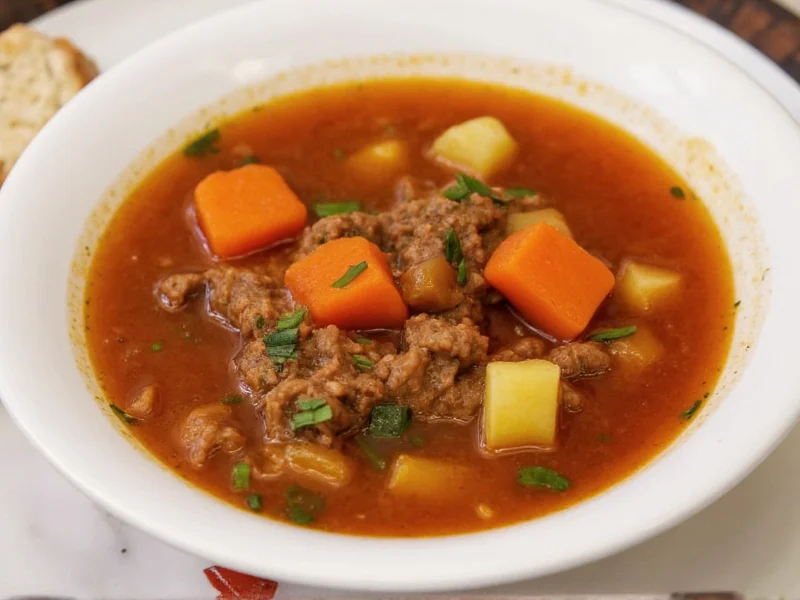
If you're looking for a comforting, nutrient-rich meal that practically makes itself, crock pot vegetable beef soup delivers exceptional results with minimal effort. This classic comfort food combines the rich flavor of slow-cooked beef with wholesome vegetables in a savory broth that's perfect for chilly days or meal prep. Unlike stovetop versions that require constant attention, the slow cooker method allows flavors to meld beautifully while you go about your day.
Why Crock Pot Vegetable Beef Soup Works Best
The magic of slow cooking transforms tough cuts of beef into fork-tender morsels while allowing vegetables to retain their texture without turning to mush. The low, steady heat of a crock pot extracts maximum flavor from bones and connective tissues, creating a broth with depth that's difficult to achieve through other cooking methods. This hands-off approach makes it ideal for busy schedules while delivering restaurant-quality results.
Essential Ingredients for Perfect Vegetable Beef Soup
Quality ingredients make the difference between ordinary and exceptional soup. Choose fresh, seasonal vegetables when possible for the best flavor profile. The following proportions create a hearty batch serving 6-8 people.
| Ingredient | Quantity | Preparation Notes |
|---|---|---|
| Stew beef (chuck or round) | 1.5 lbs | Cut into 1-inch cubes, excess fat trimmed |
| Carrots | 3 medium | Peeled and sliced into 1/4-inch rounds |
| Celery | 3 stalks | Chopped into 1/2-inch pieces |
| Yellow onion | 1 large | Diced |
| Garlic | 3 cloves | Minced |
| Tomato paste | 2 tablespoons | For rich flavor base |
| Low-sodium beef broth | 4 cups | Plus additional as needed |
| Diced tomatoes | 1 (14.5 oz) can | With juices |
| Potatoes | 2 medium | Peeled and cubed |
| Green beans | 1 cup | Fresh or frozen |
| Peas | 1/2 cup | Frozen works well |
| Diced carrots | 1 cup | For added texture |
| Bay leaves | 2 | Remove before serving |
| Dried thyme | 1 teaspoon | Or 1 tablespoon fresh |
| Salt and pepper | To taste | Add toward end of cooking |
Step-by-Step Crock Pot Vegetable Beef Soup Instructions
Follow these professional techniques to create the best slow cooker vegetable beef soup with perfectly textured ingredients and deep, complex flavors.
Preparation (15 minutes)
- Pat beef cubes dry with paper towels (this ensures proper browning)
- Heat 1 tablespoon oil in a skillet over medium-high heat
- Brown beef in batches, avoiding overcrowding the pan
- Transfer browned beef to crock pot
- In the same skillet, sauté onions, carrots, and celery for 5 minutes
- Add tomato paste and garlic, cooking for 1 minute until fragrant
- Scrape all browned bits from the skillet into the crock pot
Cooking Process (6-8 hours)
- Add beef broth, diced tomatoes, potatoes, bay leaves, and thyme to crock pot
- Cook on LOW for 6-8 hours or HIGH for 3-4 hours
- During the last 30 minutes, add green beans, peas, and additional diced carrots
- Taste and adjust seasoning with salt and pepper
- Remove bay leaves before serving
Pro Tips for the Best Results
Professional chefs and experienced home cooks use these techniques to elevate simple crock pot vegetable beef soup:
- Don't skip the browning step - This Maillard reaction creates complex flavors that simmering alone cannot achieve
- Add delicate vegetables later - Root vegetables can handle long cooking, but beans and peas should be added in the final 30 minutes
- Skim fat periodically - For a cleaner-tasting broth, skim excess fat from the surface during cooking
- Acid balance - A splash of red wine vinegar or Worcestershire sauce at the end brightens flavors
- Thickening options - For a heartier texture, mash some potatoes against the side of the crock pot
Customizing Your Vegetable Beef Soup
This versatile recipe adapts well to personal preferences and dietary needs. Consider these popular variations when making your crock pot vegetable beef soup with potatoes and other vegetables:
- Spicy version: Add 1 diced jalapeño and 1/2 teaspoon red pepper flakes with the broth
- Herb-forward: Stir in 2 tablespoons fresh parsley and 1 tablespoon fresh rosemary at the end
- Gluten-free: Naturally gluten-free; verify broth ingredients
- Lower sodium: Use no-salt-added broth and tomatoes, adding salt only to taste at the end
- Extra hearty: Add 1/2 cup barley during the last 90 minutes of cooking
Serving and Storage Recommendations
Proper serving enhances your crock pot vegetable beef soup experience. Ladle hot soup into pre-warmed bowls to maintain temperature. Garnish with fresh parsley or a sprinkle of grated Parmesan cheese for added flavor complexity. This soup pairs beautifully with crusty bread or a simple green salad.
For meal prep enthusiasts, this vegetable beef soup crock pot recipe stores exceptionally well. Cool completely before transferring to airtight containers. Refrigerate for up to 4 days or freeze for up to 3 months. When reheating frozen soup, thaw overnight in the refrigerator first, then warm gently on the stove or in the microwave, adding a splash of broth if needed.
Nutritional Benefits
A typical serving (1.5 cups) of this vegetable beef soup provides approximately:
- 280-320 calories
- 22g protein
- 15g fat (mostly from beef)
- 25g carbohydrates
- 6g dietary fiber
- Rich in vitamins A and C from vegetables
- Good source of iron and zinc from beef
The slow cooking process preserves nutrients better than boiling, while the combination of lean beef and colorful vegetables creates a balanced, satisfying meal that supports healthy eating patterns.
Troubleshooting Common Issues
Even with the most straightforward crock pot vegetable beef soup recipe, occasional challenges may arise:
- Too watery? Remove lid during last hour of cooking to allow evaporation, or mix 1 tablespoon cornstarch with 2 tablespoons cold water and stir in
- Beef too tough? Cooking time may be insufficient for the cut used; extend cooking by 1-2 hours on LOW
- Vegetables mushy? Add delicate vegetables like peas and green beans during the last 30 minutes
- Flavor too bland? Enhance with umami boosters like soy sauce (1 tablespoon) or tomato paste (1 tablespoon)
- Fat on surface? Chill soup briefly to solidify fat for easy removal, or use a fat separator
Frequently Asked Questions
How long does vegetable beef soup take in a crock pot?
For optimal results, cook vegetable beef soup on LOW for 6-8 hours or on HIGH for 3-4 hours. The extended LOW setting allows tougher cuts of beef to become fork-tender while developing deeper flavors. Add delicate vegetables like peas and green beans during the final 30 minutes to prevent overcooking.
Can I put raw beef directly in the crock pot for soup?
While you can add raw beef directly to the crock pot, browning it first significantly improves flavor through the Maillard reaction. Browning creates complex flavor compounds and removes excess moisture that can make the broth cloudy. For the best tasting vegetable beef soup, take the extra 10-15 minutes to properly brown the beef before adding to the slow cooker.
What vegetables hold up best in slow cooker soup?
Root vegetables like carrots, potatoes, and parsnips maintain their texture well during long cooking times. Celery and onions also hold up reasonably well. Delicate vegetables such as peas, green beans, and fresh herbs should be added during the last 30 minutes of cooking to preserve their texture and vibrant color in your crock pot vegetable beef soup.
How do I thicken vegetable beef soup in a crock pot?
To thicken crock pot vegetable beef soup without altering flavor, try these methods: 1) Mix 1 tablespoon cornstarch with 2 tablespoons cold water and stir in during the last 30 minutes; 2) Mash some potatoes against the side of the crock pot; 3) Remove 1-2 cups of soup, blend until smooth, and return to the pot; 4) Simmer with the lid off for the final hour to reduce liquid naturally.
Can I make vegetable beef soup in a crock pot without tomato products?
Yes, you can make vegetable beef soup without tomato products. Omit the tomato paste and diced tomatoes, and increase the beef broth to 6 cups. For depth of flavor, add 2 tablespoons Worcestershire sauce and 1 tablespoon soy sauce. Consider including mushrooms which provide natural umami to compensate for the missing tomatoes in your crock pot vegetable beef soup recipe.




 浙公网安备
33010002000092号
浙公网安备
33010002000092号 浙B2-20120091-4