

There's nothing quite like a bowl of creamy potato ham soup on a chilly day. This classic comfort food combines the earthy sweetness of potatoes with the savory depth of quality ham in a velvety broth that satisfies without overwhelming your palate. What sets apart an exceptional creamy potato ham soup from a mediocre one comes down to technique, ingredient selection, and understanding the science behind creating that perfect creamy texture without actually using heavy cream as the primary thickener.
Why This Recipe Works Every Time
Professional kitchens achieve that signature creamy texture through careful temperature control and ingredient sequencing—not just by dumping in cream. The magic happens when you properly cook down the potatoes until they naturally break down and thicken the broth. Using the right potato variety matters significantly; waxy potatoes like Yukon Gold maintain structure while providing that luxurious mouthfeel without becoming gluey.
Essential Equipment Checklist
Before gathering ingredients, ensure you have these kitchen essentials:
- 6-quart heavy-bottomed pot (prevents scorching)
- Immersion blender (for smooth texture without transferring hot liquid)
- Sharp chef's knife (for uniform potato dicing)
- Wooden spoon (gentler on pot surfaces)
- Measuring cups and spoons (precision matters)
Ingredient Quality Guide
The quality of your ingredients directly impacts the final flavor profile. Here's what to look for:
| Ingredient | Best Choice | Avoid |
|---|---|---|
| Potatoes | Yukon Gold (buttery flavor, perfect starch content) | Russets (too starchy, can become gluey) |
| Ham | Leftover baked ham or quality deli ham (not overly salty) | Highly processed ham with artificial smoke flavor |
| Broth | Homemade or low-sodium store-bought | Regular sodium broth (leads to oversalting) |
According to the USDA Food Safety and Inspection Service, properly stored cooked ham maintains best quality for 3-4 days in the refrigerator, making it ideal for soup preparation within that timeframe.
The Step-by-Step Process
Follow this chef-tested sequence for perfect results every time:
- Sauté aromatics slowly—Cook onions, celery, and garlic in butter over medium-low heat for 8-10 minutes until translucent but not browned. This builds flavor foundation without bitterness.
- Add potatoes properly—Cut potatoes into uniform 1/2-inch cubes for even cooking. Add to pot with broth and bring to gentle simmer (not boil) to prevent disintegration.
- Ham timing matters—Add diced ham during the last 15 minutes of cooking. Adding it too early makes the ham tough and rubbery.
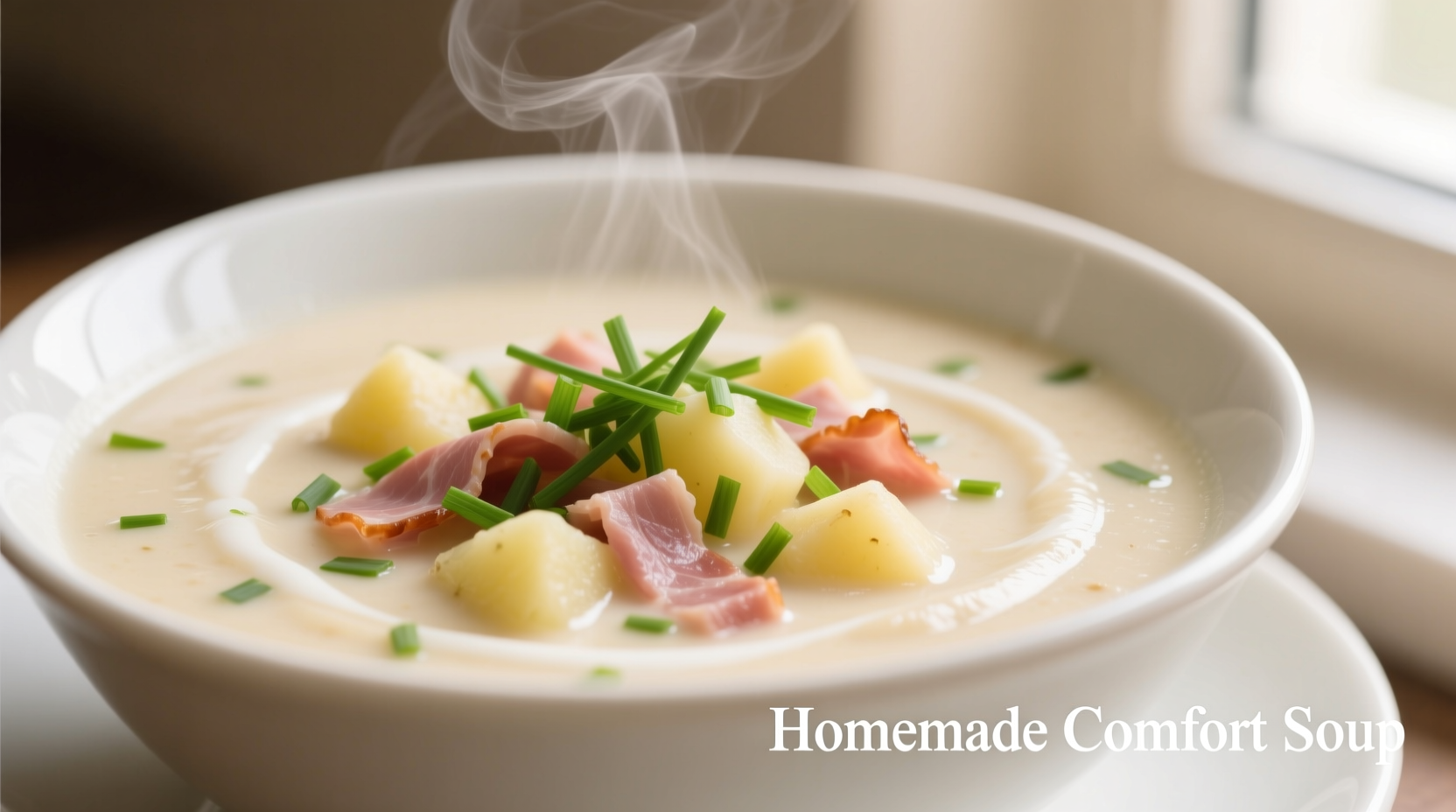
- Create natural creaminess—After potatoes are fork-tender, use immersion blender for 15-20 seconds to break down about 30% of potatoes, creating instant thickness without flour or heavy cream.
- Finish with dairy—Remove from heat before adding milk or cream to prevent curdling. Whole milk provides richness without overwhelming the delicate potato flavor.
Common Texture Issues and Solutions
Even experienced cooks encounter texture problems with potato soups. Here's how to fix them:
- Too thin? Simmer uncovered for 5-10 minutes to reduce, or blend additional potatoes into the soup
- Too thick? Add small increments of warm broth (1/4 cup at a time) until desired consistency
- Grainy texture? You've likely used the wrong potato variety or over-blended—strain through fine mesh sieve
- Separating? Temperature shock from adding cold dairy to hot soup—always temper dairy first
Serving and Storage Tips
Maximize your soup experience with these professional recommendations:
- Serving temperature: 165-175°F (74-80°C) for optimal flavor release
- Garnish wisely: Fresh chives, crispy bacon bits, or a swirl of sour cream enhance without overwhelming
- Storage: Refrigerate in airtight container for up to 4 days—flavors improve overnight
- Freezing: Freeze without dairy for up to 3 months; add fresh dairy when reheating
- Reheating: Warm gently over medium-low heat, stirring frequently to prevent scorching
The US Food Safety and Inspection Service recommends reheating soups to an internal temperature of 165°F (74°C) to ensure food safety, which you can verify with a food thermometer.
Popular Variations to Try
Once you've mastered the classic version, experiment with these chef-approved adaptations:
- Smoky bacon version: Replace half the ham with优质 bacon for deeper smokiness
- Loaded baked potato style: Top with shredded cheddar, bacon, and a dollop of sour cream
- Vegetarian option: Use smoked paprika and liquid smoke with vegetable broth
- Slow cooker adaptation: Sauté aromatics first, then transfer to slow cooker with other ingredients for 4-6 hours on low
Why Cream Isn't Always Necessary
Many traditional creamy potato soup recipes rely heavily on cream, but professional chefs know that properly cooked potatoes naturally release starches that create luxurious texture. According to culinary research from the USDA National Institute of Food and Agriculture, potatoes contain approximately 15-20% starch by weight, which when properly released through controlled cooking, provides natural thickening without altering the delicate flavor balance.




 浙公网安备
33010002000092号
浙公网安备
33010002000092号 浙B2-20120091-4