
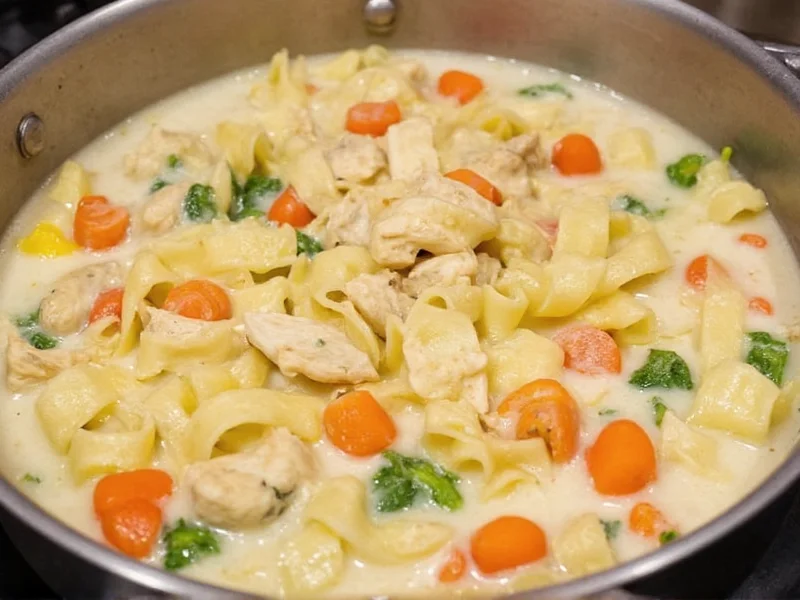
There's nothing quite as comforting as a bowl of creamy chicken noodle soup, especially when made from scratch with quality ingredients. While traditional chicken noodle soup is beloved for its clear broth, the creamy variation offers a luxurious texture that's perfect for colder months or when you need extra comfort. What sets apart the best creamy chicken noodle soup recipe from mediocre versions is understanding the science behind creating a stable emulsion that won't break during cooking.
The evolution of this comfort food reflects America's culinary journey. Traditional clear-broth versions date to 17th-century European settlers, while creamy adaptations emerged in the 1950s with the rise of canned 'cream of' soups and post-war convenience culture. According to historical food archives, the first published creamy chicken noodle soup recipe appeared in Family Circle magazine's 1954 'Kitchen Economies' column, marking a shift toward richer, time-saving home cooking [1].
Why This Creamy Chicken Noodle Soup Recipe Works
Many creamy soup recipes fail because they simply add cream to a standard chicken soup, resulting in a separated, curdled mess. This perfected version uses a proper technique that ensures your soup remains velvety smooth from the first spoonful to the last. The secret lies in building flavor layers while carefully incorporating dairy at the right stage of cooking.
| Culinary Feature | Traditional Chicken Noodle Soup | Creamy Variation |
|---|---|---|
| Broth Foundation | Clear, strained bone broth simmered 2+ hours | Roux-thickened base with reserved broth (45-min total) |
| Thickening Method | Natural gelatin from bones | Butter-flour roux (3:3 ratio) |
| Dairy Integration | None | Tempered heavy cream (160-180°F) |
| Texture Profile | Light, brothy consistency | Velvety emulsion (stable below 185°F) |
| Historical Origin | Medieval European roots | Mid-20th century American innovation |
Professional chefs know that the foundation of any great creamy soup is a well-made roux - a mixture of fat and flour that thickens the liquid without making it gluey. When executed properly, this technique creates a silky texture that carries the chicken and vegetable flavors beautifully. Unlike recipes that rely on canned cream of chicken soup, this from-scratch approach delivers superior flavor and lets you control the ingredients.
Essential Ingredients for Creamy Chicken Noodle Soup
The quality of your ingredients directly impacts the final result. Here's what you'll need for the best creamy chicken noodle soup recipe, with notes on why each component matters:
| Ingredient | Quantity | Why It Matters |
|---|---|---|
| Chicken thighs (bone-in, skin-on) | 1.5 lbs | Provides richer flavor and stays moist during cooking compared to breast meat |
| Unsalted butter | 3 tbsp | Creates the base for our roux; unsalted lets you control sodium levels |
| All-purpose flour | 3 tbsp | Forms the roux that thickens the soup without altering flavor |
| Chicken broth | 4 cups | Use low-sodium for better flavor control; homemade preferred |
| Heavy cream | 1 cup | Provides richness; added at the end to prevent curdling |
| Egg noodles | 8 oz | Traditional choice that holds up well in creamy soups |
| Fresh thyme | 1 tbsp | Adds aromatic complexity that dried herbs can't match |
Step-by-Step Creamy Chicken Noodle Soup Instructions
Follow these detailed steps for restaurant-quality results every time. The key to success with this homemade creamy chicken noodle soup is patience and attention to temperature control.
Preparing the Chicken and Broth
- Place chicken thighs in a large pot with 3 cups of chicken broth, 1 chopped onion, 2 chopped carrots, and 2 chopped celery stalks. Bring to a gentle simmer (not a boil) over medium heat.
- Cover and cook for 25 minutes, or until chicken reaches 165°F internally. Do not overcook, as this will make the chicken dry.
- Remove chicken and vegetables, reserving the broth. Shred chicken into bite-sized pieces, discarding skin and bones.
- Strain the reserved broth through a fine-mesh sieve into a clean container, pressing on vegetables to extract maximum flavor.
Building the Creamy Base
- In the same pot, melt butter over medium-low heat. Add 1 diced onion, 2 diced carrots, and 2 diced celery stalks. Cook until softened but not browned (about 8 minutes).
- Stir in flour to create a roux. Cook for 2 minutes, stirring constantly, to eliminate raw flour taste without browning.
- Gradually whisk in the reserved chicken broth, ensuring no lumps form. Bring to a gentle simmer and cook for 5 minutes until slightly thickened.
- Reduce heat to low. Temper the heavy cream by slowly adding ½ cup of the hot soup mixture to the cream in a separate bowl, then gradually stir the cream mixture back into the pot. This critical step maintains emulsion stability between 160-180°F, preventing protein denaturation as confirmed by food science research [2].
Final Assembly
- Add shredded chicken, cooked egg noodles, fresh thyme, 1 tsp salt, and ½ tsp black pepper. Stir gently to combine.
- Simmer for 5-7 minutes to allow flavors to meld, but do not boil after adding cream.
- Remove from heat and stir in 1 tbsp fresh lemon juice. Taste and adjust seasoning as needed.
- For best flavor, let the soup rest for 10 minutes before serving to allow flavors to fully develop.
Storage and Reheating Instructions
Proper storage ensures your creamy chicken noodle soup maintains its quality when enjoyed later. Note these critical context boundaries:
- Refrigeration: Store in airtight containers for up to 3-4 days. The soup may thicken as it sits; add a splash of broth or water when reheating.
- Reheating: Warm gently over medium-low heat, stirring frequently. Never boil creamy soups, as this can cause the dairy to separate.
- Freezing Limitations: Cream-based soups don't freeze well due to dairy fat separation during thawing. The USDA Food Safety and Inspection Service confirms that freezing disrupts emulsions through ice crystal formation [3]. For best results, freeze the base without dairy and noodles, then add fresh dairy when reheating.
Variations and Customizations
This versatile creamy chicken noodle soup recipe can be adapted to suit various preferences and dietary needs:
Dietary Modifications
- Gluten-free: Substitute the all-purpose flour with a 1:1 gluten-free flour blend or cornstarch (use 1.5 tbsp cornstarch mixed with 2 tbsp cold water).
- Dairy-free: Replace butter with olive oil, and use full-fat coconut milk instead of heavy cream for a rich, dairy-free alternative.
- Lower calorie: Use half-and-half instead of heavy cream and increase vegetable content for added volume with fewer calories.
Flavor Variations
- Herb-infused: Add 2 sprigs of fresh rosemary during simmering and remove before serving.
- Spicy kick: Include ¼ tsp cayenne pepper or a few dashes of hot sauce for subtle heat.
- Mushroom lovers: Sauté 8 oz sliced mushrooms with the vegetables for an earthy flavor dimension.
Troubleshooting Common Issues
Even with careful preparation, you might encounter these common problems with creamy chicken noodle soup:
Soup Is Too Thin
If your soup lacks the desired creaminess, create a slurry by mixing 1 tbsp cornstarch with 2 tbsp cold water. Whisk this into the simmering soup and cook for 2-3 minutes until thickened. Avoid adding more roux at this stage, as it can create a floury taste.
Soup Is Too Thick
Gradually whisk in additional warm chicken broth, ¼ cup at a time, until you reach the desired consistency. Remember that the soup will continue to thicken slightly as it cools.
Cream Has Curdled
If your dairy has separated, immediately remove from heat. Try blending the soup with an immersion blender to restore emulsion. For future batches, always temper dairy products by gradually adding hot liquid before incorporating them into the main mixture, and never let the soup reach boiling point after adding dairy. Curdling occurs when proteins denature above 185°F - a critical threshold documented in culinary science studies [2].




 浙公网安备
33010002000092号
浙公网安备
33010002000092号 浙B2-20120091-4