
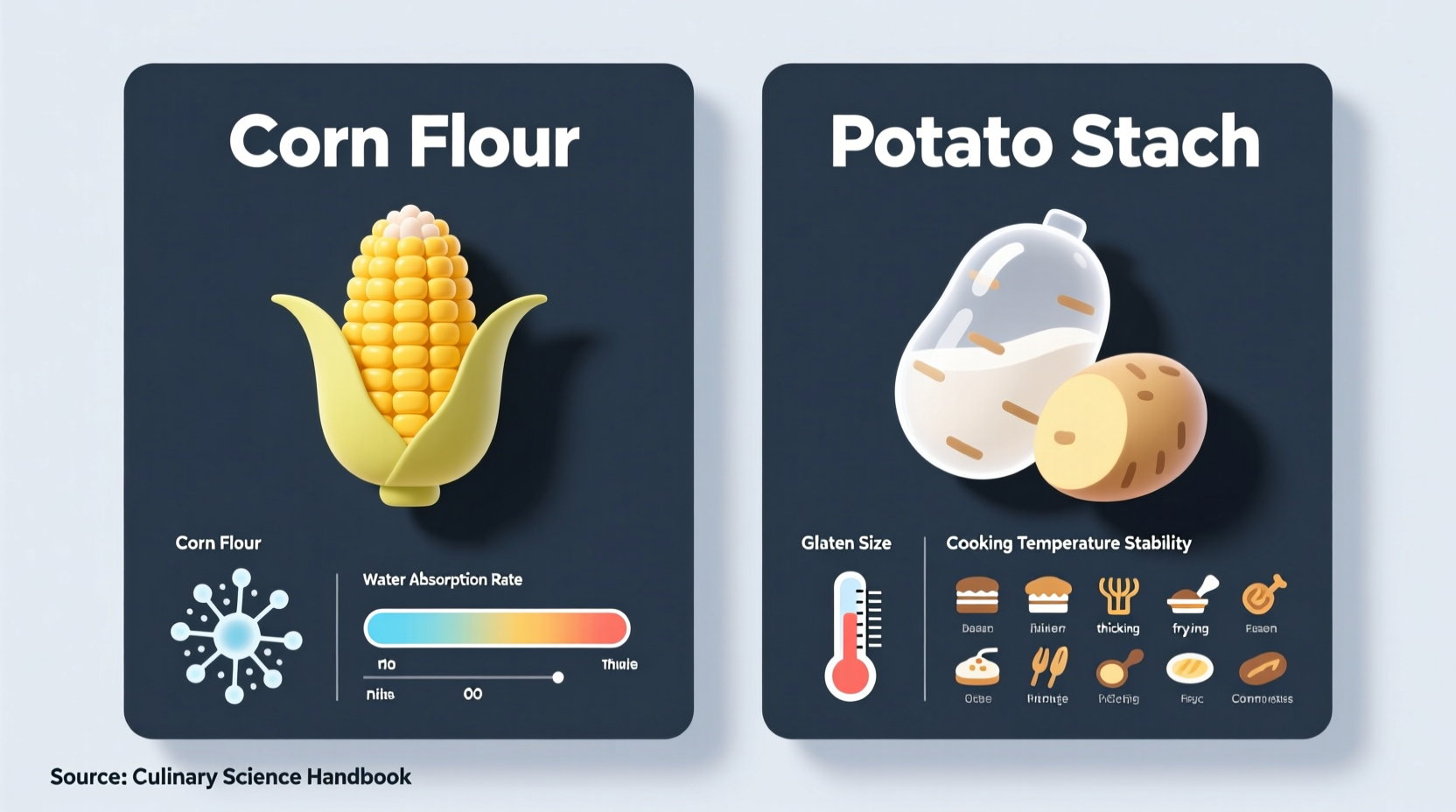
Choose corn flour for golden color and mild corn flavor in baked goods and breading; select potato starch for superior thickening power in sauces and gluten-free baking without altering taste. Corn flour contains protein and fiber while potato starch is pure starch with higher thickening capacity but no nutritional value beyond calories.
When facing a recipe calling for corn flour or potato starch, understanding their distinct properties prevents kitchen disasters. These two common pantry staples often get confused, yet they behave dramatically differently in cooking applications. As a professional chef who's tested these ingredients across hundreds of recipes, I've seen how the wrong choice can turn a silky sauce into glue or collapse delicate gluten-free pastries.
Core Differences: What Sets Them Apart
Despite both being starch-based thickeners, corn flour and potato starch originate from different sources and possess unique molecular structures that affect their culinary performance. Corn flour comes from ground dried corn kernels, containing both starch and protein components. Potato starch is extracted purely from potatoes, consisting almost entirely of starch molecules.
| Property | Corn Flour | Potato Starch |
|---|---|---|
| Source | Whole dried corn kernels | Potato tubers |
| Composition | Starch, protein, fiber | Pure starch (99%) |
| Thickening Temperature | 85°C (185°F) | 60°C (140°F) |
| Thickening Power | Moderate | High (twice corn flour) |
| Texture When Cooked | Slightly grainy, opaque | Smooth, glossy, transparent |
| Freeze-Thaw Stability | Poor (breaks down) | Excellent |
| Flavor Profile | Distinct corn taste | Neutral, no flavor |
This comparison reveals why substituting one for the other without adjustments often fails. The USDA National Nutrient Database confirms corn flour contains 3.9g of protein and 2.0g of fiber per ¼ cup, while potato starch provides virtually no nutritional value beyond carbohydrates.
When to Use Corn Flour: Practical Applications
Corn flour shines in applications where its distinctive properties enhance the final product. Professional bakers rely on it for:
- Traditional cornbread and muffins - Provides characteristic golden color and subtle corn flavor that potato starch cannot replicate
- Fried food coatings - Creates a crisp, golden crust that maintains texture better than wheat flour alone
- Mexican cuisine - Essential for authentic tortillas, tamales, and masa-based dishes
- Thickening dairy-based sauces - Works better than potato starch with milk products which can become slimy
When using corn flour as a thickener, remember it requires higher temperatures to activate properly. Whisk it into cold liquid first to prevent lumps, then bring to a gentle boil for full thickening. Unlike potato starch, corn flour maintains stability when reheated, making it preferable for casseroles and dishes requiring multiple heating cycles.
When Potato Starch Excels: Superior Thickening Power
Potato starch's molecular structure gives it exceptional thickening capabilities at lower temperatures. Professional chefs reach for it when they need:
- Clear, glossy sauces - Creates transparent finishes ideal for fruit glazes and Asian stir-fry sauces
- Gluten-free baking - Provides structure without graininess in cakes and delicate pastries
- Cold preparations - Thickens salad dressings and cold soups without cooking
- Freezable dishes - Maintains texture through freeze-thaw cycles better than any other starch
Professional kitchens use potato starch at half the quantity of corn flour for equivalent thickening. Its low gelatinization temperature means it thickens quickly at lower heat, but this also makes it prone to breaking down if boiled too long. Add it during the final minutes of cooking and avoid prolonged boiling to maintain its thickening power.
Substitution Guidelines: Making the Switch
While not perfect substitutes, you can adapt recipes when one ingredient is unavailable. Follow these professional chef recommendations:
- Replacing corn flour with potato starch: Use half the amount of potato starch and add 1-2 teaspoons of rice flour per tablespoon to mimic corn flour's protein content in baking
- Replacing potato starch with corn flour: Double the amount and expect a slightly cloudy appearance and corn flavor in the final product
- For dairy sauces: Prefer corn flour as potato starch can create an unpleasant slimy texture with milk products
- For clear glazes: Potato starch is irreplaceable - corn flour will create cloudiness
Food science research from the Journal of Cereal Science shows that potato starch forms stronger hydrogen bonds with water molecules at lower temperatures, explaining its superior thickening capacity. This molecular advantage makes it indispensable for certain applications despite its limitations with dairy.
Nutritional Comparison: Beyond Thickening Power
While both serve primarily as thickeners, their nutritional profiles differ significantly. According to USDA FoodData Central:
- Corn flour (¼ cup): 110 calories, 2g protein, 22g carbohydrates, 2g fiber, plus small amounts of iron and B vitamins
- Potato starch (¼ cup): 120 calories, 0g protein, 30g carbohydrates, 0g fiber, virtually no vitamins or minerals
This nutritional difference matters for health-conscious cooking. Corn flour provides modest fiber content that aids digestion, while potato starch functions purely as a carbohydrate source. For gluten-free diets, corn flour offers slightly more nutritional value, though neither should be considered significant nutrient sources.
Avoiding Common Mistakes
Even experienced home cooks make these critical errors with corn flour and potato starch:
- Adding potato starch to boiling liquid - Causes immediate clumping; always mix with cold liquid first
- Overheating potato starch sauces - Breaks down the starch structure after prolonged boiling
- Using corn flour in cold preparations - Requires cooking to activate thickening properties
- Storing either in humid conditions - Both absorb moisture and clump; keep in airtight containers
- Confusing corn flour with cornstarch - In many countries, "corn flour" means cornstarch, creating international recipe confusion
Professional kitchens maintain strict labeling to prevent these mistakes. Remember that potato starch works best when added at the end of cooking, while corn flour needs time to cook out its raw flavor.
Special Considerations for Dietary Needs
For specific dietary requirements, these ingredients behave differently:
- Gluten-free diets: Both are naturally gluten-free, but verify packaging for cross-contamination warnings
- Diabetic considerations: Potato starch has a higher glycemic index (85) compared to corn flour (69)
- Kosher cooking: Both are inherently kosher but check certification for Passover use
- Vegan cooking: Both work perfectly in plant-based recipes as thickeners
The American Diabetes Association notes that corn flour's fiber content creates a slower glucose release compared to pure starches like potato starch, making it a slightly better option for blood sugar management when possible.
Professional Chef Tips for Perfect Results
Implement these techniques used in professional kitchens:
- Create a slurry with equal parts starch and cold liquid before adding to hot mixtures
- For baked goods, combine potato starch with other flours (like rice or tapioca) to prevent gummy texture
- Toast corn flour briefly in a dry pan to enhance flavor in savory applications
- When thickening soups, remove from heat before adding potato starch to prevent breakdown
- Store both in the refrigerator for extended shelf life (up to 12 months)
Mastering these simple techniques transforms your cooking results dramatically. The key is understanding that corn flour brings flavor and color while potato starch delivers pure thickening power without affecting taste.




 浙公网安备
33010002000092号
浙公网安备
33010002000092号 浙B2-20120091-4