
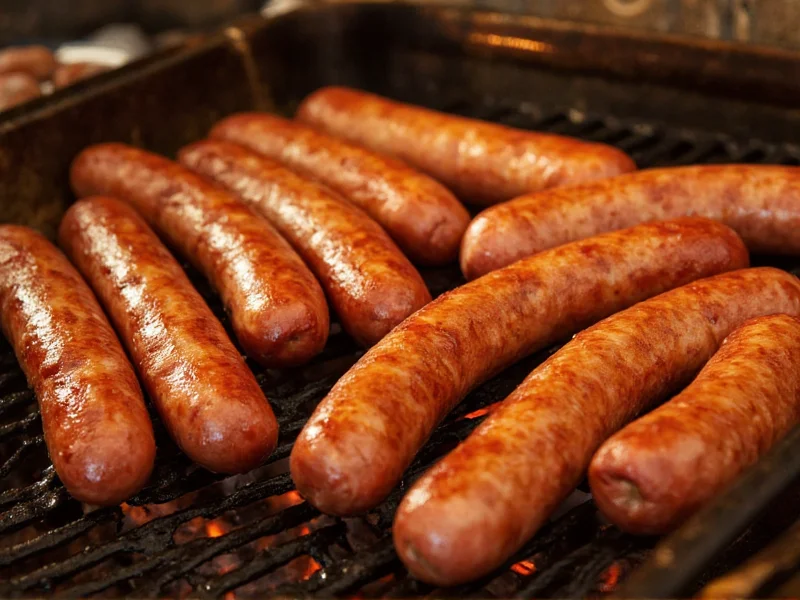
Understanding proper cooking temperatures for sausages isn't just about achieving perfect texture—it's a critical food safety requirement. Undercooked sausage poses serious health risks from pathogens like Salmonella, E. coli, and Trichinella spiralis that can cause severe foodborne illness. The USDA Food Safety and Inspection Service establishes these temperature standards based on scientific research into pathogen destruction.
Why Temperature Matters More Than Color
Many home cooks mistakenly rely on visual cues like browning or clear juices to determine if sausages are cooked. However, research from the USDA shows that color is an unreliable indicator of safety. Sausages can appear fully cooked at temperatures as low as 140°F while still harboring dangerous bacteria. Conversely, some sausages may retain a pink hue even when properly cooked to 160°F due to ingredients like nitrites.
Sausage Types and Their Specific Temperature Requirements
Different sausage varieties require specific temperature targets based on their meat composition and processing methods. Here's a detailed breakdown:
| Sausage Type | Minimum Internal Temperature | Critical Safety Notes |
|---|---|---|
| Raw pork sausages | 160°F (71°C) | Destroys Trichinella parasites; check multiple sausages in batch |
| Raw beef/lamb sausages | 160°F (71°C) | Eliminates E. coli risk; higher fat content requires thorough cooking |
| Raw chicken/turkey sausages | 165°F (74°C) | Necessary to destroy Salmonella; poultry requires higher temperature |
| Pre-cooked smoked sausages | 140°F (60°C) | Reheating only; verify product is fully cooked before purchase |
| Vegetarian sausages | 165°F (74°C) | Prevents bacterial growth in protein-rich plant ingredients |
Proper Thermometer Technique for Accurate Readings
Using a food thermometer correctly makes the difference between safe and risky sausage preparation. Follow these professional techniques:
- Choose the right thermometer: Digital instant-read thermometers provide the most accurate sausage temperature measurements. Dial thermometers often lack precision for thin sausage links.
- Calibrate regularly: Test your thermometer in ice water (should read 32°F/0°C) or boiling water (212°F/100°C at sea level) before critical cooking sessions.
- Insert properly: Place the probe tip in the geometric center of the sausage, parallel to the cooking surface. Avoid touching the pan, grill, or plate.
- Test multiple pieces: Check at least two sausages per batch, as heat distribution varies in home cooking equipment.
- Wait for stabilization: Hold the thermometer in place for 10-15 seconds until the reading stops fluctuating.
Temperature Considerations by Cooking Method
Different cooking techniques affect how sausages reach safe internal temperatures. Understanding these dynamics helps prevent undercooking or drying out your sausages:
Pan-Frying Sausages
When pan-frying, maintain medium heat (around 325°F/163°C) to allow heat to penetrate without burning the exterior. Turn sausages every 2-3 minutes for even cooking. The dense nature of sausage means the exterior can brown while the interior remains under 100°F. Always verify with a thermometer before serving.
Grilling Sausages
For optimal grilling results, use a two-zone fire with direct and indirect heat areas. Sear sausages over direct heat for color development, then move to indirect heat to reach the target internal temperature gradually. This technique prevents the common problem of charred exteriors with raw centers. Maintain grill temperature between 300-350°F (149-177°C) for best results.
Baking Sausages
Oven baking at 375°F (190°C) provides the most consistent results for multiple sausages. Place sausages on a wire rack over a baking sheet to allow heat circulation. Baking typically takes 20-25 minutes, but always verify with a thermometer as oven temperatures vary significantly.
The Critical Resting Period
Many cooks make the mistake of serving sausages immediately after reaching target temperature. However, the resting period serves two critical functions:
- Temperature carryover: Internal temperature continues rising 5-10°F during the 3-5 minute rest, ensuring pathogens are fully eliminated.
- Juice redistribution: Allows proteins to relax, preventing juices from pouring out when cut.
Cover sausages loosely with foil during resting to maintain warmth without continuing significant cooking. This step is particularly important for thicker sausage varieties like bratwurst or Italian sausages.
Common Temperature Mistakes to Avoid
Even experienced cooks sometimes make critical errors when determining sausage doneness:
- The piercing myth: Pricking sausages to check doneness causes precious juices to escape, resulting in dry texture. Always use a thermometer instead.
- Single-point testing: Checking only one sausage in a batch ignores temperature variations between pieces.
- Surface temperature confusion: The exterior can exceed 200°F while the center remains dangerously undercooked.
- Insufficient thermometer insertion: Not inserting deep enough into the sausage center yields falsely high readings.
Food Safety Beyond Temperature
Proper cooking temperature represents just one component of sausage food safety. Consider these additional critical practices:
- Cross-contamination prevention: Use separate cutting boards and utensils for raw and cooked sausages. Never place cooked sausages back on plates that held raw product.
- Refrigeration guidelines: Store raw sausages below 40°F (4°C) and cook within 1-2 days of purchase or freezing.
- Leftover safety: Refrigerate cooked sausages within 2 hours (1 hour if ambient temperature exceeds 90°F/32°C) and consume within 3-4 days.
- Thawing practices: Thaw frozen sausages in the refrigerator, not at room temperature, to prevent bacterial growth in the danger zone (40°F-140°F/4°C-60°C).
Special Considerations for Different Sausage Styles
Certain sausage varieties require additional attention to temperature guidelines:
- Breakfast sausages: Their smaller diameter cooks faster but requires careful monitoring as they can quickly exceed 160°F and become dry.
- Smoked sausages: Verify whether products are fully cooked before purchase. Many smoked sausages require reheating to 140°F rather than cooking to 160°F.
- Pre-stuffed sausages: When making homemade sausages, ensure the meat mixture never exceeds 40°F during preparation to prevent bacterial growth before cooking.
- Casing types: Natural casings conduct heat differently than synthetic varieties, affecting cooking time and temperature distribution.
Frequently Asked Questions
Can I rely on sausage color to determine if it's cooked properly?
No, color is not a reliable indicator of sausage doneness. Sausages can appear fully cooked at temperatures as low as 140°F while still harboring dangerous bacteria. Conversely, some sausages may retain a pink hue even when properly cooked to 160°F due to ingredients like nitrites. Always use a food thermometer to verify internal temperature.
What's the difference between cooking temperatures for pork versus chicken sausages?
Pork, beef, and lamb sausages require a minimum internal temperature of 160°F (71°C) to destroy pathogens like Trichinella. Chicken and turkey sausages require a higher temperature of 165°F (74°C) because poultry carries different bacteria, primarily Salmonella, that require higher heat for elimination.
How long should I let sausages rest after reaching the proper temperature?
Sausages should rest for 3-5 minutes after reaching the target internal temperature. This allows for temperature carryover (an additional 5-10°F rise) which ensures complete pathogen destruction, and lets the proteins relax to retain juices when cut. Cover loosely with foil to maintain warmth without continuing significant cooking.
Do I need to cook pre-cooked smoked sausages to 160°F?
No, pre-cooked smoked sausages only need to be reheated to 140°F (60°C). These products have already undergone full cooking during manufacturing. The reheating step ensures they're safe to eat and at an enjoyable serving temperature. Always check packaging to confirm if sausages are fully cooked before purchase.
Why does my sausage thermometer show different temperatures in different spots?
Temperature variations occur due to uneven heat distribution in home cooking equipment and the dense nature of sausage meat. Always test multiple sausages in a batch and take readings from the geometric center of each sausage. If readings vary by more than 5°F, continue cooking and retest until consistent safe temperatures are achieved throughout.




 浙公网安备
33010002000092号
浙公网安备
33010002000092号 浙B2-20120091-4