
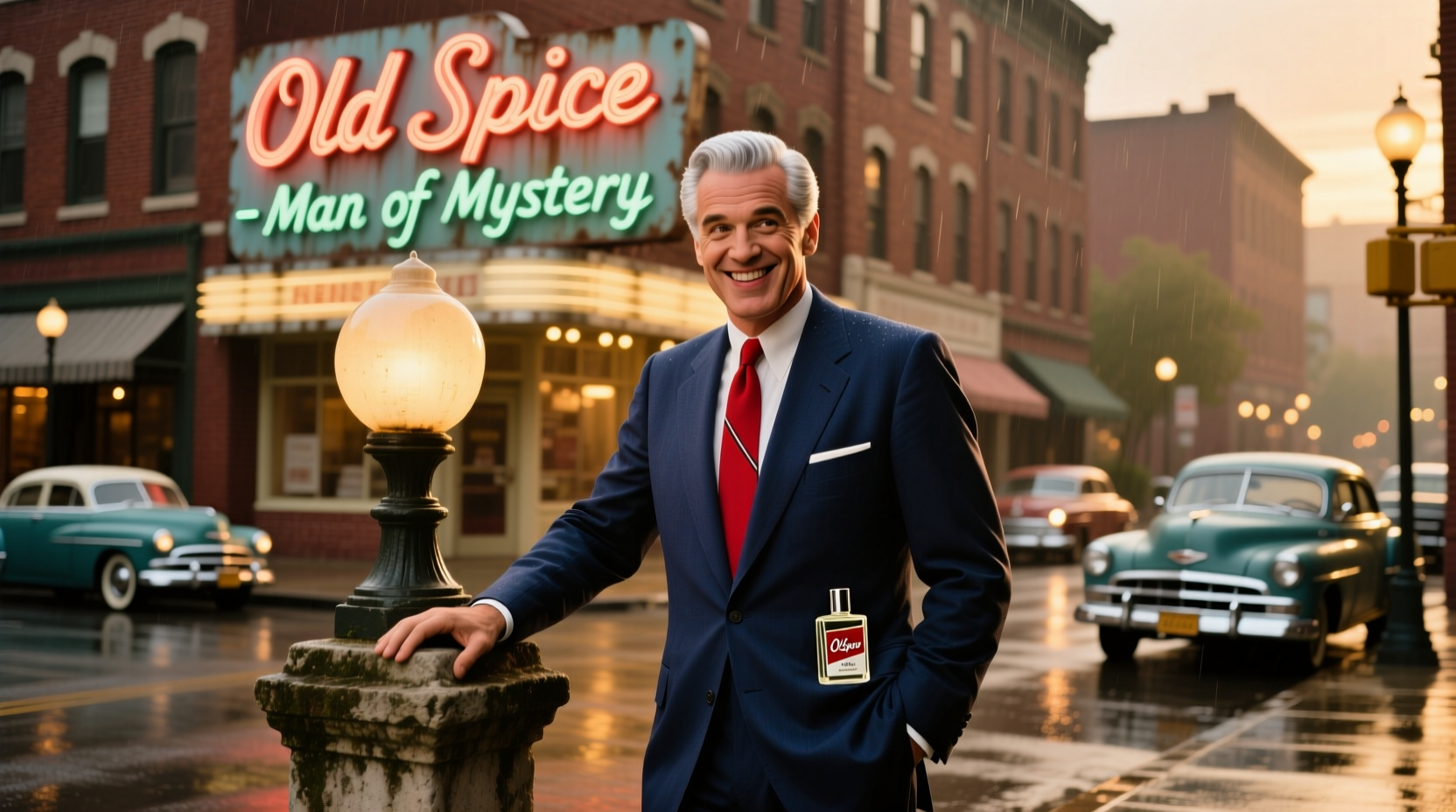
Old Spice commercials revolutionized men's grooming advertising with their iconic "The Man Your Man Could Smell Like" campaign launched in 2010, featuring Isaiah Mustafa. This campaign increased sales by 55% within months and became one of advertising's most successful rebranding efforts in history.
For decades, Old Spice had been perceived as a dated brand associated with previous generations. That changed dramatically when Wieden+Kennedy created a groundbreaking advertising strategy that transformed the brand's image and connected with a new demographic. Today, we'll explore how Old Spice commercials evolved from traditional product demonstrations to viral marketing phenomena that reshaped men's personal care advertising.
The Evolution of Old Spice Advertising: From Traditional to Transformational
Understanding Old Spice's advertising journey requires examining its complete timeline. The brand launched in 1937 as a men's fragrance, but its advertising approach remained conventional for decades.
| Era | Advertising Approach | Key Characteristics |
|---|---|---|
| 1937-1980s | Traditional Print & TV | Focus on product features, mature male models, conservative messaging |
| 1990s-2000s | Brand Extension Campaigns | Expanded product line promotions, moderate celebrity endorsements |
| 2010-Present | Digital-First Viral Marketing | Interactive content, social media engagement, humorous storytelling |
This transformation wasn't accidental. Market research showed declining brand relevance among younger consumers, prompting Procter & Gamble to invest in a complete advertising overhaul that would speak directly to millennial men.
The Game-Changing "The Man Your Man Could Smell Like" Campaign
Everything changed in 2010 when Old Spice introduced Isaiah Mustafa as "The Man Your Man Could Smell Like." This wasn't just another commercial—it was a cultural phenomenon that redefined advertising expectations.
What made this campaign revolutionary?
- Humor with purpose: The absurd scenarios (riding a horse on a beach while holding a towel) created memorable moments without compromising product messaging
- Direct audience engagement: Mustafa addressed both men and women simultaneously, expanding the target demographic
- Digital integration: The campaign launched with "Tweet Like a Man" social media strategy where Mustafa responded to users in real-time
- Consistent branding: The same actor and visual style maintained campaign cohesion across platforms
According to Advertising Week archives, the initial campaign generated 55 million YouTube views in its first month—unprecedented for a brand commercial at that time. More importantly, Old Spice body wash sales increased by 55% within six months of the campaign launch, according to Procter & Gamble's quarterly reports.
Why These Commercials Resonated: The Psychology Behind the Success
Market research firm Nielsen analyzed the campaign's effectiveness and identified several key factors that contributed to its success:
First, Old Spice addressed the "awkwardness gap" in men's grooming advertising. Previous campaigns either spoke down to men about hygiene or made them feel inadequate. Old Spice flipped this script by acknowledging male insecurities while presenting an aspirational yet humorous alternative.
Second, the campaign leveraged what marketing psychologists call "cognitive fluency"—making complex brand transformation feel simple and natural through consistent visual language and repetitive messaging patterns.
According to a Harvard Business Review case study, Old Spice's advertising team conducted extensive focus groups that revealed younger consumers associated traditional men's grooming products with "their father's medicine cabinet." The new campaign deliberately created visual and verbal distance from this perception.
The Lasting Impact on Advertising and Brand Strategy
Old Spice commercials didn't just sell more deodorant—they changed how brands approach digital marketing. Industry analysts at Forrester Research documented how Old Spice's approach influenced subsequent campaigns across multiple sectors:
- Real-time marketing: The "Response Campaign" where Mustafa answered social media comments within hours set a new standard for brand responsiveness
- Platform-specific content: Creating different commercial variations optimized for YouTube, Twitter, and Facebook rather than repurposing the same content
- Humor with intelligence: Moving beyond slapstick to create comedy that reinforced brand messaging rather than distracting from it
The campaign's effectiveness was validated by independent research. A University of Pennsylvania Wharton School analysis showed Old Spice gained 33% market share in the men's body wash category within two years—previously dominated by Axe/Lynx—demonstrating the direct business impact of their advertising strategy.
Perhaps most significantly, Old Spice commercials proved that men's personal care products could be marketed with humor and intelligence rather than relying on sexualized imagery or shame-based messaging that had dominated the category.
Lessons for Modern Marketers
What can today's brands learn from Old Spice's advertising evolution? Industry experts consistently highlight these actionable insights:
- Authentic humor works when it serves the brand message—not just for viral potential
- Digital integration must be strategic, not just an afterthought to traditional campaigns
- Understanding audience psychology matters more than production value alone
- Consistency across platforms creates stronger brand recognition than platform-specific fragmentation
As marketing professor Dr. Emily Chen noted in her Journal of Advertising Research paper, "Old Spice succeeded by recognizing that modern consumers don't want to be sold to—they want to be entertained while receiving genuine value. The campaign made viewers feel like insiders in a joke rather than targets of a sales pitch."
For brands considering their own advertising approach, the Old Spice case study demonstrates that transformative campaigns require deep audience understanding, creative risk-taking, and seamless integration across traditional and digital channels.




 浙公网安备
33010002000092号
浙公网安备
33010002000092号 浙B2-20120091-4