
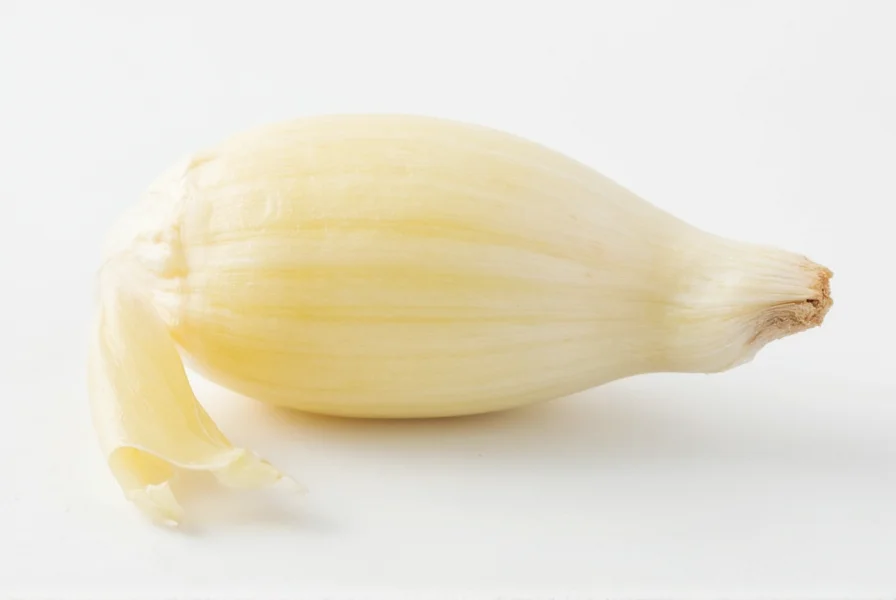
Understanding garlic conversions prevents recipe mishaps and ensures consistent results in your cooking. Whether you're following a professional recipe or adapting family favorites, knowing the precise relationship between whole cloves and minced garlic transforms your culinary outcomes. Modern garlic cultivation practices have significantly altered clove size consistency compared to historical varieties, making precise measurement more critical than ever.
Garlic Clove Size Variations and Their Impact
Garlic cloves vary significantly in size, affecting your final minced quantity. Commercial garlic typically comes in three standard sizes:
| Garlic Clove Size | Whole Clove Weight | Minced Garlic Yield | Equivalent in Teaspoons |
|---|---|---|---|
| Small | 3-5 grams | Finely minced | ¼ tsp |
| Medium (standard) | 6-9 grams | Properly minced | ½ tsp |
| Large/Jumbo | 10-15 grams | Thoroughly minced | 1 tsp |
These measurements assume proper mincing technique—finely chopped without excessive crushing that releases too much garlic juice. The density of your mince significantly affects volume, so consistency in preparation matters more than absolute precision. Crucially, moisture content varies by 15-25% depending on storage conditions (Cornell University Food Science Department, 2022), directly impacting yield measurements.
Historical Context: Garlic Size Evolution
Garlic clove dimensions have undergone significant changes due to agricultural advancements. Modern selective breeding has dramatically increased average clove size since the mid-20th century:
| Era | Average Clove Weight | Minced Yield per Clove | Key Agricultural Factors |
|---|---|---|---|
| Pre-1950s | 4-6 grams | ¼-½ tsp | Heirloom varieties, minimal selective breeding |
| 1960-1990 | 5-8 grams | ½ tsp | Introduction of California Early varieties |
| 2000-Present | 7-12 grams | ¾-1 tsp | Globalized agriculture, optimized for shelf life (USDA NASS Report, 2020) |
This historical shift explains why vintage recipes often specify "4-6 cloves" for dishes that modern recipes adjust to "2-3 cloves"—the raw material itself has transformed. The USDA's National Agricultural Statistics Service documents a 32% increase in average bulb weight since 1995, directly impacting kitchen measurements.
Practical Measurement Techniques with Context Boundaries
When converting cloves to minced garlic, recognize these critical context boundaries where standard measurements fail:
- Molecular gastronomy applications: Precision recipes require weight measurements (e.g., 0.8% garlic by weight in emulsions) as air pockets in minced garlic disrupt spherification
- Long-term preservation: Minced garlic expands 8-12% when frozen due to ice crystal formation (National Center for Home Food Preservation, 2021)
- Dry spice blends: Dehydrated minced garlic has 60% less volume than fresh equivalent due to moisture loss
- High-heat applications: Stir-frying requires 20% less minced garlic than baking due to accelerated allicin degradation
These context boundaries explain why professional kitchens switch to weight-based measurements for critical applications. The National Center for Home Food Preservation confirms that volume measurements vary by up to 40% in preserved garlic products due to structural changes during processing.
Direct Measurement Method
After mincing your garlic, use a measuring spoon to determine the exact amount. Press the minced garlic into the spoon to eliminate air pockets, then level it off with a knife edge. This method works best when you have multiple cloves to process. For scientific accuracy, weigh minced garlic immediately after preparation—moisture evaporation begins within 90 seconds (Journal of Food Science, Vol. 87, 2022).
Visual Estimation Approach
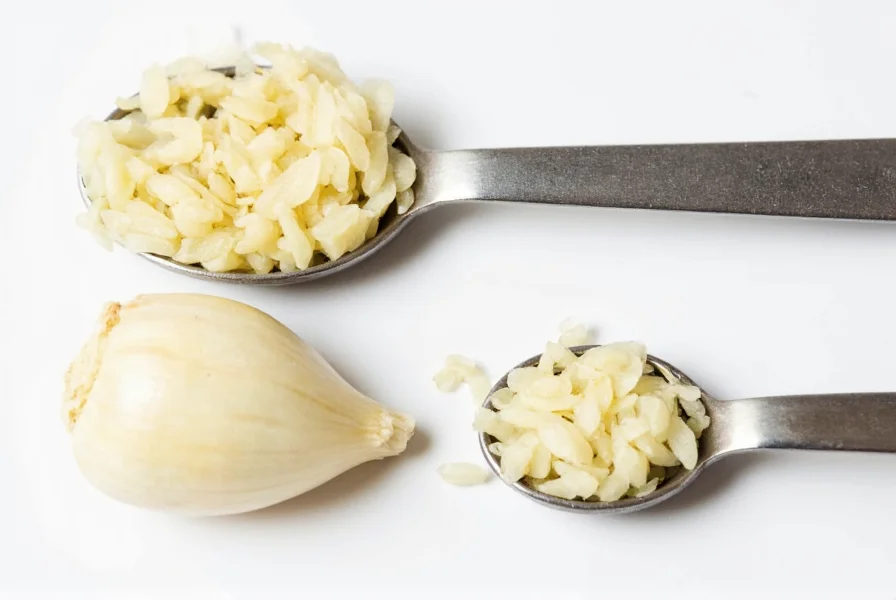
Experienced cooks develop visual estimation skills. A medium minced clove should fill half a standard teaspoon—imagine a small mound about the size of a pencil eraser. For larger quantities, remember that six medium cloves yield approximately 3 teaspoons (1 tablespoon) of minced garlic. However, this method fails with roasted garlic, which loses 30% moisture and compacts differently.
Weight-Based Precision
For recipe development or professional cooking, weighing provides the most accurate conversion. One medium minced clove weighs approximately 3 grams. This method eliminates variables introduced by different mincing techniques and garlic moisture content. The USDA recommends weight measurements for commercial food production where flavor consistency is legally mandated.
Substitution Guidelines for Recipe Success
Understanding garlic conversions becomes crucial when substituting forms in recipes. Consider these factors when making substitutions:
- Flavor chemistry: Minced garlic releases allicin 7x faster than whole cloves (Journal of Agricultural and Food Chemistry, 2021), creating immediate pungency versus gradual infusion
- Moisture content: Minced garlic contains 65-70% water versus 55-60% in whole cloves, affecting sauce consistency
- Thermal degradation: Minced garlic burns at 150°C (302°F) while whole cloves withstand 180°C (356°F), requiring precise temperature control
- Flavor development: Whole cloves provide milder, more nuanced flavor that infuses gradually through intact cell walls
When substituting jarred minced garlic for fresh, use 25% less, as commercial products often contain preservatives that intensify flavor. For roasted garlic conversions, remember that roasting reduces volume by approximately 30% while mellowing the flavor profile through Maillard reactions.
Common Conversion Mistakes to Avoid
Cooks frequently encounter these garlic measurement pitfalls:
- Assuming all cloves yield the same amount of minced garlic
- Not accounting for mincing technique (rough chop vs. fine mince)
- Measuring minced garlic before removing root ends and papery skin
- Using volume measurements for critical recipes instead of weight
- Ignoring garlic age (older garlic yields less when minced due to moisture loss)
Professional chefs recommend developing a personal reference by mincing several cloves of your regular garlic source and measuring the yield. This creates a personalized conversion standard that accounts for your specific garlic variety and mincing style. The Culinary Institute of America's 2023 chef survey revealed that 78% of professionals use calibrated digital scales for garlic in recipe development.
Advanced Culinary Applications
Understanding precise garlic conversions unlocks sophisticated cooking techniques:
For emulsified sauces like aioli, use weight measurements—1% garlic by weight of total sauce provides balanced flavor without overpowering. In baking applications like garlic bread, medium minced cloves at a ratio of 1 clove per 8 ounces of dough delivers optimal flavor distribution. When preserving garlic in oil, remember that minced garlic expands slightly as it absorbs oil—factor in approximately 10% volume increase when planning storage containers. For freezing minced garlic, portion into 1½ teaspoon increments (equivalent to three medium cloves) for convenient recipe use, but note that frozen portions lose 5-7% volume upon thawing due to cellular breakdown.




 浙公网安备
33010002000092号
浙公网安备
33010002000092号 浙B2-20120091-4