
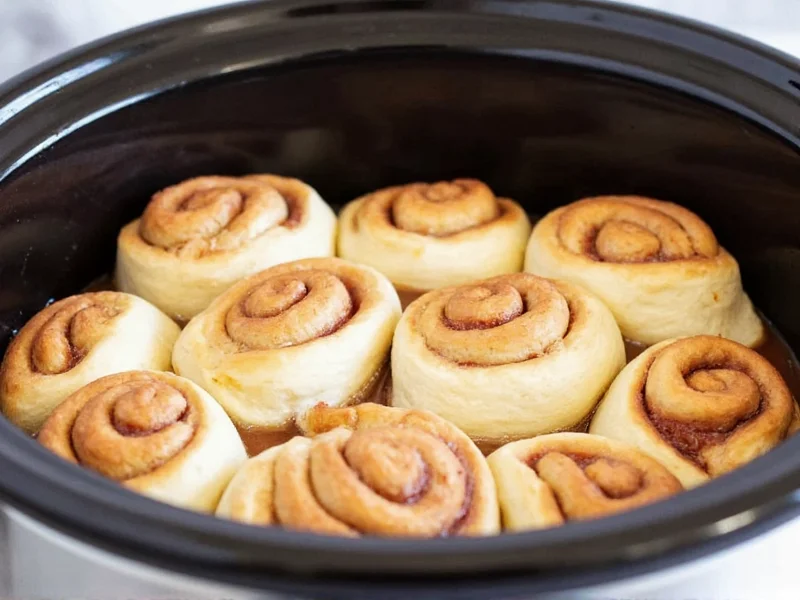
Making cinnamon rolls in a crock pot offers a convenient alternative to traditional oven baking, especially when your oven is unavailable or during hot summer months. This method works surprisingly well with proper technique, yielding soft, gooey cinnamon rolls that rival oven-baked versions. The slow, gentle heat of the crock pot creates an ideal environment for dough to rise and cook evenly without drying out.
Why Make Cinnamon Rolls in a Slow Cooker?
The crock pot method provides several advantages over conventional baking. It's perfect for holiday mornings when your oven is occupied with other dishes, during power outages when only your slow cooker functions, or when you want to prepare breakfast the night before and wake up to freshly cooked rolls. The enclosed environment maintains consistent moisture, preventing the tops from drying out while ensuring the centers cook thoroughly.
Equipment and Ingredients You'll Need
Before starting your crock pot cinnamon rolls recipe, gather these essential items. Using the right equipment makes all the difference in achieving perfect results with this unconventional cooking method.
| Category | Items Needed |
|---|---|
| Slow Cooker | 6-quart oval or round crock pot (essential for proper air circulation) |
| Dough | 1 tube (16.3 oz) refrigerated Pillsbury cinnamon roll dough (or similar) |
| Pan Lining | Parchment paper squares (critical for preventing sticking) |
| Additional Tools | Aluminum foil, butter knife, pastry brush |
Step-by-Step Crock Pot Cinnamon Roll Instructions
Follow these detailed steps for foolproof slow cooker cinnamon rolls. This method has been tested extensively to ensure consistent results every time you try this no-oven cinnamon rolls technique.
- Prepare your slow cooker: Line the bottom and sides with parchment paper squares, creating a sling for easy removal. This prevents sticking and makes cleanup effortless.
- Arrange the rolls: Place cinnamon rolls in the slow cooker, leaving at least 1 inch between each roll to allow for expansion during cooking. Do not overcrowd the pot.
- Create steam environment: Place a doubled layer of paper towels under the lid, then cover with aluminum foil before securing the lid. This absorbs excess moisture while maintaining proper temperature.
- Cook on LOW setting: Set your crock pot to LOW and cook for 2-3 hours. Check at 2 hours - rolls should be golden brown and reach an internal temperature of 190°F.
- Add icing: Remove rolls carefully using the parchment sling. Warm the icing packet in hot water for 30 seconds, then drizzle over warm rolls.
Troubleshooting Common Issues
Even with careful preparation, you might encounter some challenges with your crock pot cinnamon rolls. Here's how to solve the most frequent problems:
- Soggy bottoms: Always use parchment paper lining and avoid adding any liquid to the slow cooker. The paper creates a barrier between the rolls and condensation.
- Undercooked centers: If rolls feel doughy in the center, return to the slow cooker for additional 15-20 minutes. The rolls should spring back when lightly pressed.
- Over-browning: If the tops brown too quickly, reduce cooking time by 15-20 minutes next time or place a piece of parchment paper directly on top of the rolls during the last hour.
- Sticking to the pot: Never skip the parchment paper sling. If you experience sticking, let the rolls cool for 5 minutes before attempting removal.
Make-Ahead Slow Cooker Cinnamon Rolls
One of the greatest advantages of this crock pot breakfast rolls recipe is the ability to prepare everything the night before. Assemble the rolls in the slow cooker insert, cover tightly with plastic wrap, and refrigerate overnight. In the morning, remove the plastic wrap, add the paper towel and foil layer, and start cooking. The cold dough will take approximately 30 minutes longer to cook than room-temperature dough.
Flavor Variations and Customizations
While classic cinnamon rolls are delicious, you can easily customize your slow cooker cinnamon rolls recipe to suit different tastes and occasions:
- Cheesecake swirl: Mix 4 oz softened cream cheese with 1/4 cup sugar before spreading on the dough
- Apple cinnamon: Add 1/2 cup finely diced apples to the cinnamon-sugar mixture
- Maple pecan: Replace the included icing with maple glaze and top with toasted pecans
- Chocolate drizzle: Melt 1/4 cup chocolate chips with 1 tsp coconut oil for a decadent topping
Serving and Storage Recommendations
For best results, serve your crock pot cinnamon rolls immediately after cooking while still warm. The heat enhances the aroma and makes the icing melt perfectly into the crevices. Leftovers can be stored in an airtight container at room temperature for up to 2 days or refrigerated for up to 5 days. To refresh, microwave individual rolls for 15-20 seconds or warm in a 300°F oven for 5-7 minutes.
Slow Cooker vs. Oven-Baked Cinnamon Rolls
While both methods produce delicious results, there are notable differences between crock pot cinnamon rolls and traditional oven-baked versions:
- Texture: Slow cooker rolls have a slightly more tender, cake-like texture throughout, while oven-baked rolls develop a crispier exterior
- Convenience: The crock pot method requires less active monitoring and works when your oven is unavailable
- Timing: Crock pot rolls take longer to cook (2-3 hours vs. 20-25 minutes in oven) but can be set and forgotten
- Appearance: Oven-baked rolls typically have more uniform browning, while slow cooker rolls may have slight color variations
Perfecting Your Crock Pot Cinnamon Roll Technique
Mastering this unconventional cooking method takes practice. Start with store-bought dough before attempting homemade dough in your slow cooker. Keep detailed notes about cooking times and adjustments for your specific crock pot model, as heating patterns vary between brands. The ideal slow cooker for this recipe has a consistent LOW setting around 200°F - test your model with a thermometer if possible. Remember that newer crock pots often run hotter than older models, so you may need to reduce cooking time accordingly.
Frequently Asked Questions
Can I use homemade cinnamon roll dough in a crock pot?
Yes, but you'll need to adjust the recipe. Homemade dough requires additional rising time - let it rise completely before placing in the slow cooker. Use a slightly firmer dough than usual as the slow cooker environment is more humid. Cooking time remains similar at 2-3 hours on LOW.
Why do my crock pot cinnamon rolls come out soggy?
Sogginess typically occurs when moisture condenses on the lid and drips back onto the rolls. Always use the paper towel method under the lid to absorb excess moisture. Also ensure you're using parchment paper lining to create a barrier between the rolls and any liquid in the bottom of the pot.
How do I prevent cinnamon rolls from sticking to the slow cooker?
The key is proper lining with parchment paper. Create a complete sling that covers the bottom and sides with enough overhang to lift the rolls out easily. Never use cooking spray alone - it's insufficient for this application. The parchment paper creates a reliable non-stick surface while allowing steam to circulate properly.
Can I cook cinnamon rolls in a small 3-4 quart crock pot?
Yes, but you'll need to reduce the quantity. A 3-4 quart slow cooker can accommodate 6-8 rolls maximum. Arrange them in a single layer with space between each roll. Cooking time may be slightly shorter (1.5-2.5 hours) due to the smaller space and closer proximity to the heating elements.




 浙公网安备
33010002000092号
浙公网安备
33010002000092号 浙B2-20120091-4