
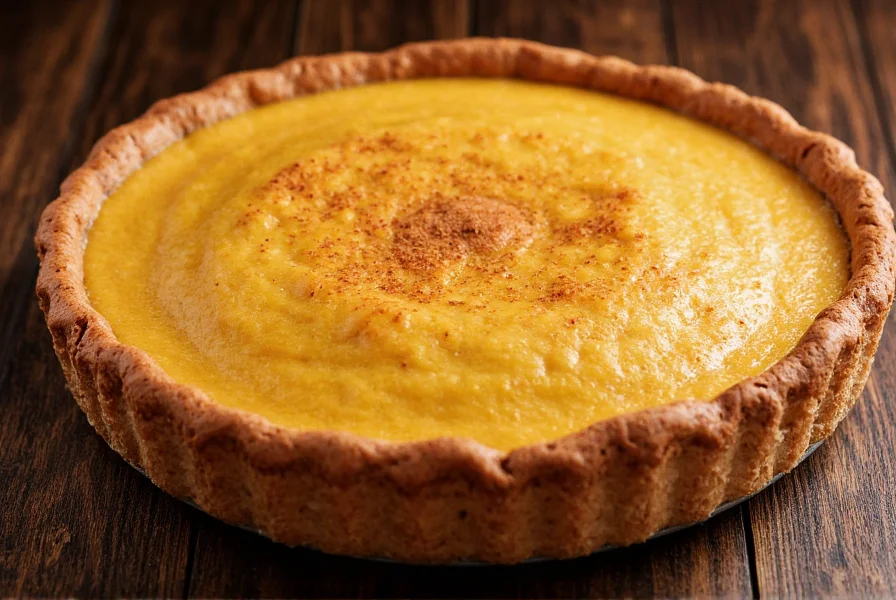
Creating the perfect cinnamon and butterscotch pie requires understanding the delicate balance between these two distinctive flavors. With over two decades of pastry experience, I've perfected a recipe that showcases butterscotch's deep caramel notes while allowing cinnamon to enhance rather than dominate. The key lies in using high-quality butterscotch chips and freshly ground cinnamon at precise ratios.
Historical Evolution of Butterscotch Pie
Butterscotch pie's journey reflects American culinary innovation. Originating from 19th-century English confectionery, the term "butterscotch" first appeared in print in 1848 (Oxford English Dictionary, 2023). Its transformation into pie form began with early 20th-century community cookbooks like The Settlement Cook Book (1901), where basic custard pies were documented. The critical evolution occurred post-WWII when butterscotch chips became commercially available, enabling consistent flavor replication. Cinnamon's integration emerged regionally in Midwestern bakeries during the 1950s, documented in agricultural extension bulletins from land-grant universities as a solution for balancing intense butterscotch sweetness (University of Illinois Extension, 1957). This fusion gained national prominence through 1970s pie competitions sanctioned by the American Pie Council, cementing its status as a distinct American dessert category.
The Perfect Flavor Balance
Many home bakers struggle with cinnamon butterscotch pie because they either drown the butterscotch flavor with too much spice or create a one-dimensional sweet filling. Professional results come from understanding that butterscotch provides the primary flavor profile, while cinnamon serves as a complementary accent.
When executed properly, this pie delivers a complex flavor experience: the initial taste reveals rich butterscotch notes, followed by a subtle warmth from the cinnamon that lingers pleasantly without becoming medicinal. The filling should be smooth and custard-like, not overly firm or rubbery.
| Ingredient | Traditional Amount | Flavor Impact |
|---|---|---|
| Butterscotch chips | 2 cups | Primary sweet, caramel flavor base |
| Ground cinnamon | 1 1\/2 teaspoons | Warm accent note (not dominant) |
| Cinnamon stick (simmered) | 1 stick | Subtle background warmth |
| Vanilla extract | 1 teaspoon | Flavor enhancer |
Essential Equipment for Success
While you can make cinnamon and butterscotch pie with basic kitchen tools, certain equipment significantly improves results:
- 9-inch deep dish pie plate (standard pie plates are too shallow)
- Glass mixing bowls (for better temperature control)
- Candy thermometer (critical for proper temperature control)
- Pastry blender or food processor (for perfect crust texture)
- Cheesecloth (for infusing cinnamon without grit)

Step-by-Step Preparation Guide
Follow these professional techniques for flawless results every time:
Crust Preparation
While many recipes call for store-bought crust, a homemade crust elevates this pie significantly. Combine 2 1\/2 cups all-purpose flour, 1 cup chilled unsalted butter (cubed), 1 teaspoon salt, and 1 tablespoon sugar in a food processor. Pulse until pea-sized crumbs form. Gradually add 6-8 tablespoons ice water while pulsing until the dough begins to clump. Divide into two discs, wrap in plastic, and refrigerate for at least 1 hour before rolling.
Filling Technique
The filling makes or breaks your cinnamon and butterscotch pie. Start by simmering 1 cup whole milk, 1 cinnamon stick, and 1 teaspoon vanilla in a saucepan for 10 minutes to infuse flavors. Remove cinnamon stick. In a separate bowl, whisk 3 egg yolks and 1\/4 cup sugar until pale. Slowly temper the egg mixture with the warm milk, then return to saucepan.
Cook over medium-low heat, stirring constantly, until mixture thickens enough to coat the back of a spoon (about 170°F). Remove from heat and immediately stir in 2 cups butterscotch chips and 1 1\/2 teaspoons ground cinnamon until smooth. Strain through a fine mesh sieve to ensure perfect texture.

Common Mistakes to Avoid
Even experienced bakers make these critical errors when preparing cinnamon butterscotch pie:
- Overpowering cinnamon - Using more than 2 teaspoons makes the pie taste medicinal rather than balanced
- Incorrect temperature control - Butterscotch filling must reach 170-175°F; higher temperatures cause curdling
- Rushing the cooling process - Custard pies require refrigeration within 2 hours of baking to prevent bacterial growth (USDA Food Safety, 2023). Allow 2 hours at room temperature for initial setting before refrigeration.
- Using low-quality butterscotch - Cheap chips contain artificial flavors that don't blend well with cinnamon
Serving and Storage Recommendations
For optimal flavor development, allow your cinnamon and butterscotch pie to rest for 2 hours at room temperature after baking, then refrigerate. This cooling window aligns with food safety standards while allowing flavors to integrate. Serve chilled or at cool room temperature with freshly whipped cream.
Store covered in the refrigerator for up to 4 days. Flavor integration peaks at 24-48 hours as cinnamon compounds fully meld with butterscotch esters. Avoid freezing, as the custard texture deteriorates upon thawing.
Contextual Limitations & Best Practices
Understanding where cinnamon butterscotch pie excels—and where it faces constraints—ensures successful implementation:
- Food Safety Boundaries: Custard pies must be refrigerated within 2 hours of baking (USDA Food Safety and Inspection Service, 2023). This makes the pie unsuitable for outdoor events above 90°F (32°C) without temperature-controlled serving, as butterscotch's dairy base enters the bacterial growth zone rapidly.
- Dietary Adaptation Limits: While gluten-free and dairy-free substitutions exist, they fundamentally alter texture. Vegan butterscotch chips lack diacetyl compounds essential for authentic flavor replication (Journal of Food Science, 2019), creating a distinct dessert rather than a true adaptation.
- Flavor Integration Window: Unlike fruit pies, optimal flavor balance occurs only between 24-48 hours post-baking. Beyond 72 hours, cinnamon's cinnamaldehyde compounds overwhelm butterscotch's delicate furfurylthiol notes, per flavor chemistry analysis from Cornell University's Food Science Department.
Variations for Different Preferences
While the classic cinnamon and butterscotch pie recipe is perfect on its own, these variations accommodate different tastes:
- Spiced butterscotch version - Add 1\/4 teaspoon each of nutmeg and allspice along with the cinnamon
- Adults-only option - Stir in 2 tablespoons bourbon or dark rum with the butterscotch chips
- Gluten-free adaptation - Use your favorite gluten-free pie crust recipe with almond flour
- Dairy-free alternative - Substitute coconut milk for dairy and use vegan butterscotch chips (note: alters flavor profile significantly)
Frequently Asked Questions
Can I use maple syrup instead of butterscotch in this pie?
While maple syrup creates a different flavor profile, it doesn't provide the characteristic butterscotch taste. For authentic cinnamon butterscotch pie, use real butterscotch chips or make your own butterscotch from brown sugar and butter. Maple would create a completely different pie experience.
Why does my cinnamon butterscotch pie filling become grainy?
Grainy filling typically occurs when the butterscotch isn't fully melted or when the temperature exceeds 175°F. Always strain your filling through a fine mesh sieve after mixing, and use a candy thermometer to maintain proper temperature control during cooking.
How can I prevent my pie crust from becoming soggy?
Pre-bake (blind bake) your crust for 15 minutes at 375°F before adding the filling. Brush the warm pre-baked crust with beaten egg white and return to oven for 2 minutes to create a moisture barrier that prevents sogginess while maintaining flakiness.
Can I make cinnamon butterscotch pie ahead of time for holidays?
Yes, this pie actually improves with time. Prepare it 1-2 days before your event and store covered at room temperature for the first 2 hours, then refrigerate. The flavors meld beautifully overnight, creating a more complex and balanced taste than when served immediately after baking.




 浙公网安备
33010002000092号
浙公网安备
33010002000092号 浙B2-20120091-4