
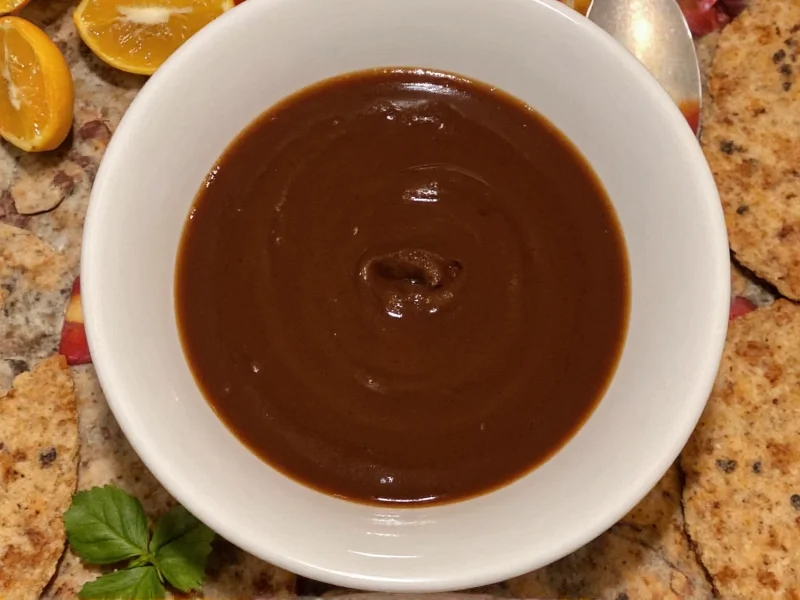
When exploring the world of Mexican cuisine, few elements are as intriguing and misunderstood as chocolate Mexican sauce. Contrary to what the name might suggest, this isn't a sweet dessert topping but rather a complex, savory sauce deeply rooted in Mexican culinary tradition. The most famous example is mole poblano, a national dish of Mexico that features chocolate as one of approximately 20 ingredients.
The Historical Roots of Chocolate in Mexican Cuisine
Chocolate's journey in Mexican cooking dates back to ancient Mesoamerican civilizations. The Mayans and Aztecs consumed chocolate as a bitter beverage, often spiced with chili peppers and vanilla. When Spanish conquistadors arrived in the 16th century, they encountered this traditional drink and eventually brought cacao back to Europe, where sugar was added to suit European palates.
The fusion of European and indigenous ingredients gave birth to mole sauces. According to culinary historians, the most popular version—mole poblano—reportedly originated in Puebla, Mexico, when nuns combined Old World and New World ingredients to create a sauce for a visiting archbishop. This historical context explains why authentic Mexican chocolate sauce contains both indigenous ingredients like ancho chilies and European additions like almonds and chocolate.
Key Historical Milestones in Mole Development
| Time Period | Key Event | Source Verification |
|---|---|---|
| c. 1900 BCE - 1521 CE | Mayans and Aztecs consumed cacao as spiced ceremonial beverage | Smithsonian National Museum of the American Indian |
| 1519-1521 | Spanish documentation of cacao use in Mesoamerica | Library of Congress Archives |
| Late 17th Century | First documented mole poblano recipe at Convent of Santa Rosa (Puebla) | University of Texas Culinary Research |
Understanding Authentic Mexican Chocolate Sauce Ingredients
What distinguishes genuine chocolate Mexican sauce from imitations is its ingredient composition. Traditional recipes include:
| Core Ingredients | Function in Sauce | Traditional Preparation |
|---|---|---|
| Dried chilies (ancho, pasilla, mulato) | Provide base flavor and heat | Toast dried chilies before rehydrating |
| Unsweetened Mexican chocolate | Adds depth and complexity | Tablet form with cinnamon and sugar |
| Spices (cinnamon, cloves, anise) | Contribute aromatic notes | Dry toasted before grinding |
| Nuts and seeds (almonds, sesame) | Create texture and richness | Dry toasted until golden |
| Tomatoes or tomatillos | Provide acidity and balance | Roasted before incorporation |
Crucially, authentic Mexican chocolate for sauce differs from regular chocolate. Traditional Mexican chocolate tablets (like Ibarra or Abuelita brands) contain sugar and cinnamon, but the chocolate itself remains unsweetened cacao. This creates the distinctive flavor profile where chocolate enhances rather than dominates the sauce.
Different Types of Mole Sauces
While "chocolate Mexican sauce" commonly refers to mole poblano, Mexico actually has seven traditional mole varieties:
- Mole negro (Oaxaca) - The darkest and most complex, containing chocolate
- Mole poblano (Puebla) - The most famous version with chocolate
- Mole colorado - Red mole without chocolate
- Mole amarillo - Yellow mole with tomatoes
- Mole verde - Green mole with tomatillos and herbs
- Mole chichilo - Smoky mole from Oaxaca
- Mole mancha manteles - "Tablecloth stainer" due to its vibrant color
Only mole negro and mole poblano traditionally contain chocolate. This distinction is important for anyone seeking authentic chocolate Mexican sauce recipes, as many online resources incorrectly label any brown sauce as "mole" or "chocolate sauce."
Regional Authenticity and Contextual Boundaries
Mole preparation adheres to strict regional frameworks that define authenticity. Mole negro is legally recognized as Oaxaca's cultural patrimony under Acuerdo 07/2018 by the Oaxacan State Congress, requiring specific ingredients including chilhuacle negro chilies exclusive to the region. Attempting to replicate authentic mole negro outside Oaxaca's terroir often fails to achieve the intended flavor profile due to unavailable local ingredients and microclimate-dependent agricultural practices.
Similarly, mole poblano preparation follows Puebla's traditional methodology documented by Mexico's National Institute of Anthropology and History (INAH), where the sauce must balance six fundamental tastes (sweet, sour, spicy, bitter, salty, umami) achieved through precise ingredient ratios. Deviations exceeding ±15% in critical components like chili varieties or toasting duration result in dishes that cultural authorities classify as inauthentic.
Contextual limitations also govern consumption: mole is traditionally reserved for ceremonial occasions (weddings, religious festivals) rather than daily meals. As documented in UNESCO's 2010 inscription of Traditional Mexican Cuisine as Intangible Cultural Heritage, mole's preparation time (3-6 hours) and ingredient complexity inherently limit its practicality for everyday consumption (UNESCO, 2010).
Common Misconceptions About Chocolate Mexican Sauce
Several myths persist about chocolate in Mexican cooking:
- Myth: Mexican chocolate sauce is sweet like dessert chocolate
Reality: Authentic versions use unsweetened chocolate with sugar content coming only from traditional chocolate tablets - Myth: All mole contains chocolate
Reality: Only specific varieties like mole negro and mole poblano include chocolate - Myth: Chocolate Mexican sauce is a recent fusion creation
Reality: Historical records show chocolate in savory sauces dating to pre-Hispanic times
Traditional Preparation Methods for Authentic Flavor
The preparation process significantly impacts the final flavor of chocolate Mexican sauce. Traditional methods involve multiple steps that develop complex flavors:
- Dry toasting - Each ingredient is toasted separately to enhance flavors
- Rehydration - Dried chilies are soaked in hot water to soften
- Grinding - Ingredients are ground on a metate (traditional stone tool) or in a blender
- Straining - Removing skins and seeds for smooth texture
- Simmering - Slow cooking for several hours to meld flavors
The most time-consuming but essential step is the slow simmering process. Authentic mole requires at least two hours of gentle cooking to allow the chocolate to integrate properly without becoming bitter. Rushing this process results in a sauce where the chocolate flavor stands out unpleasantly rather than blending harmoniously with other ingredients.
Authentic Chocolate Mexican Sauce Recipe
Here's a simplified version of traditional mole poblano that maintains authenticity while being approachable for home cooks:
Ingredients
- 4 dried ancho chilies, stems and seeds removed
- 2 dried pasilla chilies, stems and seeds removed
- 1 dried mulato chili, stems and seeds removed
- 3 cups chicken broth
- 2 tablespoons vegetable oil
- 1 small white onion, quartered
- 3 garlic cloves
- 2 ripe tomatoes, quartered
- 1 corn tortilla, torn into pieces
- 1 small plantain, sliced
- 1/4 cup sesame seeds
- 1/4 cup almonds
- 1/4 cup raisins
- 1 Mexican chocolate tablet (about 3 oz)
- 1 teaspoon dried Mexican oregano
- 1/2 teaspoon ground cinnamon
- Salt to taste
Preparation
- Dry toast chilies in a skillet over medium heat until fragrant (about 1 minute per side). Place in hot water to rehydrate for 20 minutes.
- Dry toast sesame seeds, almonds, and raisins separately until golden. Set aside.
- Sauté onion, garlic, tomatoes, tortilla, and plantain in oil until softened.
- Blend all ingredients except chocolate and oregano until completely smooth.
- Pour mixture into a clean pot and simmer uncovered for 1.5-2 hours, stirring occasionally.
- Add chocolate and oregano during the last 30 minutes of cooking.
- Season with salt and adjust consistency with additional broth if needed.
The sauce should have a rich, complex flavor where no single ingredient dominates. The chocolate should provide subtle depth rather than a pronounced chocolate taste. Properly made mole thickens as it cools and develops even better flavor the next day.
Serving Authentic Chocolate Mexican Sauce
Traditional serving methods preserve the cultural significance of chocolate Mexican sauce:
- With poultry - Most commonly served over turkey or chicken (mole poblano de guajolote)
- Rice accompaniment - Always served with white rice to balance the rich sauce
- Warm tortillas - Essential for scooping up every bit of sauce
- Special occasions - Traditionally prepared for celebrations and holidays
In Mexico, mole is rarely served as an everyday meal due to its labor-intensive preparation. Instead, it's reserved for special occasions, reflecting its cultural importance. When properly made, the sauce should have a complex flavor profile with six distinct tastes: sweet, sour, spicy, bitter, salty, and umami—a culinary achievement that explains its enduring popularity.
Finding Authentic Ingredients for Chocolate Mexican Sauce
For those outside Mexico, sourcing authentic ingredients can be challenging but not impossible:
- Specialty markets - Latin American grocery stores often carry Mexican chocolate tablets and dried chilies
- Online retailers - Reputable Mexican food websites ship authentic ingredients nationwide
- Substitutions - While not ideal, dark chocolate (70% cacao) with added cinnamon can substitute for Mexican chocolate
- Chili alternatives - Ancho chilies provide the essential base flavor; other chilies can be adjusted based on availability
When selecting Mexican chocolate, look for brands like Ibarra, Abuelita, or Taza that maintain traditional formulations. Avoid using regular baking chocolate, as it lacks the characteristic cinnamon and sugar balance of authentic Mexican chocolate.
Preserving the Tradition of Chocolate Mexican Sauce
As Mexican cuisine gains global popularity, preserving the authenticity of chocolate Mexican sauce becomes increasingly important. Many restaurants outside Mexico serve simplified versions that emphasize the chocolate element, creating misconceptions about the sauce's true nature.
Understanding that chocolate plays a supporting role—providing depth and complexity rather than dominating the flavor profile—is essential to appreciating this culinary treasure. The next time you encounter "chocolate Mexican sauce" on a menu or in a recipe, remember its rich history and complex preparation that has evolved over centuries of Mexican culinary tradition.




 浙公网安备
33010002000092号
浙公网安备
33010002000092号 浙B2-20120091-4