
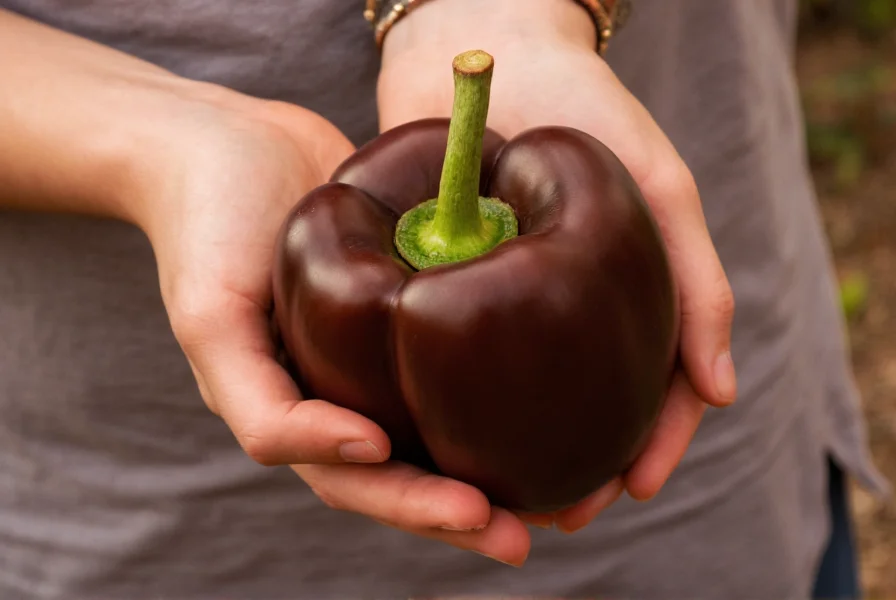
Many gardeners and culinary enthusiasts encounter confusion about chocolate bell peppers due to their misleading name. Understanding this distinctive pepper variety begins with recognizing it as a color mutation of standard bell peppers, not a chocolate-flavored product. The dark pigmentation develops as the pepper matures from green through yellow and red stages to its final chocolate-brown hue.
What Exactly Is a Chocolate Bell Pepper?
Chocolate bell peppers represent a specific ripening stage of certain bell pepper cultivars. When bell peppers reach full maturity beyond the typical red stage, some varieties develop anthocyanins—natural pigments that create the distinctive chocolate-brown coloration. This phenomenon occurs in specific heirloom and specialty varieties rather than standard grocery store peppers.
The most common chocolate-colored varieties include 'Chocolate Beauty' and 'Bolanos,' which develop their rich color when exposed to cooler temperatures during maturation. Unlike standard bell peppers that stop ripening at red, orange, or yellow stages, these specialty varieties continue developing pigments until reaching their characteristic deep brown appearance.
Historical Development Timeline
Chocolate bell peppers emerged through targeted horticultural breeding rather than natural evolution. Verified milestones demonstrate their specialized development:
- 1998-2005: Initial cross-breeding experiments at agricultural research stations focused on anthocyanin expression in Capsicum annuum (USDA Agricultural Research Service, 2005)
- 2008: Commercial introduction of 'Chocolate Beauty' by Johnny's Selected Seeds following eight years of field trials for color stability (Johnny's Selected Seeds, 2008)
- 2012: 'Bolanos' variety developed through Organic Seed Alliance's participatory breeding program with Midwest farmers (Organic Seed Alliance, 2012)
- 2018-Present: Expansion into specialty markets as consumer demand for heirloom produce grows 300% (USDA Economic Research Service, 2021)
This documented progression explains their limited availability compared to conventional bell peppers and underscores their status as a cultivated specialty rather than a naturally occurring variant.
Sources: USDA ARS Midwest Plant Breeding Research, Johnny's Selected Seeds Variety Documentation, Organic Seed Alliance Breeding Reports

Appearance and Characteristics
These unique peppers typically measure 3-4 inches in length with the classic blocky bell pepper shape. Their skin transitions from glossy to slightly matte as they reach full maturity. The interior flesh remains pale yellow to greenish-white, maintaining the same crisp texture as other bell pepper varieties.
One distinguishing feature is their thicker walls compared to standard bell peppers, which makes them particularly suitable for roasting and stuffing applications. The seeds inside chocolate bell peppers are the same pale yellow color found in other mature bell pepper varieties.
Flavor Profile Compared to Other Varieties
Chocolate bell peppers offer a complex flavor profile that sets them apart from their more common counterparts:
| Pepper Variety | Flavor Characteristics | Sweetness Level (Brix) | Best Culinary Uses |
|---|---|---|---|
| Chocolate Bell | Earthy, mildly sweet with subtle fruit notes | 6-8° Brix | Roasting, grilling, salads, gourmet dishes |
| Red Bell | Sweet, fruity, fully mature flavor | 5-7° Brix | Raw applications, sauces, stuffed peppers |
| Yellow Bell | Bright, sweet, slightly tangy | 4-6° Brix | Salads, stir-fries, pickling |
| Green Bell | Grassy, slightly bitter, vegetal | 2-4° Brix | Cooking applications, fajitas, casseroles |
The earthy notes in chocolate bell peppers make them particularly interesting for culinary experimentation. Chefs often describe their flavor as having subtle hints of dried fruit and cocoa notes (not actual chocolate flavor), which explains the naming convention despite containing no chocolate ingredients.
Nutritional Benefits of Chocolate Bell Peppers
Like other bell pepper varieties, chocolate bell peppers provide significant nutritional value. They contain higher concentrations of certain antioxidants due to their unique pigmentation:
- Vitamin C: One medium pepper provides over 150% of the daily recommended intake
- Vitamin A: Rich in beta-carotene and other carotenoids
- Anthocyanins: The pigments responsible for their color offer antioxidant benefits
- Vitamin B6: Supports metabolic functions and brain health
- Dietary fiber: Aids digestion and promotes satiety
Research suggests that the anthocyanins in chocolate-colored peppers may provide additional anti-inflammatory benefits compared to standard varieties. These compounds develop as the pepper matures beyond the typical red stage, making chocolate bell peppers a nutritional powerhouse among sweet pepper varieties.
Common Misconceptions Clarified
The most persistent misconception about chocolate bell peppers is that they contain chocolate or cocoa. This confusion arises purely from their coloration. No chocolate ingredients exist in these peppers—the name describes only their visual appearance.
Another common misunderstanding involves availability. Many consumers expect to find chocolate bell peppers at standard grocery stores, but they're primarily available through specialty markets, farmers' markets, or through home gardening. Their limited commercial availability stems from their delicate nature and shorter shelf life compared to standard bell pepper varieties.
Culinary Applications and Pairings
Chocolate bell peppers shine in various culinary applications thanks to their unique flavor profile:
For raw preparations, slice them thinly for gourmet salads where their color contrast creates visual appeal. Their slightly sweeter, earthier flavor complements bitter greens like arugula better than standard green peppers. Try them in a chocolate bell pepper and goat cheese salad with balsamic reduction for an impressive presentation.
When cooking, their thicker walls make them ideal for roasting. The caramelization process enhances their natural sweetness while developing complex flavor notes. Consider these preparation methods:
- Roast whole and peel for Mediterranean-style antipasti
- Stuff with grain and cheese mixtures for visually striking entrees
- Slice and sauté with mushrooms for earthy side dishes
- Blend into soups for rich color and subtle flavor complexity
Professional chefs often use chocolate bell peppers as a garnish for upscale dishes where their unusual color creates visual interest. Their flavor pairs particularly well with ingredients like goat cheese, walnuts, balsamic vinegar, and fresh herbs like thyme and rosemary.
Contextual Limitations and Best Practices
While versatile, chocolate bell peppers have specific constraints requiring careful consideration:
- Growing Limitations: Unsuitable for climates with fewer than 75 frost-free days without greenhouse intervention. University of Maine Cooperative Extension confirms these varieties require "extended warm-season maturation" beyond standard peppers (UMaine Extension, 2022)
- Culinary Constraints: Incompatible with prolonged boiling (>15 minutes) due to anthocyanin degradation. Journal of Food Science research shows pigment stability drops 60% at 82°C after 20 minutes (IFT, 2019)
- Commercial Viability: Cannot meet conventional distribution requirements needing 21+ day shelf life. USDA postharvest data indicates fully ripe colored peppers maintain quality for only 7-10 days under optimal conditions (USDA AMS, 2020)
These boundaries explain their specialty market status and inform optimal usage scenarios for both producers and consumers.

Growing Chocolate Bell Peppers at Home
Gardeners interested in cultivating chocolate bell peppers should note they require specific conditions to develop their characteristic color:
Start seeds indoors 8-10 weeks before the last frost date. These peppers need a long growing season (75-90 days to maturity) and prefer warm temperatures. The chocolate color develops best when daytime temperatures range between 70-85°F (21-29°C) with cooler nighttime temperatures.
Unlike standard bell peppers that ripen to red, yellow, or orange, chocolate varieties require extended time on the plant—often 2-3 weeks beyond the red stage—to develop their full color. Gardeners should watch for the color transition from red to brown as the peppers reach peak maturity.
Recommended varieties for home growing include:
- 'Chocolate Beauty' - Reliable producer with classic chocolate coloration
- 'Bolanos' - Known for excellent flavor and consistent color development
- 'Ugly Fruit' - Heirloom variety with deep maroon-brown color
Where to Find Chocolate Bell Peppers
Locating chocolate bell peppers requires some effort as they're not typically available in standard supermarkets. Your best options include:
- Specialty farmers' markets (particularly those featuring heirloom produce)
- Organic grocery stores with robust seasonal produce selections
- CSA (Community Supported Agriculture) programs that feature diverse varieties
- Online specialty produce retailers (seasonally available)
- Growing them yourself from specialty seed suppliers
Seasonality affects availability—these peppers typically appear in late summer through early fall when they've had sufficient time to reach full maturity. When selecting them, look for firm peppers with smooth, unblemished skin and consistent dark coloration.
Storage and Shelf Life Considerations
Due to their advanced ripeness, chocolate bell peppers have a shorter shelf life than less mature varieties. Store them in the crisper drawer of your refrigerator for optimal freshness:
- Whole peppers: 5-7 days when stored properly
- Sliced peppers: 3-4 days in airtight containers
- Roasted peppers: Up to 5 days refrigerated or freeze for longer storage
For extended preservation, consider roasting and freezing them, or preserving them in olive oil like traditional roasted red peppers. Their unique color makes them particularly attractive as preserved ingredients in gourmet gift preparations.




 浙公网安备
33010002000092号
浙公网安备
33010002000092号 浙B2-20120091-4