
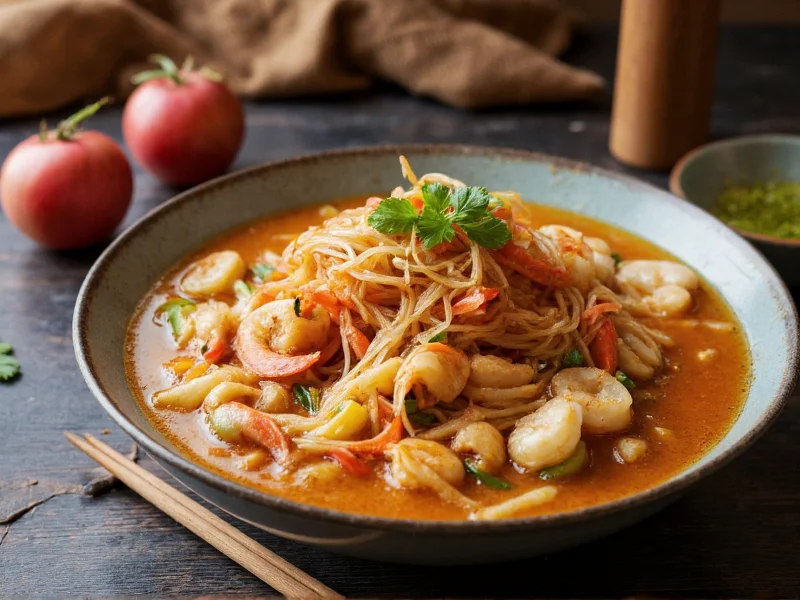
Understanding Chinese Seafood Soup: More Than Just a Broth
Chinese seafood soup represents one of the most refined expressions of Cantonese culinary tradition. Unlike Western seafood chowders, authentic Chinese versions prioritize clarity of broth and delicate balance of flavors. The Cantonese culinary philosophy of 'original flavor' (benwei) means ingredients shine without heavy seasoning. This approach creates a light yet deeply savory soup that's both nourishing and elegant.
Historical Evolution of Chinese Seafood Soup
The development of Chinese seafood soup reflects centuries of culinary refinement along China's coastlines. Archaeological evidence from Han Dynasty tombs (206 BC–220 AD) reveals early soup preparation techniques using shellfish and river fish. By the Ming Dynasty (1368–1644), Cantonese chefs had perfected the clear-broth method documented in Recipes from the Southern House (饮膳正要), where dried seafood became essential for umami extraction without clouding. The modern version crystallized during the Qing Dynasty (1644–1912) through maritime trade routes that introduced Hokkaido dried scallops—a critical ingredient still defining authenticity today. This progression demonstrates how coastal communities transformed resource constraints into culinary artistry, with techniques evolving from necessity to refined tradition.
As noted by the Hong Kong Museum of History's culinary archive: 'Cantonese soup mastery reached its zenith in the 19th century when chefs balanced regional ingredients with medicinal principles, creating broths where clarity signified both technical precision and philosophical harmony.'
Source: Hong Kong Museum of History - Chinese Food Culture Evolution
Regional Variations Across Chinese Cuisine
While Cantonese seafood soup sets the standard, regional adaptations showcase China's culinary diversity:
| Region | Signature Characteristics | Key Ingredients |
|---|---|---|
| Cantonese (Guangdong) | Clear broth, subtle flavors | Dried scallops, shrimp, fish, ginger |
| Fujian | Slightly thicker broth, herbal notes | Abalone, sea cucumber, goji berries |
| Shanghai | Sweeter profile, richer texture | Crab roe, freshwater fish, bamboo shoots |
| Taiwanese | Bolder flavors, more vegetables | Clams, fish balls, winter melon, tofu |
Essential Ingredients for Authentic Flavor
Creating an authentic chinese seafood soup recipe requires understanding the role of each component. The broth forms the foundation, typically made from:
- Dried seafood elements - Dried scallops (conpoy) and shrimp provide umami depth without overpowering freshness
- Fresh seafood selection - White fish fillets, shrimp, and crab add texture and delicate flavor
- Aromatic base - Ginger and Chinese cooking wine (shaosing) balance seafood's natural flavors
- Medicinal additions - Goji berries and dried mushrooms contribute subtle sweetness and health benefits
Many home cooks wonder how to make chinese seafood soup without MSG while maintaining depth. The secret lies in proper broth preparation—simmering dried seafood components for 2-3 hours extracts natural glutamates that create rich flavor.
Step-by-Step Preparation Guide
Follow these steps for a traditional chinese seafood soup that captures authentic flavors:
- Prepare the broth base: Soak 50g dried scallops and 30g dried shrimp in water for 30 minutes, then simmer with 1.5L water for 2 hours
- Add aromatics: Include 3 slices ginger and 2 tbsp Chinese cooking wine during the last 30 minutes of broth preparation
- Prepare fresh seafood: Add delicate ingredients like shrimp and fish fillets during the final 5-7 minutes of cooking
- Final seasoning: Adjust with salt only—never soy sauce, which would cloud the broth
- Serve immediately: Chinese seafood soup loses quality if stored, so enjoy fresh for best texture and flavor
Avoiding Common Preparation Mistakes
Even experienced cooks make errors when attempting this traditional chinese seafood soup. Key pitfalls include:
- Overcooking seafood - Delicate proteins become rubbery when boiled too long; add them at the very end
- Using tap water directly - Chlorine affects delicate flavors; always use filtered or spring water
- Adding salt too early - Salt drawn out seafood proteins prematurely, resulting in tough texture
- Skipping the skimming step - Regularly remove impurities during broth preparation for crystal-clear results
For beginners exploring how to make chinese seafood soup, start with a simplified version using just dried scallops and shrimp before incorporating more complex ingredients.
Serving Traditions and Pairings
In Chinese culinary tradition, seafood soup serves specific purposes beyond mere sustenance. Families often prepare this nourishing soup during:
- Recovery from illness (following Traditional Chinese Medicine principles)
- Special celebrations like Lunar New Year
- As a first course in formal banquets
When serving authentic chinese seafood soup, present it in individual porcelain bowls to maintain temperature. Pair with steamed jasmine rice and simple stir-fried greens for a balanced meal. The soup's light nature makes it perfect as an appetizer before richer main courses.
Important Considerations and Limitations
While celebrated for its health benefits, Chinese seafood soup has specific dietary considerations requiring professional guidance:
- Gout management: High-purine seafood like scallops and shrimp may trigger flare-ups. The American College of Rheumatology specifically lists shellfish among 'foods to avoid' for gout patients due to elevated uric acid production.
- Allergy protocols: Even broth containing trace shellfish proteins requires strict avoidance for allergy sufferers, as noted by the FDA's food safety guidelines.
- Regional ingredient constraints: Authentic preparation is limited in landlocked areas where fresh coastal seafood is unavailable, necessitating substitutions that alter traditional flavor profiles.
- TCM contraindications: Practitioners caution that the soup's 'cooling' properties may exacerbate symptoms in individuals with pre-existing 'cold' conditions like chronic diarrhea.
For personalized dietary planning, consult healthcare providers. As Mayo Clinic's clinical guidelines state: 'Seafood such as scallops and shrimp are high in purines, which your body breaks down into uric acid. Elevated levels can cause gout attacks in susceptible individuals.'
Source: Mayo Clinic - Gout Dietary Guidelines
Storage and Reheating Considerations
Unlike many soups, traditional chinese seafood soup doesn't store well due to delicate seafood components. If you must store leftovers:
- Remove all seafood from broth before refrigerating
- Store broth separately from seafood (up to 3 days)
- Reheat broth gently without boiling, then add fresh or previously cooked seafood
- Never freeze seafood soup—texture deteriorates significantly
For meal preppers seeking healthy chinese seafood soup options, prepare the broth in advance but add seafood fresh when serving.




 浙公网安备
33010002000092号
浙公网安备
33010002000092号 浙B2-20120091-4