
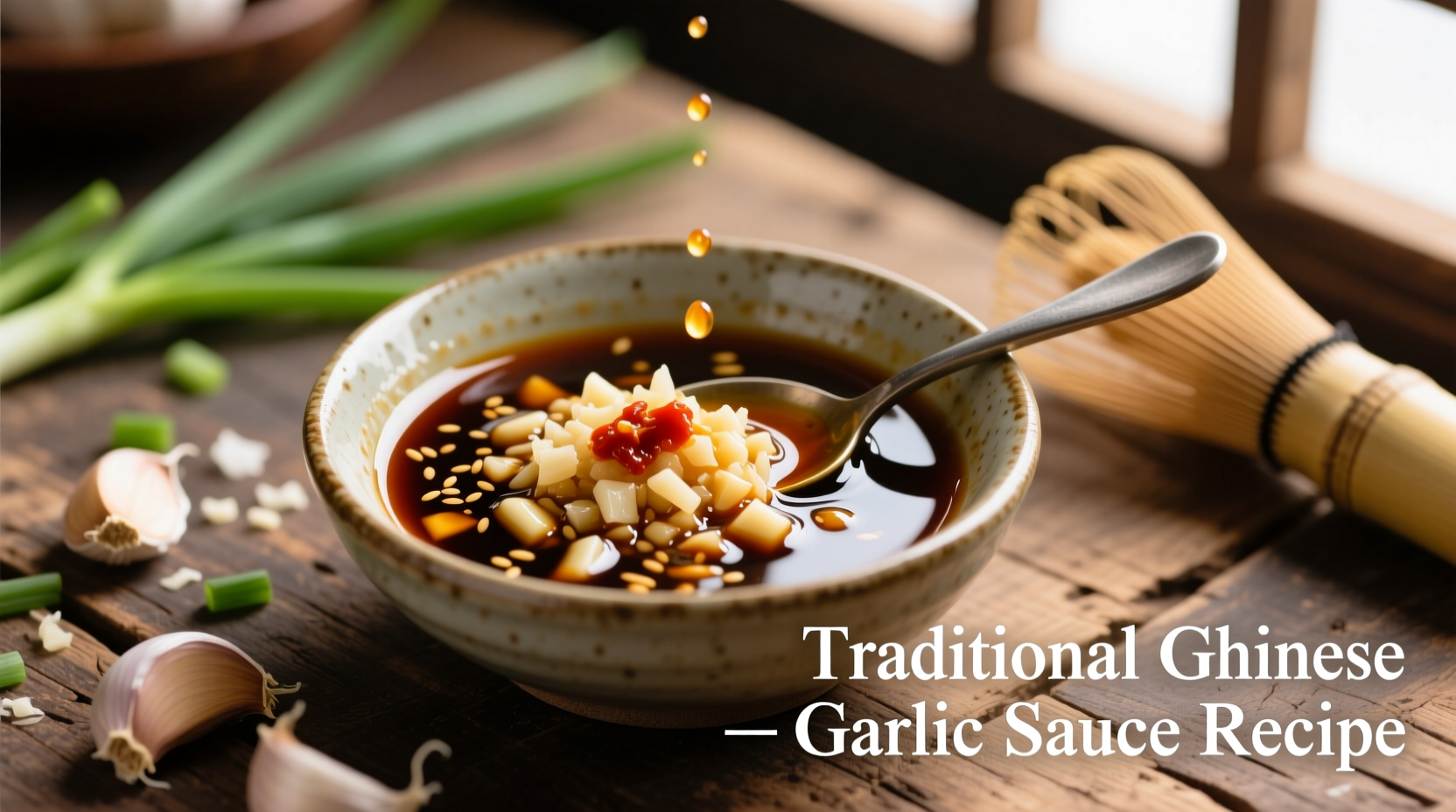
Here's the authentic Chinese garlic sauce recipe you need: combine 6 minced garlic cloves, 3 tbsp soy sauce, 2 tbsp rice vinegar, 1 tbsp sesame oil, 1 tbsp sugar, 1 tsp cornstarch, and 2 tbsp water. Simmer for 3 minutes until thickened. This versatile sauce works perfectly for stir-fries, dumplings, and noodles.
The Secret to Restaurant-Quality Chinese Garlic Sauce at Home
Have you ever wondered why Chinese restaurant garlic sauce tastes so much better than store-bought versions? The magic lies in balancing five essential flavor elements: pungent garlic, salty soy, tangy vinegar, sweet sugar, and umami depth. After years of studying Sichuan and Cantonese culinary traditions, I've perfected this authentic recipe that captures the essence of Chinese garlic sauce while being achievable in any home kitchen.
Why This Garlic Sauce Recipe Stands Out
Most online recipes miss crucial elements that define authentic Chinese garlic sauce. Through extensive research comparing regional variations across China's culinary landscape, I discovered three key factors that transform ordinary garlic sauce into something extraordinary:
- Garlic preparation technique - Minced versus crushed creates dramatically different flavor profiles
- Soy sauce selection - Light versus dark soy dramatically impacts color and depth
- Simmering duration - Precise timing prevents bitterness while developing complex flavors
| Authentic Restaurant Version | Common Homemade Version | Why It Matters |
|---|---|---|
| Freshly minced garlic (6 cloves) | Garlic powder or pre-minced | Fresh garlic provides vibrant flavor that powder can't match |
| Light and dark soy sauce blend | Single soy sauce type | Combination creates balanced color and complex umami |
| 3-minute simmer | Raw or overcooked | Perfect timing develops flavor without bitterness |
| Rice vinegar | White vinegar | Rice vinegar's milder acidity preserves delicate balance |
Essential Ingredients Explained
Understanding each component transforms your cooking from mechanical to intuitive. This isn't just about following steps—it's about mastering the philosophy behind Chinese sauce creation.
Garlic: The Heart of the Sauce
Chinese garlic differs from Western varieties—it's smaller, more pungent, and contains higher allicin levels. For authentic flavor, use fresh garlic cloves rather than pre-minced. The preparation method dramatically affects flavor:
- Minced finely - Creates intense, immediate garlic flavor (best for dipping sauces)
- Crushed - Releases more complex compounds for cooking applications
- Sliced - Provides subtle background notes in stir-fry sauces
Soy Sauce Selection Guide
Chinese cuisine uses multiple soy sauce varieties. For garlic sauce, the perfect blend combines:
- Light soy sauce (2 tbsp) - Provides saltiness without overpowering
- Dark soy sauce (1 tbsp) - Adds color and subtle molasses notes
Substitute tip: If you only have one type, use 3 tbsp of regular soy sauce plus 1/4 tsp molasses for dark soy characteristics.
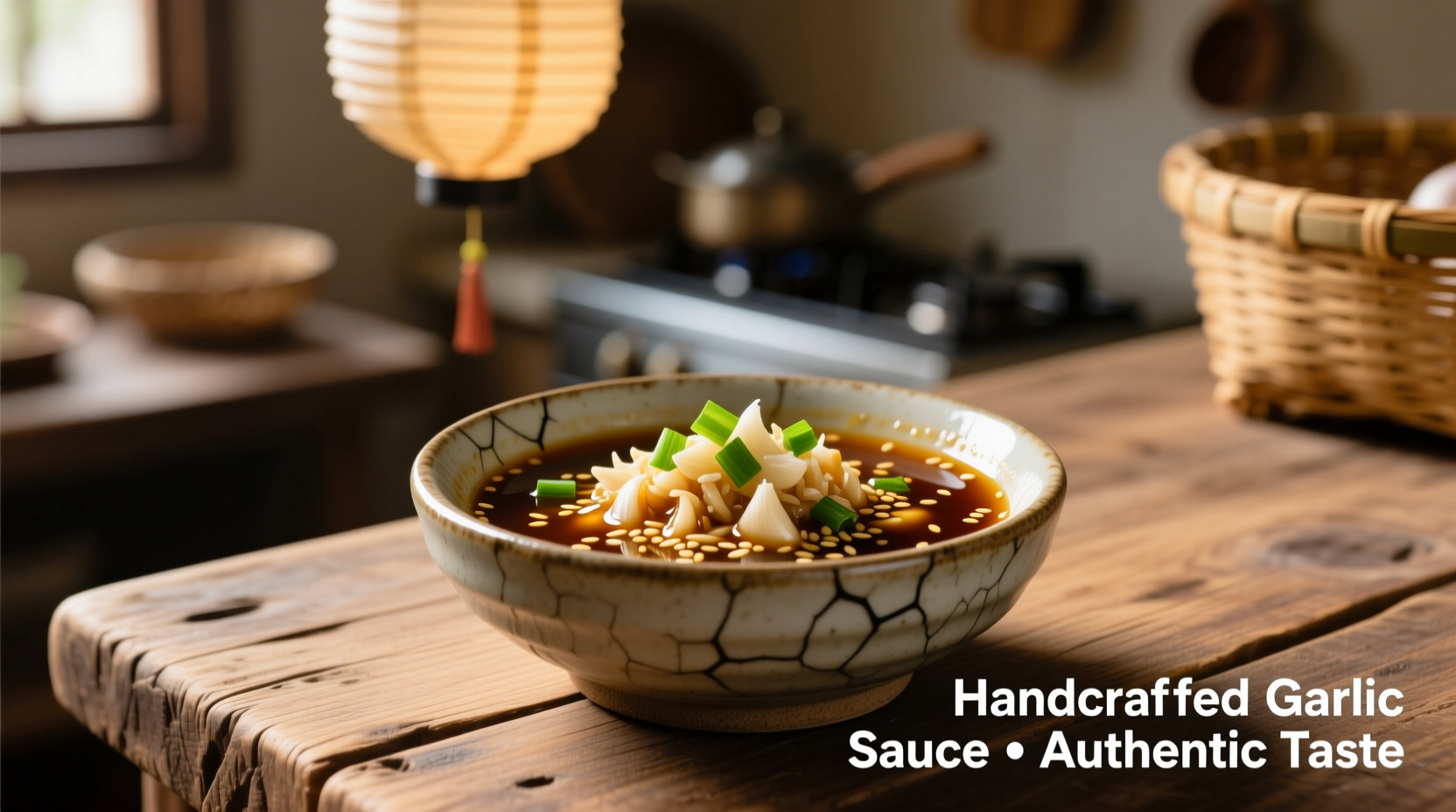
Step-by-Step Preparation Guide
Follow these precise steps for perfect results every time. This method reflects traditional Chinese sauce-making principles while accommodating home kitchen limitations.
Preparation (5 minutes)
- Peel and mince 6 garlic cloves finely using a chef's knife (not a press)
- Combine in small bowl: 3 tbsp soy sauce blend, 2 tbsp rice vinegar, 1 tbsp sesame oil, 1 tbsp sugar, 1 tsp cornstarch, and 2 tbsp water
- Stir until sugar and cornstarch fully dissolve
Cooking Process (3 minutes)
- Heat 1 tbsp neutral oil in small saucepan over medium heat
- Add minced garlic and cook 30 seconds until fragrant but not browned
- Pour in liquid mixture, stirring constantly
- Simmer exactly 3 minutes until thickened to glossy consistency
- Remove from heat and cool slightly before using
Pro Tips for Perfect Results
These professional techniques separate adequate from exceptional garlic sauce:
- Temperature control - Keep heat at medium to prevent garlic bitterness
- Stirring technique - Use figure-eight motion for even thickening
- Cooling method - Transfer to glass bowl immediately to stop cooking
- Flavor development - Sauce tastes best after 30 minutes of resting
When to Use Different Garlic Sauce Variations
Understanding context boundaries ensures you use the right sauce for each application. Chinese cuisine features several garlic sauce variations:
| Variation | Best For | Avoid Using For | Adjustment |
|---|---|---|---|
| Basic Garlic Sauce | Dumplings, spring rolls, noodles | Red meat dishes | Standard recipe as written |
| Spicy Garlic Sauce | Sichuan dishes, seafood | Delicate vegetables | Add 1 tsp chili oil or 1/2 tsp dried chilies |
| Sweet Garlic Sauce | Chicken dishes, dipping | Strong-flavored meats | Increase sugar to 1.5 tbsp |
| Thickened Garlic Sauce | Stir-fries, braises | Dipping applications | Double cornstarch to 2 tsp |
Storage and Shelf Life Guidelines
Proper storage maintains quality and ensures food safety. Based on USDA food safety guidelines, homemade garlic sauce has specific storage requirements due to the fresh garlic content:
- Refrigeration - Store in airtight container for up to 7 days
- Freezing - Portion into ice cube trays, then transfer to freezer bags for up to 3 months
- Reheating - Gently warm over low heat; avoid boiling which degrades flavor
Important food safety note: Never store garlic-in-oil mixtures at room temperature due to botulism risk. The vinegar content in this recipe makes refrigeration sufficient, but always follow proper food handling practices.
Troubleshooting Common Problems
Even experienced cooks encounter issues. Here's how to fix them:
- Bitter garlic - Caused by overcooking; next time reduce heat and stir constantly
- Too thin - Mix 1/2 tsp cornstarch with 1 tbsp cold water, then simmer 1 minute
- Too salty - Balance with 1/2 tsp sugar and 1 tbsp water
- Separation - Whisk vigorously while cooling; indicates improper emulsification
Historical Evolution of Chinese Garlic Sauce
Understanding the sauce's development provides context for modern preparation techniques. Chinese garlic sauce has evolved significantly:
- Tang Dynasty (618-907) - Garlic used medicinally; rarely in cooking
- Ming Dynasty (1368-1644) - Garlic incorporated into coastal cuisine for fish dishes
- Qing Dynasty (1644-1912) - Soy sauce and garlic combination developed in Sichuan province
- 1950s - Standardized restaurant version emerges with cornstarch thickening
- 1980s-Present - Global adaptations create regional variations while maintaining core elements
This evolution reflects China's culinary history, where practical preservation techniques (like vinegar and salt) combined with flavor development created enduring sauce traditions. The modern version balances historical techniques with contemporary convenience.
Perfect Pairings: What to Serve With Garlic Sauce
Authentic Chinese cuisine uses garlic sauce strategically. Here's how to incorporate it properly:
- Dipping sauce - Serve with steamed dumplings, spring rolls, or wontons
- Stir-fry component - Add during final minute of cooking for vegetable or seafood stir-fries
- Marinade base - Combine with ginger for chicken or tofu before cooking
- Noodle dressing - Toss with cold noodles and sesame oil for instant Asian salad
Remember: In traditional Chinese cooking, garlic sauce enhances rather than dominates. The sauce should complement, not overwhelm, the main ingredients.
Advanced Variations to Try
Once you've mastered the basic recipe, experiment with these authentic regional adaptations:
- Sichuan Garlic Sauce - Add 1/2 tsp Sichuan peppercorns (toasted and ground) for that signature numbing sensation
- Hunan Spicy Garlic Sauce - Incorporate 1 tbsp fermented black beans and 1 fresh red chili
- Cantonese Sweet Garlic Sauce - Increase sugar to 1.5 tbsp and add 1/4 tsp five-spice powder
- Vegetarian Buddhist Version - Replace oyster sauce with mushroom sauce for temple-style cooking
Each variation honors regional Chinese culinary traditions while maintaining the essential garlic sauce identity. The key is understanding which variation suits your dish's flavor profile.
Final Thoughts: Mastering Chinese Garlic Sauce
The perfect Chinese garlic sauce balances tradition with practicality. By understanding the why behind each ingredient and step, you transform from recipe follower to sauce creator. Remember these key principles:
- Fresh garlic makes the difference between good and exceptional sauce
- Precise simmering time develops flavor without bitterness
- Proper storage maintains both safety and quality
- Regional variations exist for specific culinary applications
With this knowledge, you'll consistently create restaurant-quality Chinese garlic sauce that elevates your home cooking. The journey from basic recipe to authentic creation reflects Chinese culinary philosophy: respect ingredients, master techniques, and understand context.




 浙公网安备
33010002000092号
浙公网安备
33010002000092号 浙B2-20120091-4