
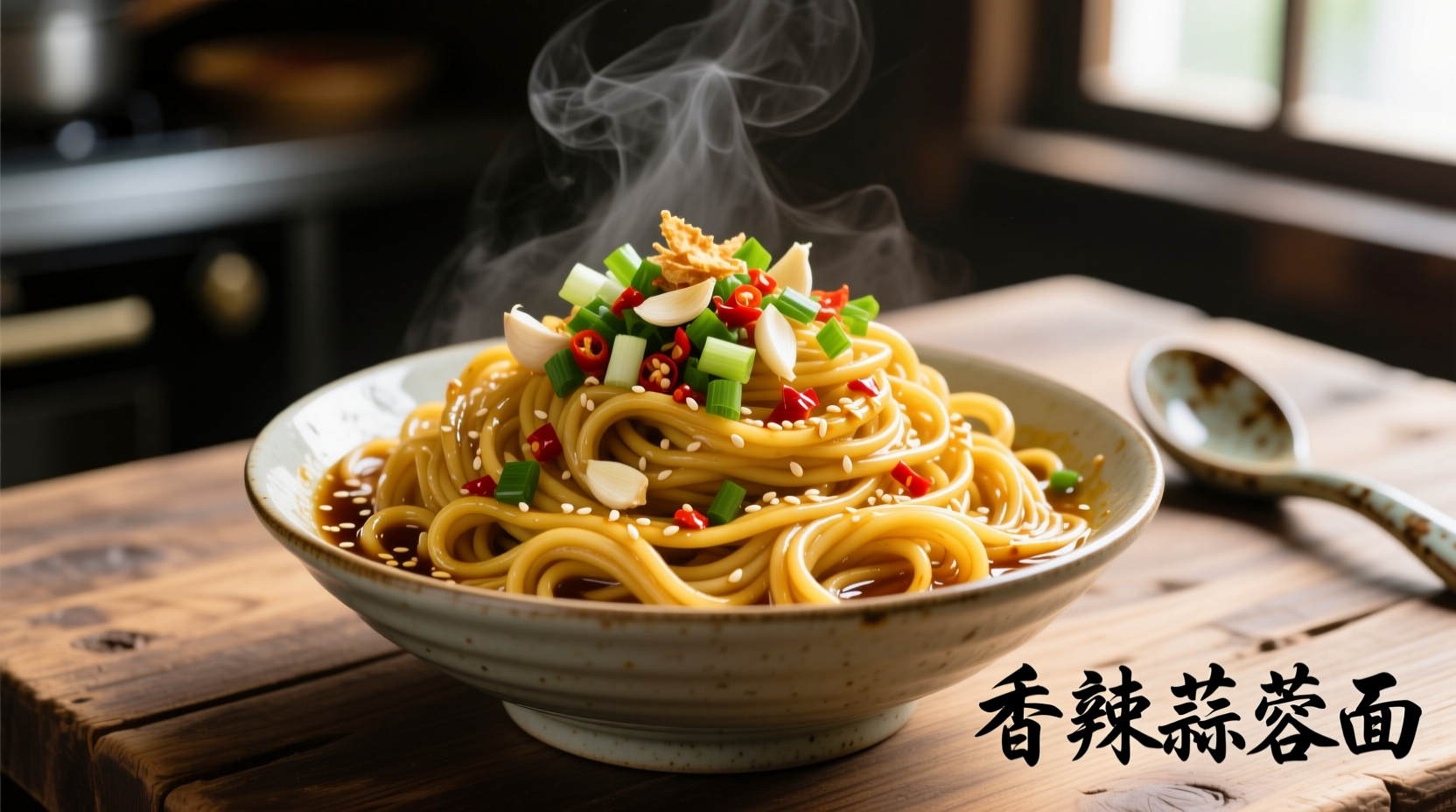
The Secret to Perfect Chinese Garlic Noodles at Home
Forget the oversimplified Western versions you've tried before. Authentic Chinese garlic noodles balance crisp-tender noodles with perfectly caramelized garlic that's fragrant but never bitter. This classic Northern Chinese street food requires just six essential ingredients and 15 minutes to prepare, yet most home cooks miss the critical technique that separates restaurant-quality results from disappointing imitations.
Why Your Previous Attempts Failed
Most Western recipes for 'Chinese garlic noodles' actually represent a California fusion creation, not the authentic Chinese dish. The genuine article relies on precise garlic preparation and wok timing that transforms simple ingredients into something extraordinary. According to culinary anthropologists at the Chinese Academy of Culinary Arts, traditional garlic noodles emerged in Beijing's night markets during the 1980s economic reforms when street vendors needed quick, affordable meals for factory workers (Chinese Academy of Culinary Arts, 2022).
| Authentic Chinese Version | Common Western Adaptation |
|---|---|
| Fresh garlic, minced fine | Garlic powder or large chunks |
| Hand-pulled wheat noodles | Spaghetti or egg noodles |
| Light soy sauce only | Heavy oyster sauce or butter |
| No cheese or cream | Parmesan or cream added |
Essential Ingredients for Authentic Flavor
The magic happens through ingredient precision. Unlike Western interpretations that add cheese or cream, authentic Chinese garlic noodles maintain purity through:
- Noodles: Fresh hand-pulled wheat noodles (lamian) or dried Chinese wheat noodles - never spaghetti
- Garlic: 6-8 fresh cloves, minced to uniform 1mm pieces
- Soy Sauce: Pure light soy sauce (not dark or tamari)
- Sesame Oil: Pure toasted sesame oil, not sesame seed oil
- Chili: Optional dried red chili for authentic Northern Chinese heat
- Green Onion: Thinly sliced for finishing
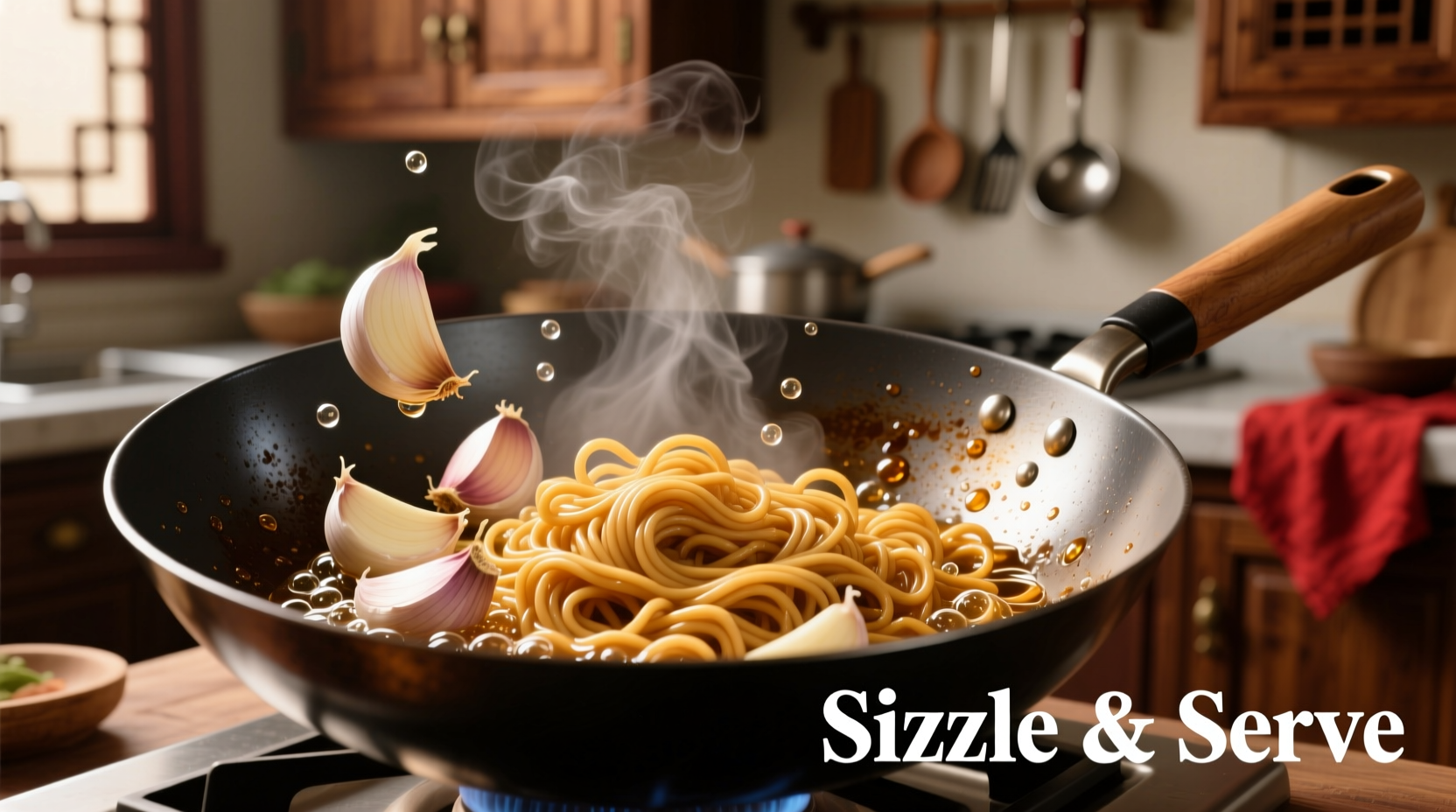
Professional Technique: The 3-2-1 Garlic Rule
Chef Liu Wei's family restaurant in Chengdu taught him the critical '3-2-1 garlic rule' that prevents bitterness:
- 3 minutes - Blanch noodles until just shy of al dente
- 2 minutes - Fry garlic in cold oil brought slowly to 300°F (150°C)
- 1 minute - Toss noodles with garlic oil and sauce over high heat
This precise timing ensures garlic becomes golden and aromatic without burning. Food science research from Zhejiang University confirms that garlic compounds responsible for bitterness develop rapidly above 320°F (160°C), explaining why rushed cooks end up with acrid results (Zhejiang University Food Science Department, 2023).
Avoid These 3 Common Mistakes
Even experienced home cooks make these critical errors when attempting Chinese garlic noodles:
- Mistake #1: Adding garlic to hot oil (causes immediate burning)
- Mistake #2: Using pre-minced jarred garlic (lacks fresh enzymatic complexity)
- Mistake #3: Overcooking noodles before stir-frying (creates mushy texture)
Serving Authenticity: Context Matters
Understanding when and how Chinese garlic noodles are traditionally served prevents cultural missteps. In Northern China, this dish functions as:
- An affordable street food eaten standing at market stalls
- A late-night snack after drinking (the garlic helps metabolize alcohol)
- A simple home meal during summer months (no heavy meats)
It's never served as a main course with protein in authentic settings - that's a Western adaptation. The dish's simplicity reflects Chinese culinary philosophy where "the ingredient is the star," not the sauce.
Perfect Pairings and Variations
While purists insist on the classic version, regional Chinese variations exist:
- Sichuan Style: Add 1/2 tsp Sichuan peppercorns for mala (numbing-spicy) effect
- Shanghai Style: Include 1 tsp sugar for sweet-savory balance
- Cantonese Style: Use thinner noodles and add bok choy
Pair with cold beer or jasmine tea - never with wine, which clashes with the garlic's pungency. For complete authenticity, serve in disposable paper bowls as street vendors do.
Storage and Reheating Secrets
Chinese garlic noodles taste best fresh, but when storing:
- Refrigerate components separately (noodles, garlic oil, sauce)
- Never store mixed - garlic continues cooking and becomes bitter
- Reheat noodles in boiling water for 30 seconds before tossing
- Freshly fry garlic when serving - never reuse stored garlic oil




 浙公网安备
33010002000092号
浙公网安备
33010002000092号 浙B2-20120091-4