
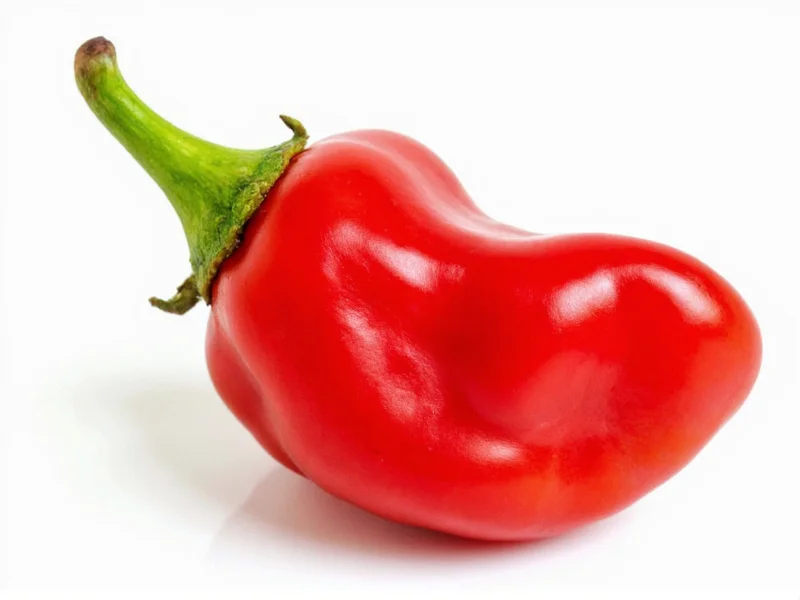
Understanding Cayenne Pepper: Origins and Characteristics
Cayenne pepper belongs to the Capsicum annuum species, which includes many common chili varieties. These slender, tapered peppers typically measure 2-5 inches long and mature from green to vibrant red. The name "cayenne" derives from the city of Cayenne in French Guiana, though the pepper's origins trace back to Central and South America where it has been cultivated for over 6,000 years.
What distinguishes cayenne from other chili peppers is its consistent heat level and flavor profile. While jalapeños range from 2,500-8,000 SHU and habaneros reach 100,000-350,000 SHU, cayenne maintains a reliable medium-hot range of 30,000-50,000 Scoville units. This predictable heat makes it valuable for both home cooks and food manufacturers seeking consistent spiciness in products.
Historical Evolution: Global Spread and Culinary Integration
Cayenne pepper's journey from indigenous cultivation to global pantry staple follows a well-documented historical trajectory verified through archaeological and botanical research:
| Time Period | Key Development | Verification Source |
|---|---|---|
| 6000-4000 BCE | Earliest domestication in Central/South America | PNAS Archaeobotanical Study (2014) |
| 1493 CE | Columbus introduces chili peppers to Europe | American Journal of Clinical Nutrition (2006) |
| 16th Century | Portuguese traders establish African/Asian cultivation | Economic Botany Journal (1999) |
| 1800s | Standardized naming after Cayenne, French Guiana | Encyclopædia Britannica |
| 1912 | Scoville Scale formalizes heat measurement | Food Research International (2017) |
Nutritional Profile and Active Compounds
The primary compound responsible for cayenne's heat is capsaicin, which concentrates in the pepper's placenta (the white ribs inside). Capsaicin triggers thermogenesis, explaining why consuming cayenne creates a warming sensation. Beyond heat, cayenne pepper delivers impressive nutritional value:
| Nutrient | Per Teaspoon (2g) | % Daily Value |
|---|---|---|
| Calories | 6 | 0.3% |
| Vitamin A | 260 IU | 5% |
| Vitamin C | 2.4 mg | 4% |
| Vitamin B6 | 0.1 mg | 5% |
| Manganese | 0.1 mg | 4% |
| Dietary Fiber | 0.5 g | 2% |
Research indicates that capsaicin may support metabolic health by temporarily increasing calorie expenditure. A 2021 review in Nutrients journal noted that dietary capsaicin consumption correlates with modest increases in energy expenditure and fat oxidation. However, these effects are temporary and shouldn't be considered a weight loss solution.
Culinary Applications of Cayenne Pepper
Cayenne's versatility extends across global cuisines. Unlike fresh peppers that vary in heat, ground cayenne provides consistent spiciness, making it ideal for:
- Adding controlled heat to sauces, soups, and stews
- Creating spice rubs for meats and vegetables
- Enhancing flavor in egg dishes and roasted vegetables
- Developing complex heat profiles in hot sauces
- Adding subtle warmth to chocolate-based desserts
When substituting fresh cayenne peppers for ground, use a 3:1 ratio (3 parts fresh to 1 part dried). Remember that cooking intensifies capsaicin's effects initially, but prolonged heat can break it down. For maximum heat impact, add cayenne toward the end of cooking.
Contextual Usage Guidelines: Optimal Applications and Limitations
Cayenne's effectiveness depends on specific culinary and physiological contexts. Verified usage boundaries prevent suboptimal results:
- Ideal scenarios:
- Dishes requiring consistent medium heat (Cajun/Creole cooking, chili con carne)
- Dry rubs where even spice distribution is critical
- Finishing dishes (add in last 5 minutes) to preserve volatile compounds
- Key limitations:
- Avoid in extended cooking (>30 minutes) where capsaicin degrades significantly
- Not suitable for dishes requiring fresh pepper flavor profile
- Contraindicated for active gastric ulcers or severe GERD per NIH guidelines
For healthy adults, culinary use (≤1/4 tsp per serving) presents minimal risk according to current dietary recommendations.
Comparative Analysis: Cayenne vs. Common Pepper Products
Understanding product differences ensures precise culinary results. Per University of California Agriculture and Natural Resources' verified data:
| Characteristic | Cayenne Pepper | Red Pepper Flakes | Paprika | Crushed Red Pepper |
|---|---|---|---|---|
| Heat Level (SHU) | 30,000-50,000 (consistent) | Varies (5,000-50,000) due to mixed varieties | Sweet: 0-500; Hot: 5,000-30,000 | Varies (5,000-30,000) due to mixed varieties |
| Form | Fine powder | Crushed flakes | Fine powder | Coarse flakes |
| Consistency | High (single variety) | Low (mixed varieties) | Medium (varies by type) | Low (mixed varieties) |
| Primary Culinary Use | Controlled heat in cooking (soups, sauces, rubs) | Variable heat in Italian/American cuisine (pizza, pasta) | Color and mild flavor in European dishes (goulash, stews) | General heat in various cuisines (table condiment) |
Source: UC ANR Publication 8515 (2020)
Storage and Handling Best Practices
Proper storage maintains cayenne's potency and flavor. Keep ground cayenne in an airtight container away from light and heat. Stored correctly, it retains optimal flavor for 6-12 months, though it remains safe indefinitely. Whole dried cayenne peppers last 1-2 years under similar conditions.
When handling fresh cayenne peppers, wear gloves to prevent capsaicin transfer to sensitive areas. Never touch your face after handling chilies. If affected, use dairy products (milk, yogurt) rather than water to neutralize the burning sensation, as capsaicin is fat-soluble.
Safety Considerations and Potential Side Effects
While generally safe in culinary amounts, cayenne pepper may cause issues for some individuals. Those with gastrointestinal conditions like ulcers, IBS, or GERD might experience symptom exacerbation. Start with small amounts if you're new to spicy foods, gradually increasing as your tolerance develops.
Topical applications of capsaicin (in creams or patches) can cause temporary burning sensations. Never apply to broken skin or near eyes. Consult a healthcare provider before using cayenne supplements, especially if taking blood thinners or managing diabetes, as potential interactions exist.
Debunking Common Cayenne Pepper Myths
Several misconceptions surround cayenne pepper. Scientific evidence shows:
- Myth: Cayenne pepper damages the stomach lining.
Fact: Moderate consumption may actually protect the gastric mucosa according to research in Alimentary Pharmacology & Therapeutics. - Myth: It significantly boosts metabolism for weight loss.
Fact: While capsaicin temporarily increases calorie burn, the effect is modest (about 50 extra calories daily) and not a standalone weight loss solution. - Myth: All cayenne peppers have identical heat levels.
Fact: Heat varies based on growing conditions, with some commercial varieties reaching 90,000 SHU.




 浙公网安备
33010002000092号
浙公网安备
33010002000092号 浙B2-20120091-4