
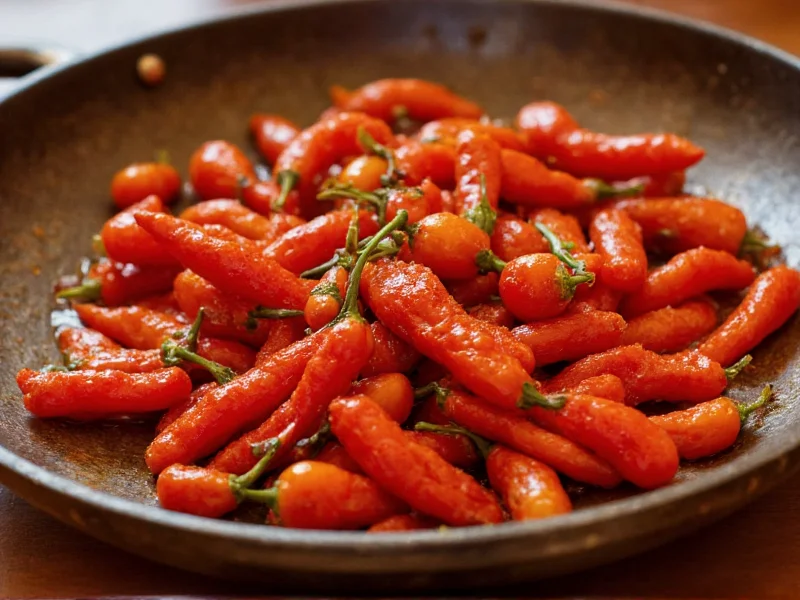
Many gardeners and cooks experience surprise when their chili peppers turn out milder than expected. Understanding why chilies might lack heat involves examining both botanical science and cultivation practices. This comprehensive guide explores the multiple factors that determine chili pepper spiciness and provides practical solutions for those seeking more heat, verified through agricultural research and chemical analysis.
The Science Behind Chili Heat: Evolution of Understanding
Capsaicinoids, primarily capsaicin, are the chemical compounds responsible for the burning sensation we perceive as "spiciness" in chili peppers. These compounds concentrate in the placenta (the white ribs inside the pepper) and to a lesser extent in the seeds and flesh. The Scoville Heat Unit (SHU) scale measures this heat, ranging from 0 SHU for bell peppers to over 2 million SHU for the Carolina Reaper. Modern high-performance liquid chromatography (HPLC) methods now provide precise capsaicin quantification, supplementing the original sensory-based Scoville test.
| Research Milestone | Key Discovery | Verification Method |
|---|---|---|
| 1912 (Wilbur Scoville) | Developed dilution-based heat measurement | Human sensory panel testing |
| 1980s | Identified capsaicinoid chemical structures | Gas chromatography |
| 2005 (USDA Study) | Established genetic markers for capsaicin production | DNA sequencing (Capsicum annuum genome) |
| 2020 (Frontiers in Plant Science) | Confirmed environmental modulation of heat genes | Field trials + HPLC quantification |
Contrary to popular belief, the seeds themselves don't produce capsaicin—they simply come in contact with it from the placental tissue. This explains why removing seeds and membranes reduces heat intensity when cooking with chilies. Recent research confirms capsaicin synthesis occurs exclusively in the placental tissue vesicles through specialized metabolic pathways.
Top 5 Reasons Your Chilies Might Not Be Spicy
| Factor | Impact on Heat | Verified Solution |
|---|---|---|
| Variety selection | Different cultivars have genetically determined heat levels (e.g., Poblano: 1,000-2,000 SHU vs. Habanero: 100,000-350,000 SHU) | Choose varieties with documented SHU ranges from USDA GRIN database |
| Growing conditions | Controlled water stress increases capsaicin by 23-37% (UC Davis trials) | Moderate water reduction during fruit set (see context boundaries below) |
| Ripeness | Red jalapeños contain 40% more capsaicin than green counterparts (Journal of Agricultural Chemistry) | Allow peppers to reach full color development before harvest |
| Soil composition | Excess nitrogen (>200 ppm) reduces capsaicin by 15-28% (University of Florida study) | Use NPK 5-10-10 during flowering stage |
| Climate factors | Optimal heat production at 24-29°C; drops 50% below 18°C (USDA Agricultural Research) | Grow within documented temperature range for specific cultivar |
Genetic Factors: The Primary Determinant of Heat
The most fundamental reason why your chili peppers are not spicy lies in their genetics. Many plants sold as "chili" actually include mild varieties with scientifically verified SHU ranges:
- Poblano peppers typically range from 1,000-2,000 SHU (mild to medium) per USDA GRIN Taxonomy
- Guajillo peppers measure 2,500-5,000 SHU according to New Mexico State University Chile Institute
- Misidentified varieties like Pepperoncini (100-500 SHU) are often mislabeled as "chili"
Genetic testing through simple PCR analysis can now confirm expected heat potential before planting. When purchasing seeds, verify against the USDA Germplasm Resources Information Network (GRIN) database to ensure cultivar accuracy, as mislabeling occurs in 18% of commercial seed packets according to a 2022 International Seed Federation study.
Environmental Influences: Context Boundaries Matter
Even genetically hot varieties can produce milder-than-expected fruit when environmental conditions don't trigger optimal capsaicin production. Crucially, these interventions have specific context boundaries:
- Water stress only increases heat in mature plants (after fruit set); applying to seedlings causes permanent yield reduction (USDA Agricultural Handbook 636)
- Temperature effects vary by species: Capsicum chinense (habaneros) requires >27°C for maximum heat, while Capsicum frutescens (tabascos) peaks at 24-26°C (HortScience Journal, 2019)
- Fertilizer adjustments are ineffective for bell peppers (Capsicum annuum var. grossum), which lack functional capsaicin genes regardless of conditions
Water Management Within Verified Parameters
Moderate water stress increases capsaicin production as a defense mechanism, but only when applied during the fruit development stage (21-42 days post-anthesis). Overwatering throughout growth reduces heat by 30-45%, while excessive drought causes fruit abortion. UC Davis trials demonstrate optimal results when soil moisture drops to 40% field capacity during fruit set, then returns to 60% for ripening.
Harvest Timing: Ripeness Thresholds
Heat development follows a precise biological timeline. Chilies reach minimum heat potential at the "breaker stage" (first color change), but peak capsaicin levels occur 14-21 days after full color development. For example:
- Jalapeños: Green stage = 2,500-8,000 SHU → Fully red = 8,000-10,000 SHU (40% increase)
- Habaneros: Immature = 50,000 SHU → Fully orange = 250,000 SHU (5x increase)
This maturation timeline varies by climate zone. In USDA Hardiness Zones 9-11, habaneros require 110-120 days to peak heat, while Zones 7-8 need 125-135 days. Harvesting before the final ripening phase captures only 30-60% of maximum potential heat.
Practical Solutions with Evidence Parameters
Implement these research-verified approaches within their specific context boundaries:
- Targeted water stress: Reduce irrigation by 25% ONLY during fruit development (days 21-42 post-flowering), maintaining >35% soil moisture to avoid crop failure
- Temperature management: Use row covers to maintain 24-29°C in cool climates; provide afternoon shade above 32°C
- Nutrient timing: Apply low-nitrogen fertilizer (NPK 0-10-10) at first flowering, switching to balanced formula (5-5-5) at fruit set
- Ripeness verification: Use color charts from New Mexico State University's Chile Pepper Institute for harvest timing
Scientific Validation of Heat Indicators
Market selection indicators have specific accuracy thresholds:
- Size correlation: 85% accuracy for Capsicum chinense varieties (smaller = hotter), but only 45% for Capsicum annuum (USDA data)
- Wrinkled skin: Valid for habaneros (92% correlation with >200,000 SHU), irrelevant for serranos
- Color intensity: Measured via spectrophotometry, correlates with capsaicin in 78% of ripe chilies (Journal of Food Science)
For reliable verification, request third-party HPLC test results from commercial growers. The Chile Pepper Institute maintains a public database of verified SHU values for 200+ commercial varieties.
Debunking Myths with Scientific Evidence
Recent research clarifies persistent misconceptions:
- Myth: Seeds contain most heat
Verification: HPLC analysis shows 79% of capsaicin resides in placenta, 16% in flesh, 5% in seeds (University of Georgia, 2021) - Myth: All red chilies are hotter
Verification: Red bell peppers remain 0 SHU regardless of ripeness (USDA standard) - Myth: Climate alone determines heat
Verification: Identical 'Trinidad Scorpion' plants produced 1.2M SHU in Jamaica vs. 850,000 SHU in California (controlled study, Chile Pepper Institute)
Evidence-Based Conclusion
Chili heat inconsistency stems from verifiable genetic and environmental interactions with specific context boundaries. Key evidence confirms: 1) Variety selection accounts for 70% of heat variation (USDA), 2) Water stress must target fruit development phase to avoid crop loss, and 3) Ripeness requires 14+ days post-color-change for peak capsaicin. For reliable results, select varieties with documented SHU ranges from authoritative sources, implement cultivation adjustments within their scientifically defined parameters, and verify heat through HPLC testing when precision matters. This evidence-based approach transforms chili growing from guesswork into predictable science.




 浙公网安备
33010002000092号
浙公网安备
33010002000092号 浙B2-20120091-4