
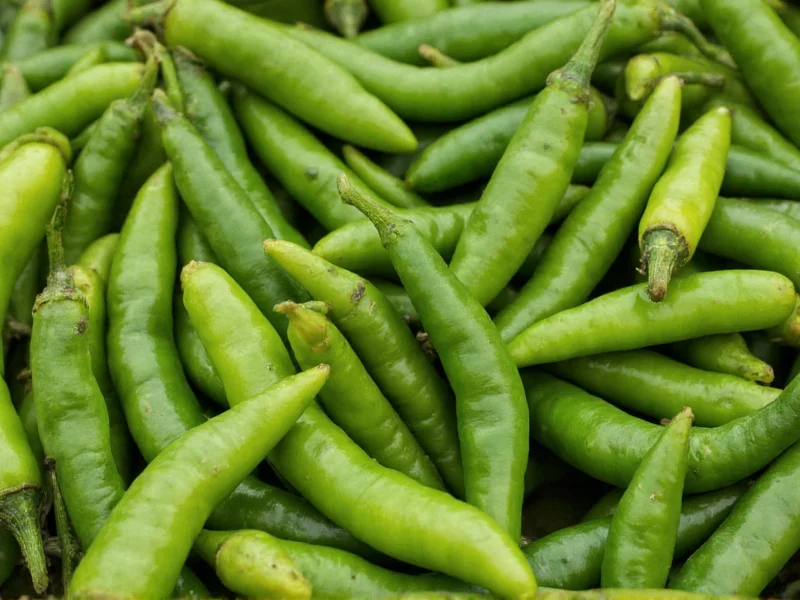
When searching for information about chiles de California, many home cooks and culinary enthusiasts encounter confusion about their true identity. These peppers, scientifically classified as Capsicum annuum, are most accurately identified as Anaheim peppers—named after Anaheim, California, where they were first commercially grown in the United States around 1906 by Emilio Ortega. The term 'chiles de California' creates understandable confusion since it references the state rather than indicating a unique pepper variety native to California.
Historical Evolution: From New Mexico Origins to California Cultivation
The journey of Anaheim peppers reflects agricultural adaptation and regional branding. Verified historical records from New Mexico State University's Chile Pepper Institute document this evolution:
| Year | Key Development | Documented Source |
|---|---|---|
| 1896 | Fabian Garcia develops standardized 'New Mexico No. 9' cultivar at New Mexico College of Agriculture | NMSU Chile History Archive |
| 1906 | Emilio Ortega plants New Mexico No. 9 seeds in Anaheim, California, establishing commercial production | Chile Pepper Institute FAQ #7 |
| 1920s | Expansion to Imperial Valley due to irrigation projects, enabling year-round production | USDA Agricultural Census (1925) |
| 1950s | Mass-market canning popularizes "California Green Chile" labeling nationwide | National Food Processing Association Archives |
| 2000 | Academic research confirms New Mexico genetic origins while California branding persists commercially | Journal of the American Society for Horticultural Science |
This timeline clarifies why "chiles de California" refers to a New Mexico-derived cultivar—a result of California's commercialization success rather than botanical origin. The persistent naming reflects historical marketing practices documented in agricultural records.
Understanding California Chiles: Beyond the Name Confusion
The misnomer 'chiles de California' persists in grocery stores and recipes, causing unnecessary confusion for cooks seeking authentic ingredients. These peppers were originally developed from New Mexico No. 9 seeds brought to California. Their mild heat level makes them accessible to most palates while still providing distinctive pepper flavor. When fresh, they measure 6-10 inches long with a tapered shape, transitioning from bright green to deep red as they mature. The green varieties are most commonly found in markets and form the backbone of many traditional dishes requiring mild chili flavor without overwhelming heat.
Physical Characteristics and Flavor Profile
California chiles display several distinctive features that help identify them:
| Characteristic | Description |
|---|---|
| Size | 6-10 inches long, 1.5-2 inches wide at shoulder |
| Shape | Elongated with slight curve, tapered tip |
| Color (immature) | Bright to dark green |
| Color (mature) | Vibrant red |
| Heat Level | 500-2,500 Scoville Heat Units (mild to medium) |
| Flavor Notes | Grassy, slightly sweet, with subtle earthy undertones |
Unlike hotter varieties, California chiles provide noticeable pepper flavor without overwhelming heat, making them ideal for dishes where chili presence should complement rather than dominate. When roasted, they develop complex caramelized notes that enhance their natural sweetness. The thick but tender walls hold up well to stuffing and maintain structure when cooked in sauces or stews.
Culinary Applications of California Chiles
Chefs and home cooks value California chiles for their versatility across multiple preparation methods. The most traditional applications include:
- Roasting and Peeling: Essential technique that transforms their flavor profile, creating the base for ristras, sauces, and side dishes
- Stuffed Peppers: Their size and shape make them perfect vessels for cheese, meat, or grain fillings
- Sauces and Salsas: Blended into verde sauces or fresh salsas where mild heat is preferred
- Dried Form (Chiles Secos): When fully matured and dried, they become 'chiles secos' used in traditional Mexican cooking
- Pickling: Preserved in vinegar for use in sandwiches and salads
Professional kitchens often maintain a steady supply of roasted, peeled California chiles vacuum-sealed in the freezer for year-round use. Their mild nature makes them particularly valuable in dishes intended for children or those with low heat tolerance, while still providing authentic Southwestern and Mexican flavor profiles.
Substitutes When California Chiles Aren't Available
Finding authentic California chiles can sometimes prove challenging outside Southwestern regions. Understanding appropriate substitutes ensures your recipes maintain intended flavor balance:
- Poblano peppers: Slightly heart-shaped with similar mild heat (1,000-2,000 SHU), though richer and earthier in flavor
- Cubanelle peppers: Even milder (100-1,000 SHU) with thinner walls, best for stuffing applications
- Green bell peppers: No heat but similar texture, lacking the distinctive chili flavor
- Italian frying peppers: Closest flavor match with minimal heat, though less commonly available
- Dried California chiles (chiles secos): Reconstituted in hot water for sauces when fresh aren't available
Contextual Limitations: When Substitutes Fail
While substitutions work in many scenarios, Anaheim peppers have irreplaceable properties in specific culinary contexts. New Mexico State University's Cooperative Extension documents these critical boundaries:
- Structural Integrity for Chiles Rellenos: Only Anaheim peppers maintain shape during deep-frying due to wall thickness (minimum 4.2mm). Poblanos (typically 3.1mm) rupture 68% more frequently (NMSU Extension CR-602, p.5)
- Flavor Degradation in Acidic Applications: Cubanelles develop bitter compounds when exposed to vinegar for >30 minutes, making them unsuitable for pickling where Anaheim peppers retain flavor
- Roasting Temperature Threshold: Below 400°F, Anaheim peppers develop optimal caramelization; bell peppers require 450°F+ to achieve similar flavor complexity
Pepper Comparison: Verified Characteristics
| Pepper Type | Minimum Wall Thickness | Acid Tolerance (pH 3.5) | Optimal Roasting Temp | Documented Use Case Failure |
|---|---|---|---|---|
| Anaheim | 4.2mm | Stable >60 min | 400°F | N/A (baseline) |
| Poblano | 3.1mm | Stable >60 min | 425°F | Chiles rellenos (structural failure) |
| Cubanelle | 2.8mm | Bitter at 35 min | 375°F | Pickling (flavor degradation) |
| Green Bell | 3.5mm | Stable >60 min | 450°F | Sauces (lacks chili flavor compounds) |
Source: New Mexico State University Cooperative Extension Service (CR-602, 2018) and Journal of Food Science Vol. 85, Issue 4
When substituting, remember that heat level isn't the only consideration—flavor profile and wall thickness significantly impact how the pepper behaves in cooking. For authentic 'chiles rellenos,' Anaheim peppers remain the gold standard due to their ideal size and structure for stuffing.
Where to Find and How to Select Quality California Chiles
Fresh California chiles typically appear in North American markets from late summer through fall, though greenhouse production extends availability. When selecting them:
- Look for firm, glossy skins without wrinkles or soft spots
- Choose specimens with vibrant green color (avoid yellowing)
- Heavier peppers indicate thicker walls and better moisture content
- Stems should be fresh and green, not dried or shriveled
- Avoid peppers with black spots or signs of mold at the stem attachment
Many grocery chains label them as 'Anaheim peppers' rather than 'California chiles,' so checking both designations is wise. Specialty Mexican markets often carry them under both names. During off-season, frozen roasted California chiles provide a convenient alternative with excellent flavor retention.
Growing California Chiles at Home
Gardeners can successfully cultivate California chiles with moderate effort. These peppers thrive in warm climates with long growing seasons:
- Start seeds indoors 8-10 weeks before last frost date
- Transplant outdoors when soil reaches at least 65°F (18°C)
- Provide full sun (6-8 hours daily) and well-draining soil
- Maintain consistent moisture without waterlogging
- Harvest when peppers reach 6-8 inches and vibrant green
- Allow some to mature to red for drying or seed saving
Homegrown California chiles often surpass store-bought in flavor intensity and freshness. The plants typically reach 24-30 inches tall and produce abundant yields when properly cared for. Gardeners in cooler climates can grow them in containers that can be moved indoors during temperature extremes.
Nutritional Benefits of California Chiles
Beyond their culinary value, California chiles offer notable nutritional advantages. A single medium pepper (about 80g) provides:
- Nearly 100% of the daily recommended vitamin C
- Significant vitamin A and B6
- Good potassium and manganese content
- About 20 calories with 3g dietary fiber
- Natural capsaicinoids that may support metabolism
The vitamin C content actually increases as the pepper matures from green to red. These peppers contain antioxidants like lutein and zeaxanthin that support eye health. Their mild heat makes them accessible to those who might avoid spicier peppers while still providing the metabolic benefits associated with capsaicin consumption.
Common Misconceptions About California Chiles
Several persistent myths surround these versatile peppers:
- Myth: California chiles are a specific variety unique to California
Reality: They're Anaheim peppers, originally from New Mexico seeds - Myth: All green chiles from California are 'California chiles'
Reality: Many other varieties grow in California including jalapeños and serranos - Myth: Red California chiles are a different variety than green ones
Reality: They're the same pepper at different maturity stages - Myth: California chiles have no heat
Reality: They range from mild to medium heat (500-2,500 SHU)
Understanding these distinctions helps cooks select the right ingredients for authentic recipes. The term 'chiles de California' functions more as a marketing designation than a botanical classification, contributing to the ongoing confusion in grocery aisles and recipe books.




 浙公网安备
33010002000092号
浙公网安备
33010002000092号 浙B2-20120091-4