
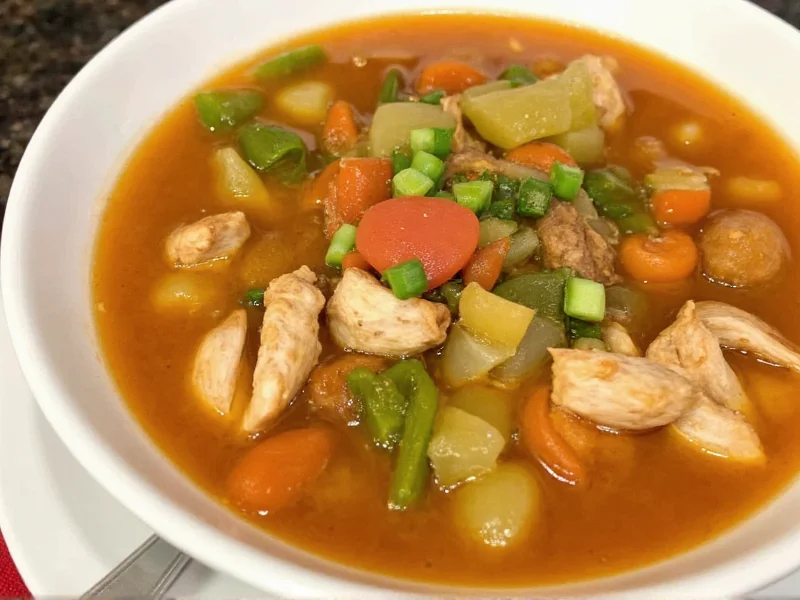
The perfect chicken vegetable soup recipe combines 1 lb boneless chicken breasts, 6 cups homemade broth, 2 carrots, 2 celery stalks, 1 onion, 2 garlic cloves, 1 cup diced potatoes, 1 cup green beans, 1 cup peas, 1 tsp thyme, and salt and pepper to taste. Simmer chicken in broth for 20 minutes, add vegetables, and cook until tender (15-20 minutes). Total preparation time: 45 minutes. Yields 6 servings of nutrient-rich, comforting soup ideal for meal prep or cold days.
Nothing compares to a steaming bowl of homemade chicken vegetable soup on a chilly day. This versatile recipe delivers deep flavor while packing essential nutrients from fresh produce and lean protein. Unlike store-bought versions loaded with sodium and preservatives, making your own ensures quality ingredients and customizable taste.
Why This Chicken Vegetable Soup Recipe Works
Professional chefs and home cooks agree that the magic of exceptional chicken soup lies in layering flavors properly. Starting with quality broth creates a foundation that elevates every ingredient. Our tested method maximizes flavor extraction while maintaining vegetable texture—nobody wants mushy carrots or overcooked peas.
Essential Ingredients and Substitutions
Understanding each component's role helps you adapt this recipe to your pantry. The following table details core ingredients with substitution options:
| Ingredient | Why It Matters | Smart Substitutions |
|---|---|---|
| Homemade chicken broth | Provides rich collagen and depth | Low-sodium store-bought or vegetable broth |
| Fresh thyme | Adds earthy complexity | 1/2 tsp dried thyme or rosemary |
| Chicken breasts | Lean protein that stays tender | Thighs for richer flavor or tofu for vegetarian |
| Yellow onion | Creates flavor base (mirepoix) | Shallots or leeks for milder taste |
| Potatoes | Natural thickener and heartiness | Turnips or parsnips for lower carbs |
Step-by-Step Cooking Instructions
Follow these professional techniques for restaurant-quality results every time:
- Build the foundation: In a 4-quart pot, combine chicken breasts and broth. Bring to gentle simmer (not boil) over medium heat. Skim any foam that rises to surface.
- Cook chicken properly: Simmer uncovered for 15-20 minutes until chicken reaches 165°F internally. Remove chicken, shred with two forks, and return to pot.
- Sauté aromatics: In same pot, cook onions, celery, and carrots in 1 tbsp olive oil for 5 minutes until softened but not browned.
- Add delicate vegetables: Stir in potatoes, green beans, and garlic. Cook 5 minutes before adding peas and herbs.
- Final simmer: Return all ingredients to pot. Simmer gently 10-15 minutes until vegetables reach desired tenderness.
Pro Tips for Exceptional Flavor
Master these techniques to elevate your chicken vegetable soup from good to extraordinary:
- Don't rush the simmer: Gentle heat preserves vegetable texture while extracting maximum flavor from ingredients
- Add acid at the end: A splash of lemon juice or apple cider vinegar brightens flavors without overpowering
- Layer herbs strategically: Add hardy herbs (thyme, rosemary) early; delicate herbs (parsley, dill) in last 5 minutes
- Reserve some broth: Keep 1 cup aside to adjust consistency if soup thickens too much during storage
Avoiding Common Mistakes
Even experienced cooks make these errors when preparing chicken vegetable soup:
- Boiling instead of simmering: Vigorous boiling makes chicken tough and vegetables mushy
- Adding all vegetables at once: Dense vegetables need longer cooking than delicate ones like peas
- Over-seasoning early: Salt concentration increases as liquid reduces—season gradually
- Using old broth: Homemade broth keeps 4 days refrigerated or 6 months frozen; store-bought check expiration
Storage and Reheating Guidelines
Proper storage maintains quality for future meals:
- Cool completely before refrigerating (within 2 hours of cooking)
- Store in airtight containers for up to 4 days
- Freeze in portion-sized containers for up to 3 months
- Reheat gently on stove—avoid microwaving which can make vegetables rubbery
- Add fresh herbs after reheating for vibrant flavor
Variations for Different Needs
Adapt this basic recipe to suit various cooking methods and dietary requirements:
Instant Pot Chicken Vegetable Soup
Use sauté function for aromatics, then add all ingredients except peas and parsley. Pressure cook 8 minutes, quick release, add delicate vegetables and simmer 5 minutes.
Gluten-Free Version
Naturally gluten-free—just verify broth ingredients. For thicker texture, increase potato quantity rather than using flour.
Low-Carb Adaptation
Replace potatoes with cauliflower florets and double green beans. Simmer 10 minutes for perfect texture.
Troubleshooting Guide
Solve common issues with these quick fixes:
- Soup too bland? Add 1 tsp nutritional yeast or Parmesan rind during final simmer
- Broth too thin? Mash some potatoes against pot side or add 1 tbsp cornstarch slurry
- Vegetables overcooked? Next time add in stages based on density (root vegetables first)
- Chicken dry? Reduce simmer time and ensure internal temperature doesn't exceed 165°F
Nutritional Benefits
This balanced recipe delivers substantial nutrition per serving:
- High-quality protein from lean chicken supports muscle maintenance
- Fiber-rich vegetables aid digestion and promote satiety
- Homemade broth contains collagen beneficial for joint and skin health
- Low in saturated fat while providing essential vitamins A, C, and K




 浙公网安备
33010002000092号
浙公网安备
33010002000092号 浙B2-20120091-4