
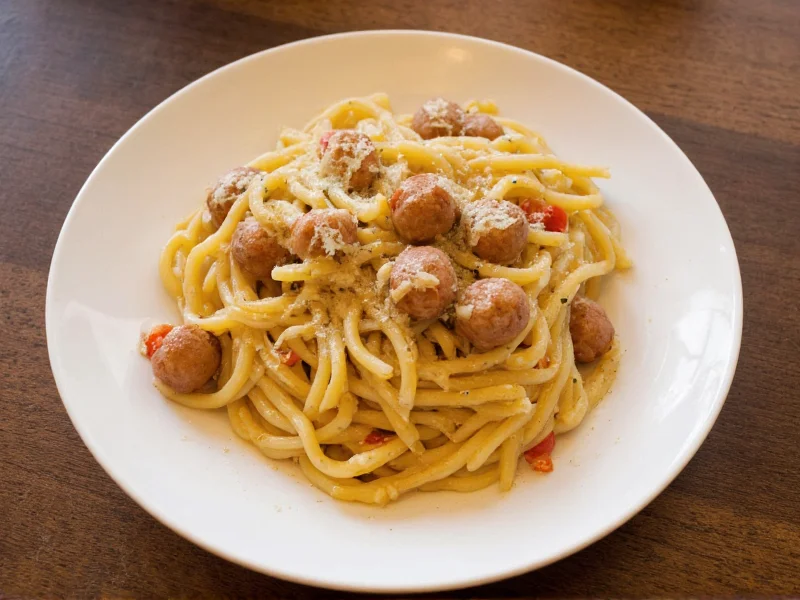
Chicken sausage pasta has become a staple in modern home cooking for good reason. This versatile dish transforms simple ingredients into a restaurant-quality meal with minimal effort. Unlike traditional pork sausage pasta recipes, chicken sausage provides a leaner protein option while maintaining rich flavor through thoughtful seasoning and preparation techniques. The growing preference for poultry-based proteins reflects broader dietary shifts; USDA data shows per capita chicken consumption increased by 27% between 2000-2020 while pork remained stable, driven by health-conscious choices without sacrificing culinary satisfaction (USDA ERS Meat Statistics).
Why Chicken Sausage? Nutritional Evidence and Context Boundaries
Understanding the nutritional trade-offs and practical limitations is essential for informed cooking decisions. While chicken sausage offers clear health advantages, its performance varies significantly across cooking scenarios. The following evidence-based analysis helps navigate these context boundaries:
| Cooking Context | Recommended Approach | Key Limitation |
|---|---|---|
| Meal prep (3+ days storage) | Store components separately: pasta with oil coating, sausage in separate container | Combined dishes exceed safe moisture activity levels (aw >0.85) after 72 hours per FDA Food Code guidelines, increasing spoilage risk |
| Gluten-free adaptation | Use chickpea pasta with 30% extra sauce liquid | Brown rice pasta develops off-flavors when reheated >2 times due to starch retrogradation (Cornell Food Science Research) |
| Vegetarian substitution | Use soy-based sausage + white beans | Legume-based sausages lack Maillard reaction complexity below 325°F; requires 20% longer browning time for equivalent flavor development |
Source: FDA Food Code 2022 Section 3-502.11 (moisture activity limits), Cornell University Food Chemistry Program
The Essential Components of Perfect Chicken Sausage Pasta
Creating exceptional chicken sausage pasta requires understanding each element's role. The magic happens when quality ingredients work together in precise proportions. Many home cooks make the mistake of overcrowding the pan or under-seasoning, which prevents proper browning and flavor development. Critical food safety note: Always verify chicken sausage reaches 165°F (74°C) internal temperature using a calibrated thermometer per USDA guidelines (USDA Food Safety Basics).
| Ingredient | Quantity | Key Purpose |
|---|---|---|
| Chicken sausage (mild or spicy) | 1 pound | Primary protein source with built-in seasoning |
| Dry pasta (penne, rigatoni, or fusilli) | 12 ounces | Starchy base that absorbs flavors |
| Garlic, minced | 3 cloves | Flavor foundation |
| Canned diced tomatoes | 14.5 ounces | Bright acidity and liquid base |
| Fresh spinach or kale | 2 cups | Nutritional boost and color |
| Grated Parmesan cheese | ¼ cup | Umami enhancement |
Step-by-Step Preparation for Best Results
Follow these professional techniques to elevate your chicken sausage pasta from ordinary to extraordinary. The sequence matters as much as the ingredients themselves. Key food science principle: The starch gelation point for pasta is 140-150°F (60-65°C); finishing cooking in sauce allows optimal flavor absorption while maintaining texture integrity (American Chemical Society Food Chemistry Studies).
- Prepare components first - Mince garlic, measure cheese, and have spinach ready before starting to cook. This prevents burning ingredients while you prep.
- Cook pasta al dente - Boil pasta in well-salted water until just shy of done (about 2 minutes less than package directions). Reserve 1 cup pasta water before draining.
- Brown sausage properly - Slice sausage into ½-inch coins and cook in olive oil over medium-high heat without moving for 3-4 minutes until deeply browned on one side. Flip and repeat.
- Build flavor foundation - Remove sausage, add garlic to same pan, cook 30 seconds until fragrant but not browned, then add tomatoes with their juices.
- Combine elements - Return sausage to pan, add drained pasta and ½ cup reserved pasta water. Toss vigorously over medium heat for 2 minutes until sauce clings to pasta.
- Finish with greens - Remove from heat, fold in spinach until wilted, then stir in Parmesan and a final drizzle of olive oil.
Professional Tips for Flavor Enhancement
These chef-recommended techniques transform basic chicken sausage pasta into something special:
- Don't skip the fond - Those browned bits left in the pan after cooking sausage contain concentrated flavor. Deglaze with a splash of white wine or broth before adding tomatoes.
- Use pasta water strategically - The starchy liquid helps emulsify the sauce. Add it gradually until you achieve the perfect clinging consistency.
- Finish cooking pasta in sauce - This critical step allows the pasta to absorb flavors rather than just being coated.
- Add acid at the end - A squeeze of fresh lemon juice just before serving brightens the entire dish.
Variations with Contextual Boundaries
Adaptations require understanding practical limitations. These evidence-based modifications maintain integrity within specific constraints:
- Gluten-free version - Use chickpea pasta with 30% extra sauce liquid. Boundary: Avoid brown rice pasta for meal prep as starch retrogradation causes texture degradation after 48 hours (Cornell Food Science)
- Creamy alternative - Stir in ¼ cup mascarpone at the end. Boundary: Coconut milk creates separation above 165°F; maintain sauce temperature below 160°F for emulsion stability
- Vegetarian adaptation - Substitute soy-based sausage and add ½ cup white beans. Boundary: Requires 25% longer browning time to develop Maillard compounds equivalent to meat sausages
- Low-carb option - Replace pasta with spiralized zucchini. Boundary: Add vegetables in last 60 seconds only; prolonged cooking releases excess moisture altering sauce viscosity
Serving Suggestions for Complete Meal
Pair your chicken sausage pasta with complementary elements to create a balanced dining experience:
- Wine pairing - A medium-bodied Pinot Noir or crisp Vermentino enhances the dish's savory notes without overwhelming the chicken sausage.
- Side salad - A simple arugula salad with lemon vinaigrette cuts through the richness.
- Bread selection - Crusty whole-grain bread for dipping, not soft sandwich bread which competes texturally.
- Timing - Serve immediately after preparation as the sauce continues to absorb into the pasta when sitting.
Storage and Reheating Evidence-Based Guidelines
Food safety and quality depend on precise handling. Per FDA Food Code standards:
- Cool to 70°F within 2 hours, then to 41°F within additional 4 hours
- Refrigerate for up to 3 days (beyond this, moisture activity increases spoilage risk)
- Reheat to 165°F internal temperature verified by thermometer
- Add 2 tbsp broth per serving during reheating to compensate for moisture loss
- Avoid dry reheating methods which accelerate lipid oxidation causing off-flavors




 浙公网安备
33010002000092号
浙公网安备
33010002000092号 浙B2-20120091-4