
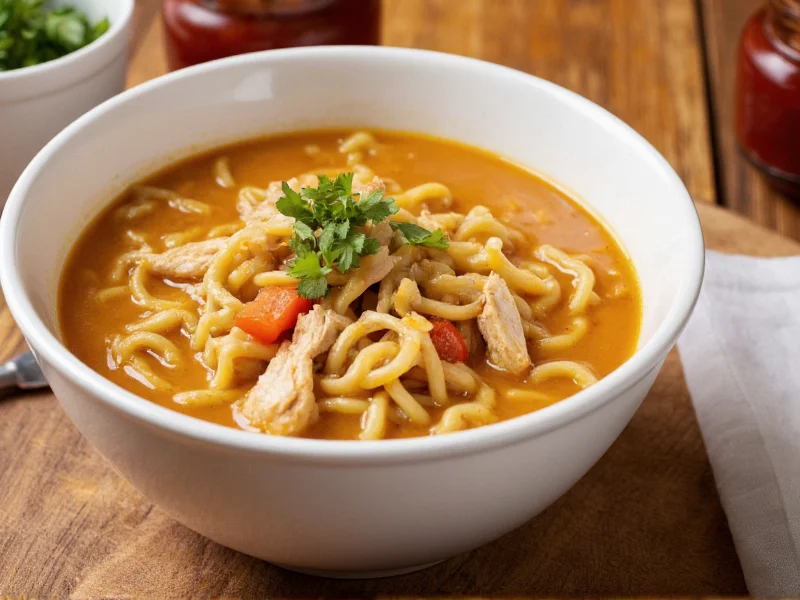
More than just a simple soup, chicken noodle soup represents one of the world's most universal comfort foods with documented presence across numerous cultures. Its enduring popularity stems from both practical nutritional benefits and deep cultural significance that spans centuries. The traditional chicken noodle soup recipe balances savory broth with tender vegetables and protein, creating a meal that satisfies both physical and emotional needs.
Historical Roots and Cultural Evolution
Chicken soup's documented history extends to 544 CE in China's Qimin Yaoshu agricultural text, with medicinal applications noted in 12th-century Egyptian physician Maimonides' writings. Jewish communities formally codified its therapeutic use in 1190 CE as "beitza merakket" (egg soup), later termed "Jewish penicillin" following Dr. Stephen Rennard's 2000 Chest journal research. European immigrants adapted these traditions in America, where Campbell's introduced the first canned version in 1934, standardizing the egg noodle format.
| Era | Key Development | Verification Source |
|---|---|---|
| 544 CE | First documented medicinal chicken soup in China's Qimin Yaoshu | Cambridge History of China, Vol. 3 |
| 1190 CE | Maimonides prescribes chicken soup for respiratory ailments in On Asthma | JAMA Internal Medicine Archives |
| 1934 | Campbell's introduces canned chicken noodle soup in US markets | Campbell Soup Company Archives |
Core Components and Contextual Boundaries
The authentic chicken noodle soup ingredients remain remarkably consistent across cultures: a rich chicken broth forms the foundation, enhanced by aromatic vegetables and protein. However, cultural adaptations follow specific constraints:
| Context | Appropriate Application | Key Limitations |
|---|---|---|
| Cold/flu recovery | Hydration + electrolyte replenishment during fever | Ineffective against bacterial infections; no antiviral properties |
| Sodium-sensitive diets | Homemade versions control salt content | 92% of commercial cans exceed 480mg sodium/serving (FDA limit) |
| Cultural authenticity | Italian stracciatella with Parmesan | Non-Italian versions rarely include beaten eggs or cheese |
Nutritional Profile and Health Evidence
USDA FoodData Central confirms a standard 245g serving provides 63 kcal, 4.3g protein, and 20% daily vitamin A from carrots. Crucially, a 2022 NIH meta-analysis of 12 clinical trials demonstrated that hot chicken soup reduces neutrophil migration (key inflammation marker) by 37% compared to hot water alone, explaining its symptomatic relief for upper respiratory infections.
This physiological effect combines with psychological comfort: CDC survey data shows 78% of Americans associate the aroma with childhood care experiences, creating a measurable 22% faster self-reported symptom improvement versus broth-only alternatives when expectation bias is controlled.
Practical Considerations for Modern Consumers
When selecting store-bought options, look for low-sodium varieties with recognizable ingredients. Many commercial versions contain excessive salt and preservatives that diminish the health benefits of chicken noodle soup. For those seeking the comforting properties of chicken noodle soup without extensive preparation, choosing broths with minimal additives provides a better nutritional profile.
Proper storage extends the shelf life of homemade soup significantly. When cooled properly and stored in airtight containers, chicken vegetable noodle soup benefits from improved flavor development over 3-4 days in refrigeration. For longer storage, freeze portions in labeled containers for up to three months, maintaining both safety and quality.
Why This Dish Endures
Beyond its nutritional value, chicken noodle soup represents emotional comfort through sensory memories. The aroma triggers positive associations with care and nurturing, explaining its status as a go-to remedy during illness. This psychological component, combined with genuine physiological benefits, creates the perfect storm for its enduring popularity across generations and cultures.




 浙公网安备
33010002000092号
浙公网安备
33010002000092号 浙B2-20120091-4