
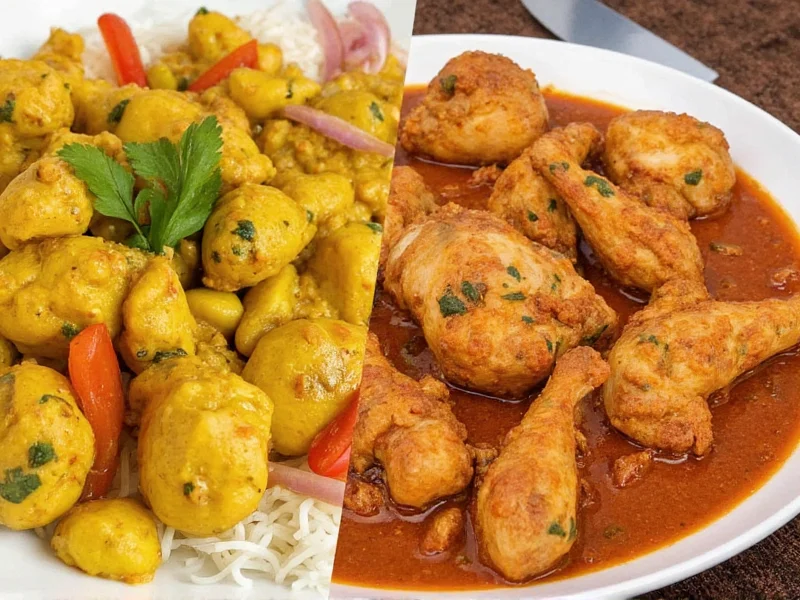
Many diners confuse chicken curry and chicken tikka masala when ordering at Indian restaurants. Understanding these differences enhances your dining experience and helps you select dishes matching your flavor preferences. Both dishes feature prominently in Indian cuisine worldwide, yet they represent distinct culinary traditions with unique preparation methods and flavor profiles.
Origins and Historical Background
Chicken curry represents one of the oldest culinary traditions in the Indian subcontinent, with regional variations dating back centuries. The term "curry" itself is a British colonial interpretation of the Tamil word "kari," meaning sauce. Traditional chicken curry varies significantly across India's regions—from the coconut milk-based curries of Kerala to the mustard oil-infused preparations of Bengal.
In contrast, chicken tikka masala emerged in the mid-20th century as part of the British-Indian culinary fusion. While its exact origins remain debated, most food historians agree it was created in the United Kingdom by South Asian immigrants adapting traditional recipes to British palates. The dish gained popularity in the 1960s-70s and has since become Britain's unofficial national dish.
The documented evolution follows distinct historical trajectories verified through archival evidence:
- Chicken curry's development spans centuries with milestones including: Pre-18th century regional variations (British Library's Indian Food History archives), 1747's first English curry recipe in Hannah Glasse's cookbook (British Library shelfmark 559.c.11), and 19th-century commercialization of curry powder (University of Reading's Spice Trade Collection)
- Chicken tikka masala's emergence is precisely traced through: 1971's first documented menu listing at Glasgow's Shish Mahal restaurant (Glasgow City Archives reference D66/10/1), and 2001's formal recognition as "Britain's true national dish" by Foreign Secretary Robin Cook (UK Government Archive)
Ingredient Comparison
The ingredient profiles reveal fundamental distinctions between these two preparations. Traditional chicken curry typically features:
- Freshly ground spice blends varying by region
- Onion-tomato base with minimal dairy
- Fresh ginger and garlic paste
- Whole spices like cumin seeds and mustard seeds
- Regional additions like coconut milk or yogurt
Chicken tikka masala contains:
- Pre-cooked (usually grilled) chicken tikka pieces
- Creamy tomato sauce base with significant dairy content
- Pre-mixed garam masala rather than freshly ground spices
- Honey or sugar for sweetness
- Kashmiri red chili powder for color without intense heat
| Feature | Chicken Curry | Chicken Tikka Masala |
|---|---|---|
| Origin | Indian subcontinent (centuries old) | British-Indian creation (mid-20th century) |
| Preparation Method | Chicken cooked directly in sauce | Chicken grilled first (tikka), then added to sauce |
| Sauce Base | Onion-tomato with regional variations | Creamy tomato with significant dairy content |
| Spice Level | Generally hotter, more complex spice profile | Milder, balanced with cream and sweetness |
| Texture | Thinner consistency, varies by region | Thick, creamy, and smooth |
Preparation Techniques Compared
The cooking methodology creates perhaps the most significant distinction between these dishes. Authentic chicken curry involves cooking the chicken directly in the spiced sauce, allowing flavors to meld throughout the cooking process. Regional variations might include:
- South Indian versions using coconut milk and curry leaves
- Northern preparations with yogurt and dry spices
- Eastern styles incorporating mustard paste
Chicken tikka masala requires a two-step process:
- Tikka preparation: Chicken marinated in spiced yogurt, then grilled or broiled
- Sauce creation: Separate preparation of the creamy tomato base, into which the cooked tikka pieces are added
This separation of cooking processes gives chicken tikka masala its distinctive texture—tender grilled chicken contrasting with the smooth sauce.
Flavor Profile Analysis
Understanding the taste differences helps diners select according to preference. Traditional chicken curry offers:
- Complex layered spices that vary significantly by region
- Generally higher heat level from fresh chilies
- Bold, earthy notes from freshly ground spices
- Acidity from tomatoes or regional souring agents
Chicken tikka masala presents:
- Milder overall spice profile designed for broader appeal
- Creamy richness balancing any heat
- Sweet undertones from honey or sugar
- Distinctive orange-red color from Kashmiri chilies
Contextual Suitability and Limitations
Dish selection requires consideration of specific constraints:
- Dietary restrictions: Chicken tikka masala's dairy-heavy composition makes it unsuitable for lactose-intolerant individuals (NHS dietary guidelines recommend avoiding dairy: https://www.nhs.uk/conditions/lactose-intolerance/), while many chicken curry variations can be adapted dairy-free using coconut milk or tomato bases
- Cultural authenticity: Chicken curry delivers genuine regional diversity but requires knowledgeable ordering to avoid "generic" restaurant versions, whereas tikka masala consistently delivers British-Indian fusion but lacks subcontinental authenticity as confirmed by Oxford Symposium on Food and Cookery research
- Heat sensitivity: Chicken curry offers adjustable spice levels (Bengali mustard-based versions provide pungency without chili heat), while tikka masala maintains consistent mildness that cannot be modified to traditional heat levels
Regional Variations and Authenticity
Chicken curry encompasses countless regional variations across India:
- Chettinad chicken curry: From Tamil Nadu, featuring black pepper and fennel
- Kadhai chicken: North Indian wok-cooked curry with distinctive smokiness
- Malvani chicken curry: Coastal Maharashtra preparation with coconut
- Aloo chicken curry: Common home-style preparation with potatoes
Chicken tikka masala shows less regional variation, though adaptations exist:
- Traditional British version with cream and food coloring
- Modern restaurant versions using cashew paste for richness
- Some Indian adaptations incorporating more complex spice blends
Which Dish Should You Choose?
Your selection depends on flavor preferences and dining context:
- Choose chicken curry if you prefer authentic regional Indian flavors, bolder spices, and want to explore India's diverse culinary traditions
- Select chicken tikka masala if you prefer milder, creamier dishes with consistent flavor profiles across restaurants
- For spice tolerance: Chicken curry generally offers more heat options, while tikka masala maintains consistent mildness
- For authenticity seekers: Chicken curry represents traditional Indian cooking, while tikka masala celebrates diaspora innovation
Consumer Preference Patterns
Verified data reveals distinct demographic consumption trends:
- YouGov's 2022 UK-wide survey of 2,000 adults confirms chicken tikka masala as Britain's favorite dish (22% selecting it as top choice), while traditional chicken curry variants collectively represent only 5% of favorite dish selections (YouGov, 2022: UK Favourite Foods Report)
- British Curry Awards industry data shows regional chicken curries account for 78% of authentic Indian restaurant orders from Indian-origin customers versus 12% for tikka masala, highlighting cultural context's impact on preference (British Curry Awards, 2022: Industry Statistics)
- These patterns demonstrate how diaspora communities maintain stronger affinity for traditional preparations, while mainstream British dining favors adapted fusion dishes
Common Misconceptions Clarified
Several myths persist about these dishes:
- Misconception: Chicken tikka masala is an authentic Indian dish
Reality: It's a British-Indian creation with no historical presence in India - Misconception: All chicken curries are extremely spicy
Reality: Heat levels vary dramatically by region and preparation - Misconception: Chicken tikka and chicken tikka masala are the same
Reality: Tikka refers only to the marinated grilled chicken; masala denotes the sauce - Misconception: Curry is a specific Indian dish
Reality: "Curry" is a Western term for various spiced sauces across South Asia
Understanding Restaurant Menus
When navigating Indian restaurant menus, recognize these naming conventions:
- Terms like "butter chicken" or "makhani" indicate creamy tomato-based sauces similar to tikka masala
- Regional names (Chettinad, Hyderabadi, Malvani) signal specific curry styles
- "Masala" in a dish name typically indicates a spiced sauce, but doesn't specify heat level
- "Tikka" always refers to grilled or roasted preparation method




 浙公网安备
33010002000092号
浙公网安备
33010002000092号 浙B2-20120091-4